ACME Thunderer Nr.1 - Brass Whistle
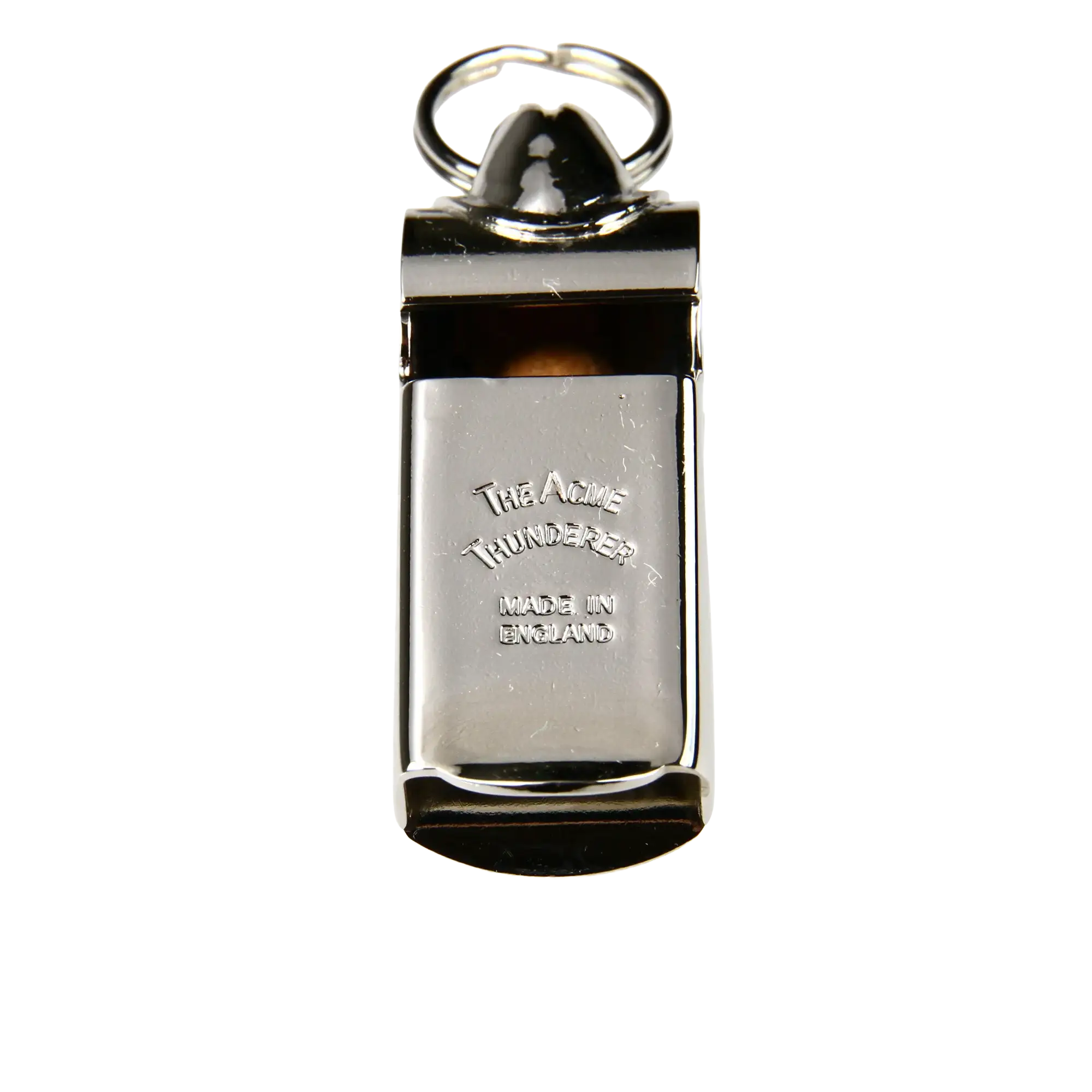
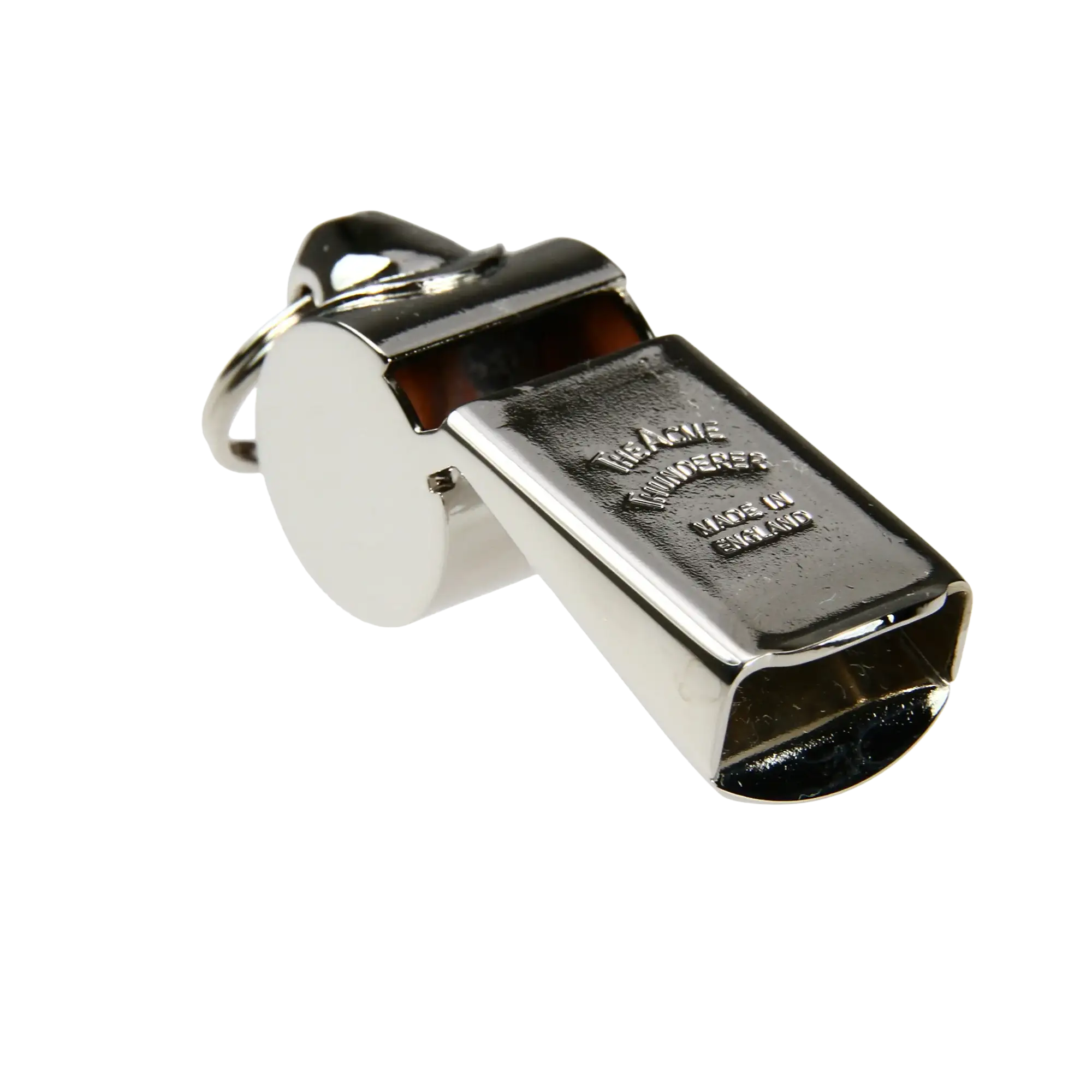
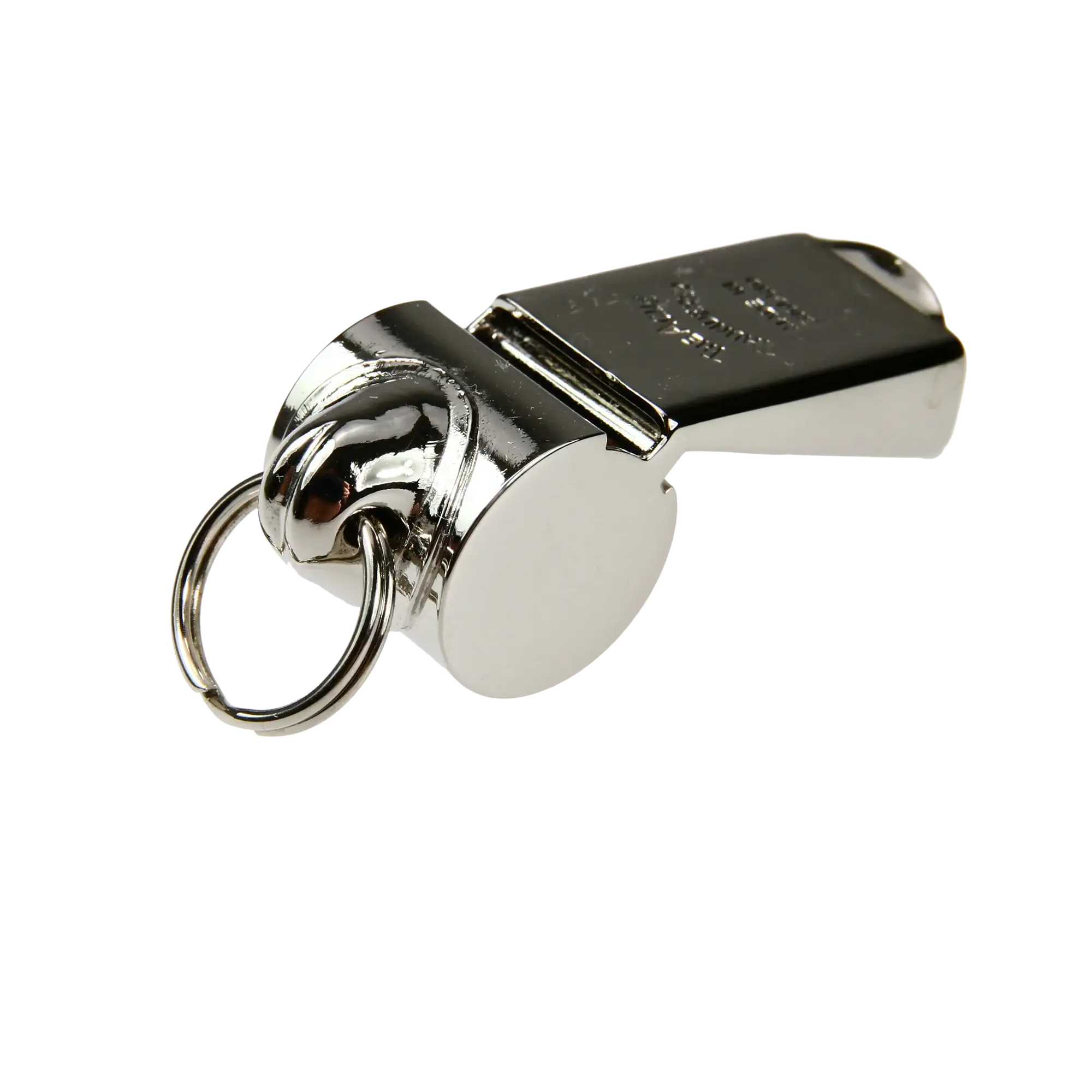
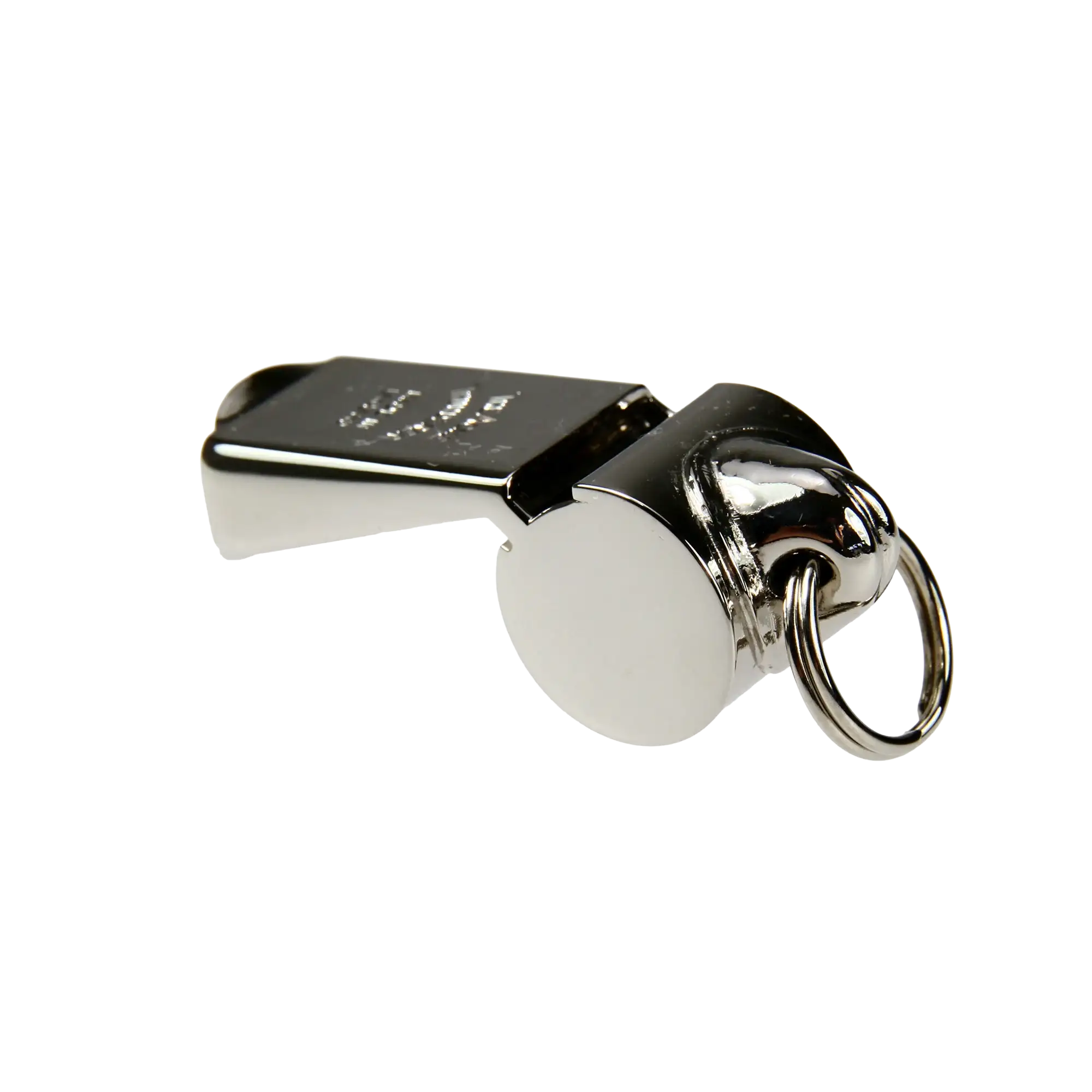
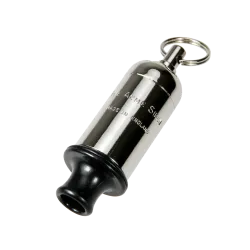
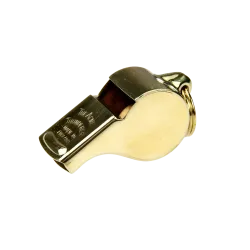
The Thunderer is a small brass whistle engineered for clarity and penetration in noisy environments. Its design—a solid brass body with nickel plating and an edged mouthpiece—produces a sharp, high-pitched tone that cuts through ambient noise without effort, making it equally at home on a sports field, a theatrical stage, or a railway platform.
Construction and Materials
The whistle is cast from brass and finished with nickel plating, a combination that resists corrosion and handles repeated use without degradation. Inside the sound chamber sits a small cork triller ball, which vibrates during play to modulate the tone and add texture to the sound.
The mouthpiece is edged—a squared design rather than rounded—which allows the whistle to sit comfortably between the lips and gives the player precise control over the air stream. This detail matters: it reduces fatigue during extended use and gives the player access to subtle variations in tone and intensity.
Sound and Playing Characteristics
The Thunderer produces a loud, high-frequency sound that remains audible even in high-noise conditions. The triller mechanism adds a tremolo or warbling quality to the tone, which can be heard as a distinct trill rather than a pure note. This characteristic makes it useful both as a practical signaling device and as a sound-effect instrument in musical or theatrical contexts.
The whistle requires minimal air pressure to activate and can be blown with comfort for extended periods. The edged mouthpiece means you can vary the sharpness and intensity of the tone by adjusting lip tension and air velocity.
Historical and Contemporary Uses
Locomotive engineers in the 19th century relied on whistles of this type to transmit operational signals along rail lines. The design proved so effective that it has remained largely unchanged for over a century. Today the Thunderer serves referees, coaches, security personnel, and musicians seeking a reliable, authentic sound-effect instrument for stage work, demonstrations, or games.
What's Included
- ACME Thunderer Nr.1 - Brass Whistle
Durability and Maintenance
The nickel plating protects the brass body from oxidation and tarnishing. Rinse the whistle under clean water after use to prevent saliva buildup, and allow it to dry completely before storage. The triller ball may occasionally stick if moisture accumulates; gentle tapping or a brief soak in warm water will restore its movement. The whistle is designed for decades of reliable service.
The Thunderer remains a standard tool in sports officiating, railway operations, and stage performance across Europe and beyond.
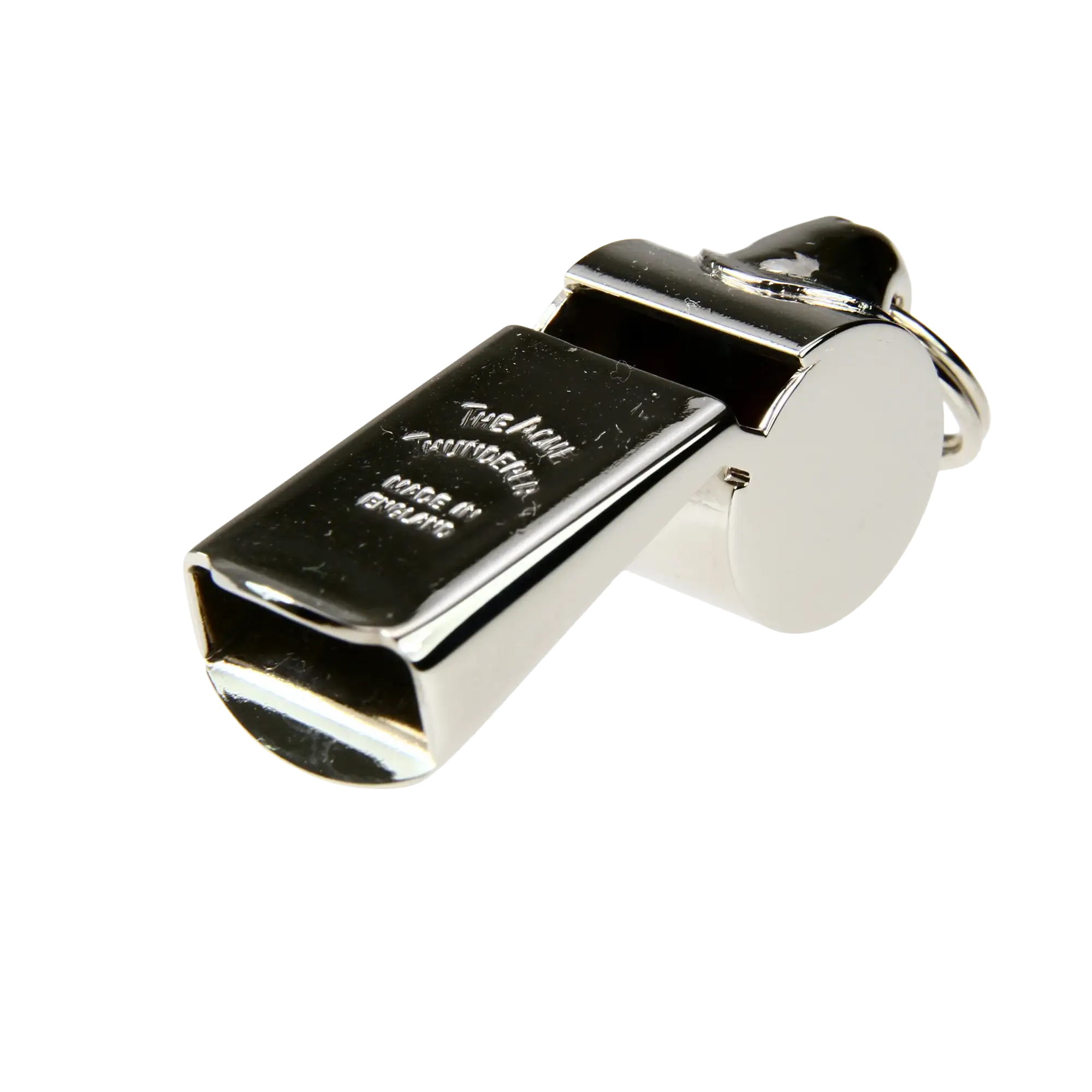
ACME Thunderer Nr.1 - Brass Whistle — This solid nickel-plated brass whistle, manufactured since the nineteenth century by the Birmingham firm J. Hudson & Co, is renowned for its powerful deep tone and unwavering reliability. Designed with a square mouthpiece and a Portuguese cork ball, it produces a piercing and distinct sound, even in noisy environments. Historically used by locomotive mechanics and today by referees, coaches and musicians seeking authentic sound effects, this whistle combines artisanal robustness and consistent performance. A reliable sonic companion for sport, safety and the stage.
| Origin | Great Britain |
|---|---|
| Weight | 0,03 kg |
| Dimensions | 4,5 × 1,7 × 1,7 cm |
| Materials | Nickel - Cork - Brass |
⚠Caution: Not suitable for children under 3 years. Please supervise older children. Beware of swallowing small parts, strangulation, material allergies, sharp edges and points! Use only for sound generation. No liability for improper use.
✦Care: Extreme temperature fluctuations, humidity and direct sunlight can affect the lifespan. Please store in balanced humidity to prevent material changes, mold and corrosion. Remove dirt with a damp cloth. Dry after cleaning and each use.
♻Disposal: Please contact your local waste disposal authority for information on environmentally sound disposal!
ACME Thunderer Nr.1 - Brass Whistle
The Thunderer is a small brass whistle engineered for clarity and penetration in noisy environments. Its design—a solid brass body with nickel plating and an edged mouthpiece—produces a sharp, high-pitched tone that cuts through ambient noise without effort, making it equally at home on a sports field, a theatrical stage, or a railway platform.
Construction and Materials
The whistle is cast from brass and finished with nickel plating, a combination that resists corrosion and handles repeated use without degradation. Inside the sound chamber sits a small cork triller ball, which vibrates during play to modulate the tone and add texture to the sound.
The mouthpiece is edged—a squared design rather than rounded—which allows the whistle to sit comfortably between the lips and gives the player precise control over the air stream. This detail matters: it reduces fatigue during extended use and gives the player access to subtle variations in tone and intensity.
Sound and Playing Characteristics
The Thunderer produces a loud, high-frequency sound that remains audible even in high-noise conditions. The triller mechanism adds a tremolo or warbling quality to the tone, which can be heard as a distinct trill rather than a pure note. This characteristic makes it useful both as a practical signaling device and as a sound-effect instrument in musical or theatrical contexts.
The whistle requires minimal air pressure to activate and can be blown with comfort for extended periods. The edged mouthpiece means you can vary the sharpness and intensity of the tone by adjusting lip tension and air velocity.
Historical and Contemporary Uses
Locomotive engineers in the 19th century relied on whistles of this type to transmit operational signals along rail lines. The design proved so effective that it has remained largely unchanged for over a century. Today the Thunderer serves referees, coaches, security personnel, and musicians seeking a reliable, authentic sound-effect instrument for stage work, demonstrations, or games.
What's Included
- ACME Thunderer Nr.1 - Brass Whistle
Durability and Maintenance
The nickel plating protects the brass body from oxidation and tarnishing. Rinse the whistle under clean water after use to prevent saliva buildup, and allow it to dry completely before storage. The triller ball may occasionally stick if moisture accumulates; gentle tapping or a brief soak in warm water will restore its movement. The whistle is designed for decades of reliable service.
The Thunderer remains a standard tool in sports officiating, railway operations, and stage performance across Europe and beyond.
Your review appreciation cannot be sent
Report comment
Report sent
Your report cannot be sent
Write your review
Review sent
Your review cannot be sent