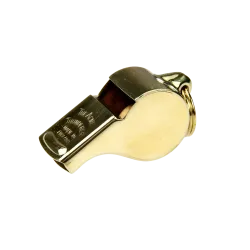
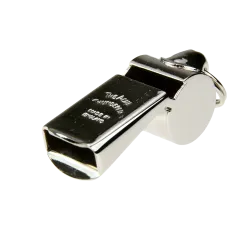
ACME Locomotive Whistle
This is a three-pipe brass whistle designed to reproduce the distinctive call of steam-era locomotives. Three nickel-plated brass pipes are mounted together in a single mouthpiece, each tuned to produce a different pitch, creating the characteristic multi-tone sound associated with railway signalling and steam locomotive operation.
Sound and Acoustic Design
The three pipes work in concert to generate a loud, sonorous output with smooth harmonic qualities. Each pipe is precisely matched to its companions, ensuring balanced tone across all three pitches. The result is a rich, layered sound with strong projection—qualities that made this whistle type effective for outdoor signalling and long-distance communication on the railway.
Construction and Materials
The whistle is constructed from brass with nickel plating on the pipes, a combination chosen for durability and tonal clarity. The mouthpiece is engineered to house all three pipes in alignment, allowing a single breath to activate them simultaneously or in sequence depending on playing technique.
Historical Use and Context
Locomotive whistles of this design were standard equipment on steam railways, used by engine drivers to signal warnings, announce arrivals and departures, and communicate with railway staff along the line. The three-tone configuration allowed operators to produce distinct signals—each combination of pipes or individual pipe producing a recognizable call within the railway environment.
Playing and Applications
The whistle responds to breath control with minimal resistance, making it accessible to players with no prior experience while offering enough dynamic range for more deliberate use. Beyond historical railway recreation, the instrument serves collectors of railway heritage, sound designers seeking authentic period tones, and anyone requiring a reliable outdoor signalling device with genuine acoustic character.
The three-pipe locomotive whistle remains a functional tool in heritage railway operations and living-history contexts worldwide.
ACME Locomotive Whistle — A three-tube brass whistle with nickel plating to reproduce the distinctive three-tone call of American steam locomotives. Originally designed for railway signalling, it delivers rich harmonic tones with impressive projection outdoors. The ergonomic mouthpiece requires minimal breath control, making it accessible to beginners while offering depth for experienced players. Ideal for historical reenactments, sound design, outdoor signalling, and collectors of railway heritage.
| Origin | Great Britain |
|---|---|
| Weight | 0,22 kg |
| Dimensions | 31,0 × 5,0 cm |
| Materials | Plastic - Brass |
⚠Caution: Not suitable for children under 3 years. Please supervise older children. Beware of swallowing small parts, strangulation, material allergies, sharp edges and points! Use only for sound generation. No liability for improper use.
✦Care: Extreme temperature fluctuations, humidity and direct sunlight can affect the lifespan. Please store in balanced humidity to prevent material changes, mold and corrosion. Remove dirt with a damp cloth. Dry after cleaning and each use.
♻Disposal: Please contact your local waste disposal authority for information on environmentally sound disposal!
ACME Locomotive Whistle
This is a three-pipe brass whistle designed to reproduce the distinctive call of steam-era locomotives. Three nickel-plated brass pipes are mounted together in a single mouthpiece, each tuned to produce a different pitch, creating the characteristic multi-tone sound associated with railway signalling and steam locomotive operation.
Sound and Acoustic Design
The three pipes work in concert to generate a loud, sonorous output with smooth harmonic qualities. Each pipe is precisely matched to its companions, ensuring balanced tone across all three pitches. The result is a rich, layered sound with strong projection—qualities that made this whistle type effective for outdoor signalling and long-distance communication on the railway.
Construction and Materials
The whistle is constructed from brass with nickel plating on the pipes, a combination chosen for durability and tonal clarity. The mouthpiece is engineered to house all three pipes in alignment, allowing a single breath to activate them simultaneously or in sequence depending on playing technique.
Historical Use and Context
Locomotive whistles of this design were standard equipment on steam railways, used by engine drivers to signal warnings, announce arrivals and departures, and communicate with railway staff along the line. The three-tone configuration allowed operators to produce distinct signals—each combination of pipes or individual pipe producing a recognizable call within the railway environment.
Playing and Applications
The whistle responds to breath control with minimal resistance, making it accessible to players with no prior experience while offering enough dynamic range for more deliberate use. Beyond historical railway recreation, the instrument serves collectors of railway heritage, sound designers seeking authentic period tones, and anyone requiring a reliable outdoor signalling device with genuine acoustic character.
The three-pipe locomotive whistle remains a functional tool in heritage railway operations and living-history contexts worldwide.
Your review appreciation cannot be sent
Report comment
Report sent
Your report cannot be sent
Write your review
Review sent
Your review cannot be sent