Music Box Let us be Happy and Cheerful
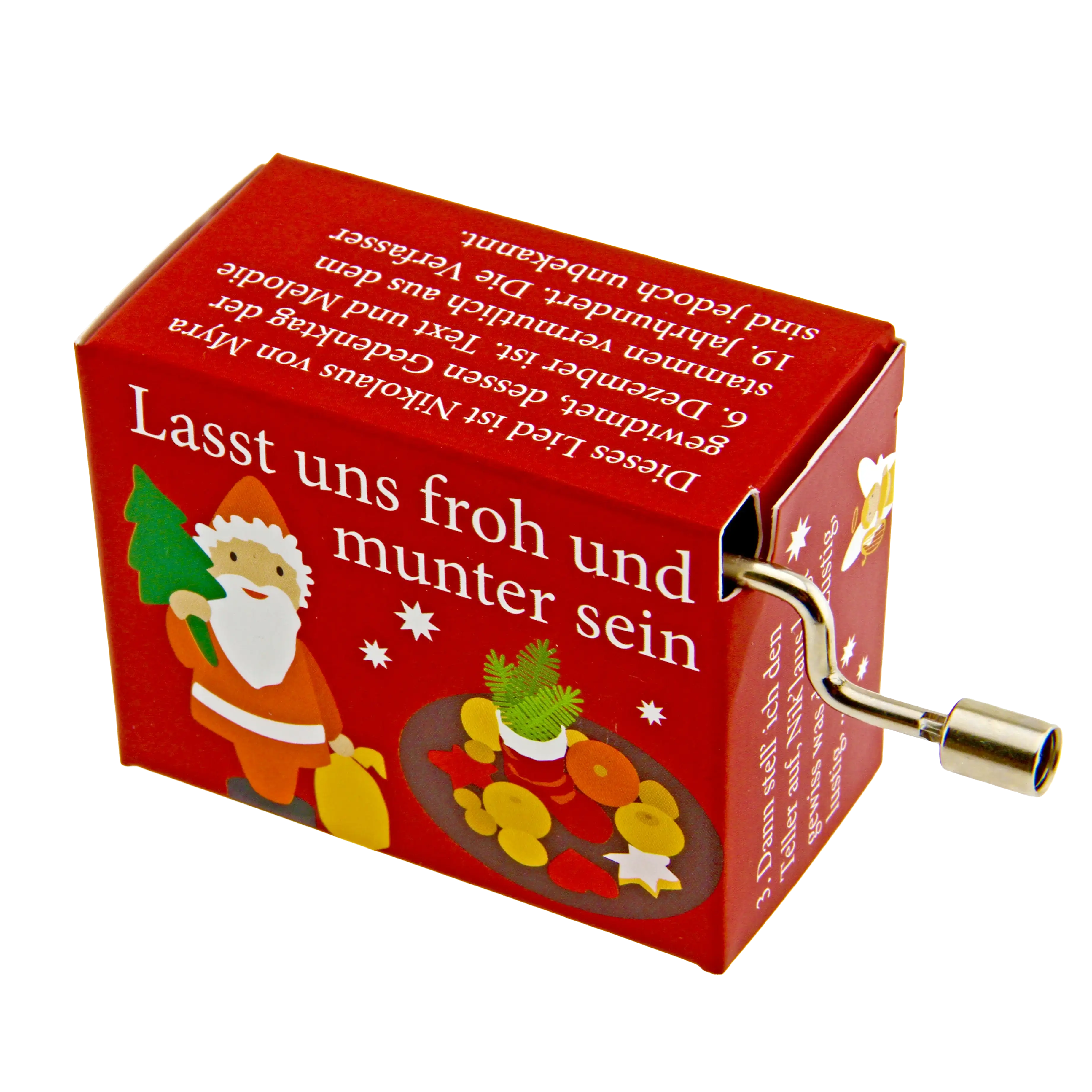
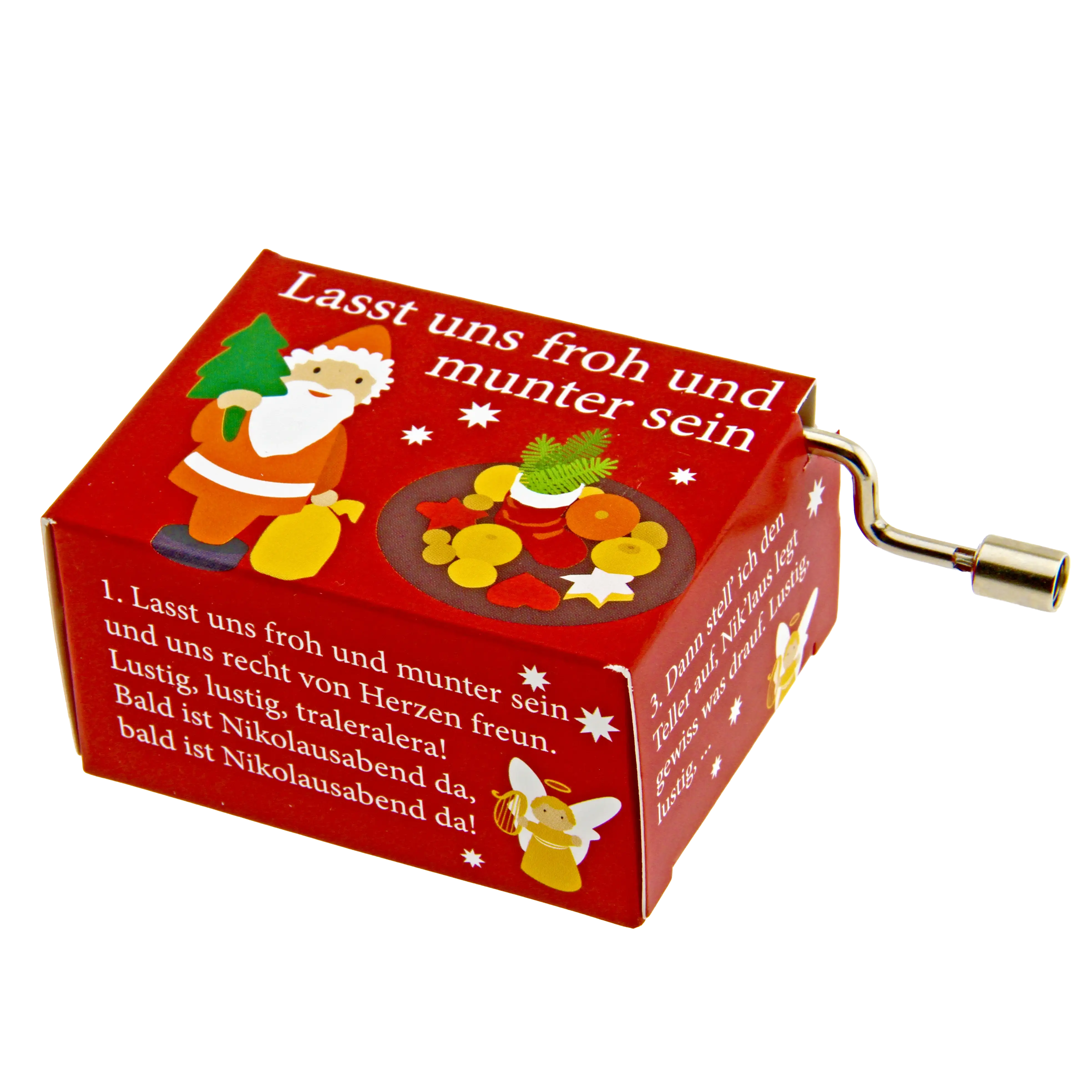
This German music box plays a winter folk melody with roots reaching back to the 19th century, activated by a simple hand crank that requires no batteries or electricity. The tune, "Lasst uns froh und munter sein" (Let us be happy and cheerful), celebrates the tradition of St. Nicholas Day on December 6th, when children would leave out gift plates overnight in anticipation of small treats and surprises.
The Melody and Its History
The song captures the childlike anticipation central to this winter observance, a custom that has remained part of European tradition for centuries. The music box prints the first three verses of the song directly on its decorated surface, allowing singers to follow along with the melody as they turn the crank — transforming the listening experience into a participatory one.
Construction and Sound
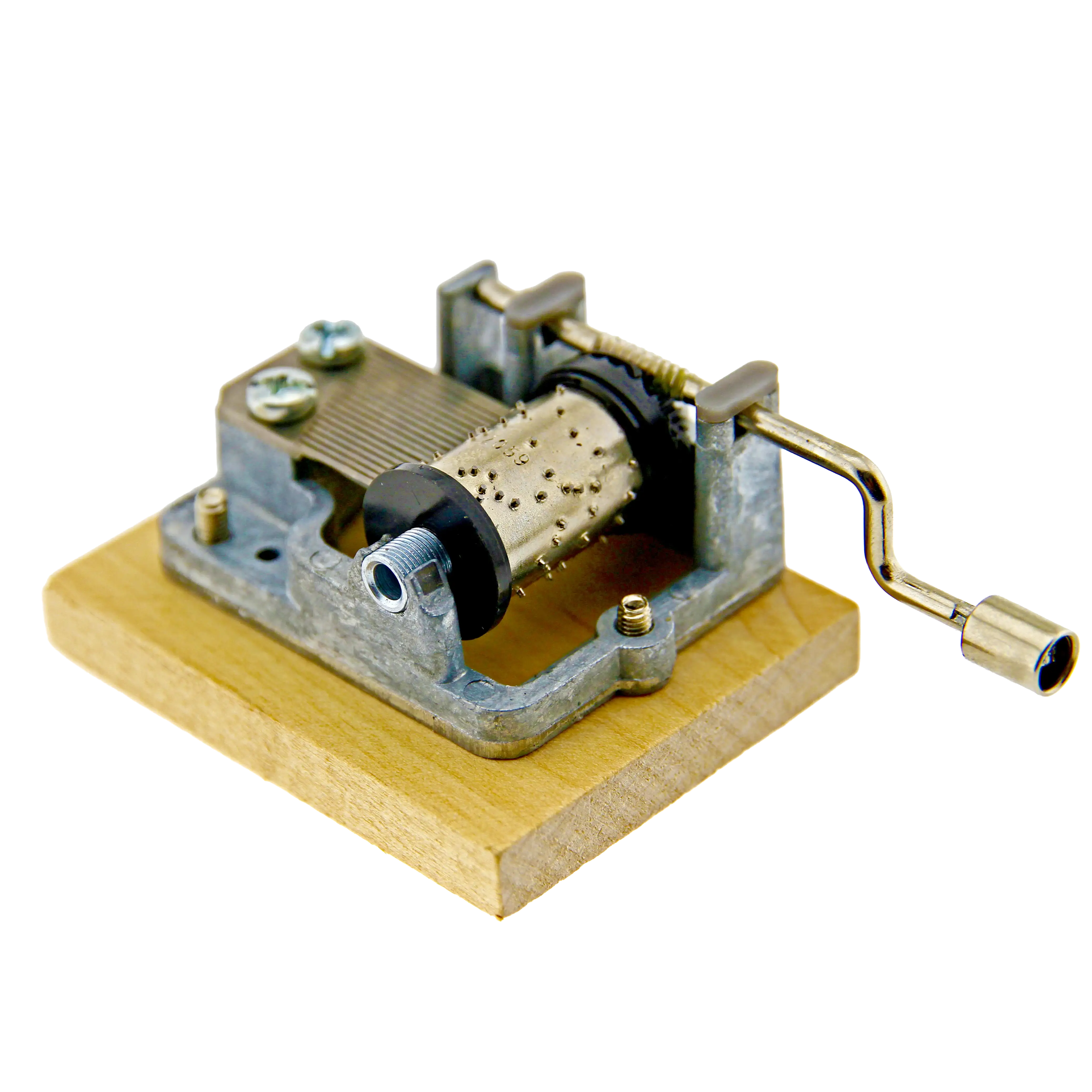
The mechanism consists of a small wooden board fitted with a toothed cylinder and metal components, all housed within a decorative cardboard box. When left inside its decorated casing, the melody sounds gentle and contained. However, the sound becomes noticeably more powerful when you remove the mechanical mechanism from the box and press it firmly against a resonating surface — a table, chair, or Cajon will amplify the tone significantly. This simple principle of acoustic resonance transforms the character of the music without any adjustment to the mechanism itself.
Playing and Use
Operation is straightforward: turn the crank steadily to drive the mechanism. The toothed cylinder catches the metal teeth in sequence, producing the melody. The removable mechanism allows you to choose between the intimate sound of the boxed version or the fuller tone achieved by coupling it with a resonating body. This flexibility makes the music box suitable both as a seasonal decoration that plays on demand and as an interactive family activity.
This music box represents a continuous mechanical tradition spanning two centuries, connecting modern listeners to a winter celebration that has remained largely unchanged since the 19th century.
Music Box Let us be Happy and Cheerful — This German music box plays a traditional folk melody from winter celebrations, operated by a simple mechanical crank without batteries or electricity. Constructed from metal and wood with a pinned cylinder mechanism, it measures 8.5 × 4.5 × 3.0 cm and produces amplified sound when placed on a resonant surface. The lyrics of the first three verses are printed on the box, inviting you to sing along as you turn the crank — a tactile and interactive experience perfect for family moments or as a collectible object. A simple mechanical mechanism that captures two centuries of music box tradition.
| Origin | Germany |
|---|---|
| Weight | 0,07 kg |
| Dimensions | 8,5 × 4,5 × 3,0 cm |
| Materials | Cardboard - Metal - Wood |
| Category | Christmas |
⚠Caution: Not suitable for children under 3 years. Please supervise older children. Beware of swallowing small parts, strangulation, material allergies, sharp edges and points! Use only for sound generation. No liability for improper use.
✦Care: Extreme temperature fluctuations, humidity and direct sunlight can affect the lifespan. Please store in balanced humidity to prevent material changes, mold and corrosion. Remove dirt with a damp cloth. Dry after cleaning and each use.
♻Disposal: Please contact your local waste disposal authority for information on environmentally sound disposal!
Music Box Let us be Happy and Cheerful
This German music box plays a winter folk melody with roots reaching back to the 19th century, activated by a simple hand crank that requires no batteries or electricity. The tune, "Lasst uns froh und munter sein" (Let us be happy and cheerful), celebrates the tradition of St. Nicholas Day on December 6th, when children would leave out gift plates overnight in anticipation of small treats and surprises.
The Melody and Its History
The song captures the childlike anticipation central to this winter observance, a custom that has remained part of European tradition for centuries. The music box prints the first three verses of the song directly on its decorated surface, allowing singers to follow along with the melody as they turn the crank — transforming the listening experience into a participatory one.
Construction and Sound
The mechanism consists of a small wooden board fitted with a toothed cylinder and metal components, all housed within a decorative cardboard box. When left inside its decorated casing, the melody sounds gentle and contained. However, the sound becomes noticeably more powerful when you remove the mechanical mechanism from the box and press it firmly against a resonating surface — a table, chair, or Cajon will amplify the tone significantly. This simple principle of acoustic resonance transforms the character of the music without any adjustment to the mechanism itself.
Playing and Use
Operation is straightforward: turn the crank steadily to drive the mechanism. The toothed cylinder catches the metal teeth in sequence, producing the melody. The removable mechanism allows you to choose between the intimate sound of the boxed version or the fuller tone achieved by coupling it with a resonating body. This flexibility makes the music box suitable both as a seasonal decoration that plays on demand and as an interactive family activity.
This music box represents a continuous mechanical tradition spanning two centuries, connecting modern listeners to a winter celebration that has remained largely unchanged since the 19th century.

Your review appreciation cannot be sent
Report comment
Report sent
Your report cannot be sent
Write your review
Review sent
Your review cannot be sent