Music Box El Condor Pasa

Price: €8.09
SKU SU-42 Category Music Boxes

Music Box - El Cóndor Pasa

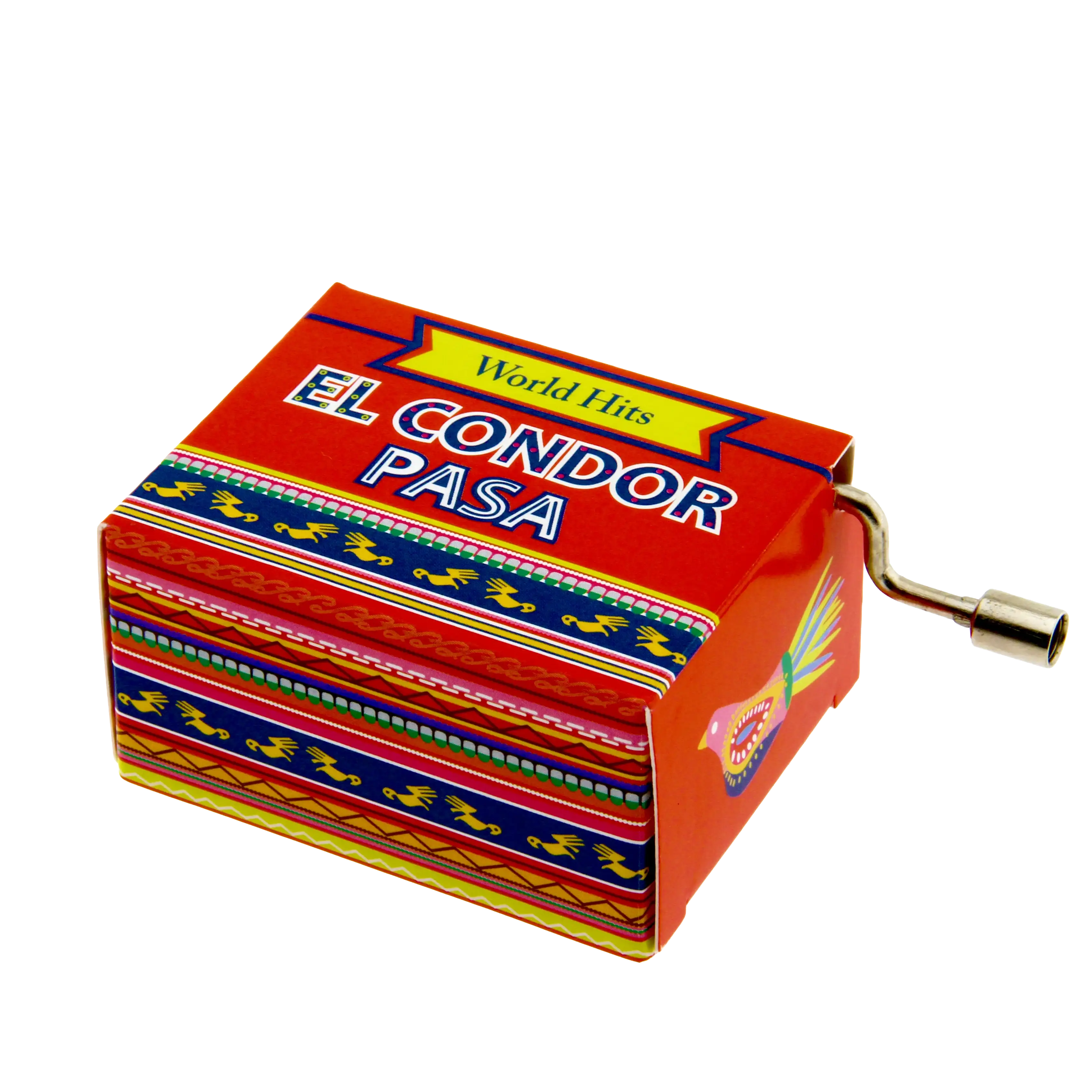
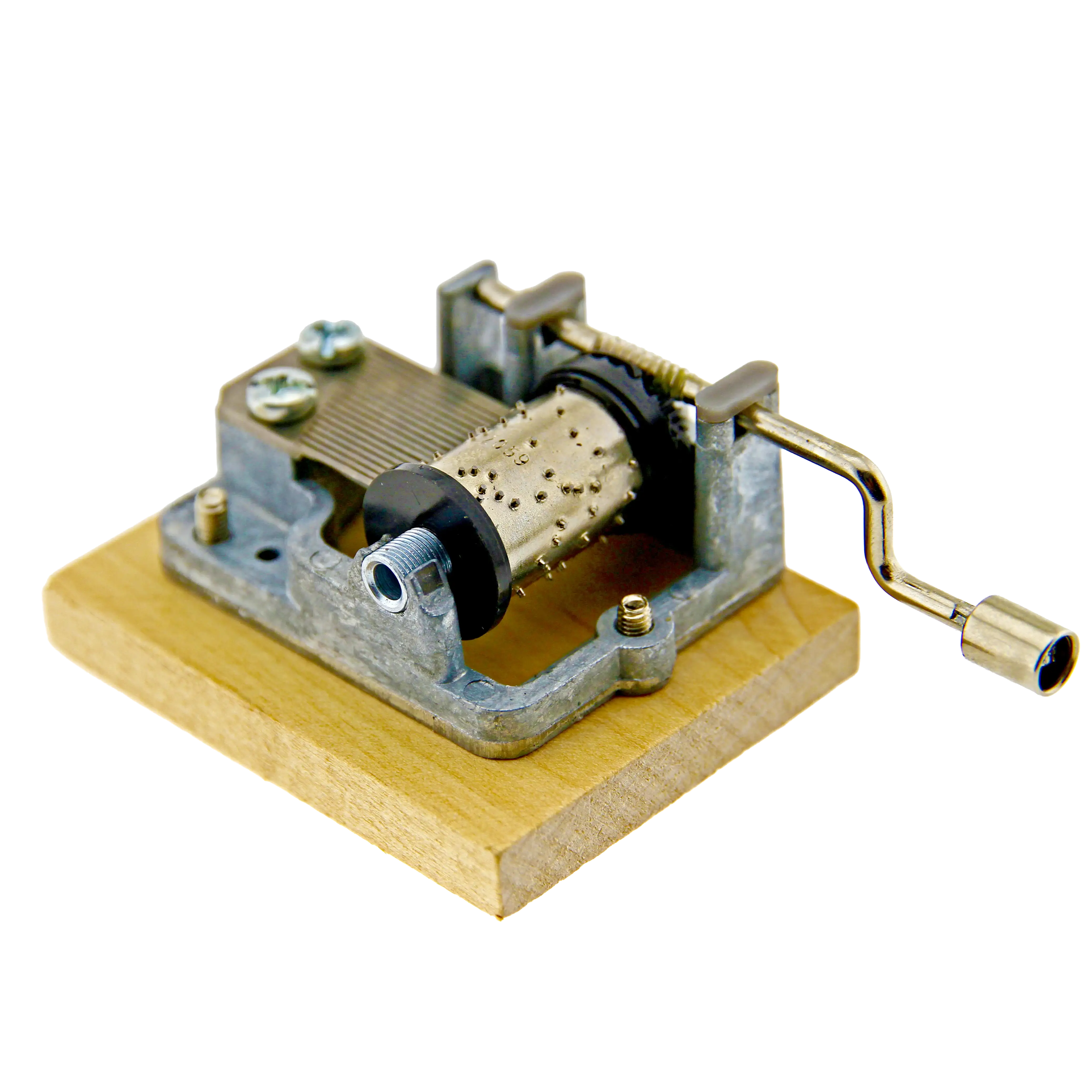
This mechanical music box plays a composition written in 1913 by Daniel Alomía Robles, a Peruvian musician who drew on Andean musical traditions to create a melody that would eventually reach audiences around the world. The piece evokes the image of condors soaring above mountain peaks — a vision translated into sound by the simplest mechanical means: a rotating cylinder studded with small metal pins, engaging a precisely calibrated metal comb.

How the mechanism works

Inside the wooden case sits a cylinder-and-comb mechanism, a design that has remained fundamentally unchanged for more than two centuries. A rotating cylinder, set with tiny metal pins, engages a metal comb as it turns. Turn the crank, and the pins pluck the teeth of the comb in a predetermined sequence — the same sequence every time you play it.

The wooden enclosure does far more than protect the delicate mechanism. It shapes the sound itself, adding warmth and resonance to the bright, crystalline tones that emerge from it. The three materials — wood, cardboard and metal — work together to create an acoustic character no electronic circuit could replicate: purely mechanical action translated directly into music.

Each performance lasts approximately 2 to 3 minutes, depending on how firmly you turn the crank. There is no pause button, no volume control. Once started, the melody unfolds at its own pace until the movement reaches its end.

The composition and its origins

The melody preserves Alomía Robles' original composition — the same arc, phrasing and emotional form that moved audiences across South America and eventually the world. This is not a simplified arrangement or fanciful interpretation. What emerges from this small box is the piece as it was written, rendered by mechanical means that entirely predate digital sound.

When you listen to this music box, you hear the direct result of metal engaging metal, of engineering and composition working together in real time. There is no recording, no digital file — only the immediate mechanical translation of a musical idea into sound.

Materials and construction

The box combines wood, cardboard and metal in a way that feels deliberate rather than economical. Each material contributes to the final result: wood provides structural support and acoustic warmth; cardboard offers protection and helps define the internal chamber; and the metal comb and pins produce the sound itself. The construction is compact enough to rest comfortably on a shelf or desk, yet substantial enough to function as both a working instrument and an object worthy of attention.

Use and care

Turn the crank gently and steadily, avoiding force beyond its natural resistance. Place the box on a hard surface — wood, glass or stone — rather than fabric or carpet, which muffle the sound. Music projects better when it has something solid beneath it to vibrate against.

Store it away from prolonged moisture and direct sunlight. Dust it occasionally with a soft, dry cloth. Handle it with the care you would give any mechanical object: avoid dropping it or shaking it vigorously. Keep it upright or in a stable position where it cannot tip over.

What's included

The music box arrives complete and ready to play. The mechanism is integrated and functional. No assembly required — just a gentle turn of the crank to begin.

This melody remains rooted in the Andean musical tradition from which it came, preserved now in a form that requires nothing more than a human hand to bring it to life.


Price: €8.09
SKU SU-42 Category Music Boxes

Music Box - El Cóndor Pasa — This mechanical music box plays the iconic melody composed in 1913 by Peruvian Daniel Alomía Robles, inspired by Andean folk music. The cylinder-and-metal-comb movement produces crystalline notes that faithfully render this Andean anthem, popularised worldwide by Simon & Garfunkel. Made in wood, cardboard and metal by Fridolin GmbH, it measures 8.5 × 4.5 × 3.0 cm and offers approximately 2 to 3 minutes of music per crank turn — ideal for collecting, decorating or sharing a moment of calm. A fragment of Andean musical heritage, hand-operated.

Origin Germany
Weight 0,07 kg
Dimensions 8,5 × 4,5 × 3,0 cm
Materials Cardboard - Metal - Wood
Category Folk songs
Audio Samples
El Cóndor Pasa

Caution: Not suitable for children under 3 years. Please supervise older children. Beware of swallowing small parts, strangulation, material allergies, sharp edges and points! Use only for sound generation. No liability for improper use.

Care: Extreme temperature fluctuations, humidity and direct sunlight can affect the lifespan. Please store in balanced humidity to prevent material changes, mold and corrosion. Remove dirt with a damp cloth. Dry after cleaning and each use.

Disposal: Please contact your local waste disposal authority for information on environmentally sound disposal!

Cet instrument vous a touché ? Faites-le découvrir.

La musique du monde se transmet — partagez cette découverte.

Music Box - El Cóndor Pasa

This mechanical music box plays a composition written in 1913 by Daniel Alomía Robles, a Peruvian musician who drew on Andean musical traditions to create a melody that would eventually reach audiences around the world. The piece evokes the image of condors soaring above mountain peaks — a vision translated into sound by the simplest mechanical means: a rotating cylinder studded with small metal pins, engaging a precisely calibrated metal comb.

How the mechanism works

Inside the wooden case sits a cylinder-and-comb mechanism, a design that has remained fundamentally unchanged for more than two centuries. A rotating cylinder, set with tiny metal pins, engages a metal comb as it turns. Turn the crank, and the pins pluck the teeth of the comb in a predetermined sequence — the same sequence every time you play it.

The wooden enclosure does far more than protect the delicate mechanism. It shapes the sound itself, adding warmth and resonance to the bright, crystalline tones that emerge from it. The three materials — wood, cardboard and metal — work together to create an acoustic character no electronic circuit could replicate: purely mechanical action translated directly into music.

Each performance lasts approximately 2 to 3 minutes, depending on how firmly you turn the crank. There is no pause button, no volume control. Once started, the melody unfolds at its own pace until the movement reaches its end.

The composition and its origins

The melody preserves Alomía Robles' original composition — the same arc, phrasing and emotional form that moved audiences across South America and eventually the world. This is not a simplified arrangement or fanciful interpretation. What emerges from this small box is the piece as it was written, rendered by mechanical means that entirely predate digital sound.

When you listen to this music box, you hear the direct result of metal engaging metal, of engineering and composition working together in real time. There is no recording, no digital file — only the immediate mechanical translation of a musical idea into sound.

Materials and construction

The box combines wood, cardboard and metal in a way that feels deliberate rather than economical. Each material contributes to the final result: wood provides structural support and acoustic warmth; cardboard offers protection and helps define the internal chamber; and the metal comb and pins produce the sound itself. The construction is compact enough to rest comfortably on a shelf or desk, yet substantial enough to function as both a working instrument and an object worthy of attention.

Use and care

Turn the crank gently and steadily, avoiding force beyond its natural resistance. Place the box on a hard surface — wood, glass or stone — rather than fabric or carpet, which muffle the sound. Music projects better when it has something solid beneath it to vibrate against.

Store it away from prolonged moisture and direct sunlight. Dust it occasionally with a soft, dry cloth. Handle it with the care you would give any mechanical object: avoid dropping it or shaking it vigorously. Keep it upright or in a stable position where it cannot tip over.

What's included

The music box arrives complete and ready to play. The mechanism is integrated and functional. No assembly required — just a gentle turn of the crank to begin.

This melody remains rooted in the Andean musical tradition from which it came, preserved now in a form that requires nothing more than a human hand to bring it to life.

Recently viewed

Comments (0)
No customer reviews for the moment.

You might also like