Music Box Smetana The Moldau
This mechanical music box plays the Vltava theme from Bedrich Smetana's symphonic cycle Má vlast (My Fatherland). The composition traces the river from its mountain sources through the landscape to Prague's High Castle, and the mechanical cylinder renders Smetana's orchestral depiction of flowing water, movement, and landmark passages into a miniature acoustic performance.
The Composition and Its Context
Smetana composed Má vlast as a cycle of six symphonic poems celebrating the geography and cultural identity of Bohemia. The Vltava movement is the most frequently performed section, known for its flowing melodic line that imitates the river's journey. The work belongs to the 19th-century tradition of program music — compositions designed to evoke specific scenes, narratives or natural phenomena through instrumental sound alone.
Remarkably, Smetana was deaf when he composed this work, having lost his hearing years earlier. The composition stands as a significant achievement in Romantic-era orchestral music and remains central to Czech musical identity.
How the Mechanical Music Box Works
The music box uses a cylinder mechanism — a metal drum studded with pins that catch and pluck the tuned metal tines of a comb as it rotates. This mechanical system translates the composer's orchestral score into a single melodic line, audible at a modest volume suitable for intimate listening or display.
The box is constructed from cardboard, metal, and wood. Its compact dimensions make it portable and suitable for placement on shelves, desks, or display cases.
Amplification and Resonance
The music box produces sound at a level appropriate to its size. To amplify the melody, place the box on a larger resonance body — a wooden table, chair, shelf, or percussion instrument such as a cajon. The resonating surface carries and projects the sound more effectively throughout a room, allowing the melody to be heard with greater presence without any electronic amplification.
What's Included
- The mechanical music box
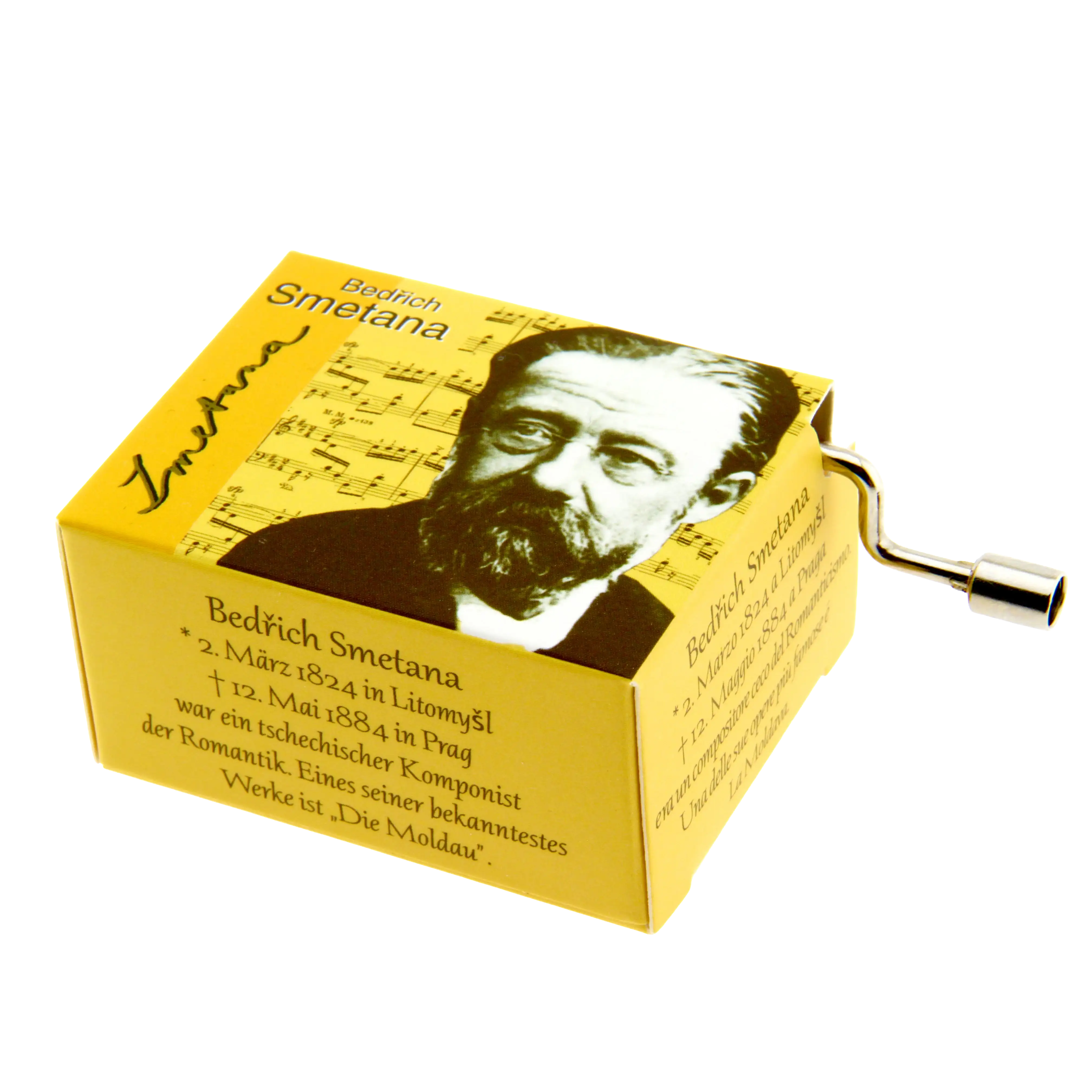
- Informative packaging that includes a portrait of Smetana and biographical text in German and English
Collector and Music Context
This music box appeals to collectors of mechanical instruments, enthusiasts of classical music, and those interested in Bohemian cultural heritage. The combination of the famous melody, historical composer portraiture, and mechanical craftsmanship makes it both a functional musical object and a curated artifact.
The Vltava remains one of the most recognizable works of 19th-century program music and continues to hold symbolic importance in Czech cultural tradition.
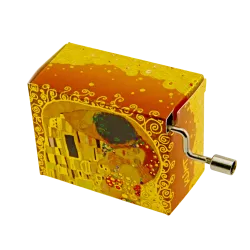
Music Box Smetana The Moldau — This mechanical music box plays the famous melody "The Moldau" from the Czech symphonic cycle "Má vlast" by Bedrich Smetana. The cylinder mechanism translates the orchestral grandeur into a miniature performance, whilst the portrait of Smetana accompanied by a biography in German and English enhances its collector appeal. Compact (8.5 × 4.5 × 3.0 cm) and manufactured in Germany, this mechanical instrument offers tactile access to one of the classics of 19th-century programme music. A charming object for classical music enthusiasts and collectors of mechanical instruments.
| Origin | Germany |
|---|---|
| Weight | 0,07 kg |
| Dimensions | 8,5 × 4,5 × 3,0 cm |
| Materials | Cardboard - Metal - Wood |
| Category | Classical music |
⚠Caution: Not suitable for children under 3 years. Please supervise older children. Beware of swallowing small parts, strangulation, material allergies, sharp edges and points! Use only for sound generation. No liability for improper use.
✦Care: Extreme temperature fluctuations, humidity and direct sunlight can affect the lifespan. Please store in balanced humidity to prevent material changes, mold and corrosion. Remove dirt with a damp cloth. Dry after cleaning and each use.
♻Disposal: Please contact your local waste disposal authority for information on environmentally sound disposal!
Music Box Smetana The Moldau
This mechanical music box plays the Vltava theme from Bedrich Smetana's symphonic cycle Má vlast (My Fatherland). The composition traces the river from its mountain sources through the landscape to Prague's High Castle, and the mechanical cylinder renders Smetana's orchestral depiction of flowing water, movement, and landmark passages into a miniature acoustic performance.
The Composition and Its Context
Smetana composed Má vlast as a cycle of six symphonic poems celebrating the geography and cultural identity of Bohemia. The Vltava movement is the most frequently performed section, known for its flowing melodic line that imitates the river's journey. The work belongs to the 19th-century tradition of program music — compositions designed to evoke specific scenes, narratives or natural phenomena through instrumental sound alone.
Remarkably, Smetana was deaf when he composed this work, having lost his hearing years earlier. The composition stands as a significant achievement in Romantic-era orchestral music and remains central to Czech musical identity.
How the Mechanical Music Box Works
The music box uses a cylinder mechanism — a metal drum studded with pins that catch and pluck the tuned metal tines of a comb as it rotates. This mechanical system translates the composer's orchestral score into a single melodic line, audible at a modest volume suitable for intimate listening or display.
The box is constructed from cardboard, metal, and wood. Its compact dimensions make it portable and suitable for placement on shelves, desks, or display cases.
Amplification and Resonance
The music box produces sound at a level appropriate to its size. To amplify the melody, place the box on a larger resonance body — a wooden table, chair, shelf, or percussion instrument such as a cajon. The resonating surface carries and projects the sound more effectively throughout a room, allowing the melody to be heard with greater presence without any electronic amplification.
What's Included
- The mechanical music box
- Informative packaging that includes a portrait of Smetana and biographical text in German and English
Collector and Music Context
This music box appeals to collectors of mechanical instruments, enthusiasts of classical music, and those interested in Bohemian cultural heritage. The combination of the famous melody, historical composer portraiture, and mechanical craftsmanship makes it both a functional musical object and a curated artifact.
The Vltava remains one of the most recognizable works of 19th-century program music and continues to hold symbolic importance in Czech cultural tradition.

Your review appreciation cannot be sent
Report comment
Report sent
Your report cannot be sent
Write your review
Review sent
Your review cannot be sent