Music Box Bach Badinerie
Music Box Bach Badinerie — Bach: Badinerie
A mechanical music box that plays one of the Baroque era's most recognisable dance pieces: Johann Sebastian Bach's "Badinerie" from the Suite for Orchestra No. 2 in B minor. Turning the crank sets a cylindrical mechanism in motion, producing the melody without electricity or batteries.
The Composition
"Badinerie" — the word itself means playful banter — is a lively, spirited piece from Bach's instrumental catalogue. The melody is instantly familiar to many listeners, even those with little classical training, making this music box an effective introduction to Baroque composition for children and a nostalgic object for those already acquainted with the work.
Mechanical Construction
The music box uses a pin-cylinder mechanism mounted on a wooden resonating body. The cylinder, fitted with precisely placed pins, engages with a tuned comb as it rotates, producing individual notes in sequence. Materials include cardboard for the decorative exterior, metal for the mechanical components, and wood for structural support and resonance.
Amplification Through Resonance
The sound emerges relatively softly from the compact mechanism. To increase volume and richness, remove the music box from its decorated housing and place it directly on a wooden surface — a table, shelf, or wooden box. The larger resonating body amplifies the melody, transforming the delicate mechanical sound into something fuller and more present without any additional equipment.
Context and History
Bach spent 27 years in Leipzig as cantor, directing music at the city's four principal churches and composing much of his sacred output for those venues. His secular works, including dance-like pieces such as "Badinerie," were performed in Leipzig's coffee houses — settings where instrumental suites found an eager, informal audience. The music box itself represents a later technological tradition, one that brought composed melodies into domestic spaces during the 18th and 19th centuries through mechanical rather than performed means.
What's Included
The music box arrives in its decorated cardboard housing, ready to operate. No assembly, winding key, or external power source is required — only manual operation of the hand crank.
This piece occupies a particular niche in Bach's output: secular, dance-like, and designed for social rather than liturgical contexts.

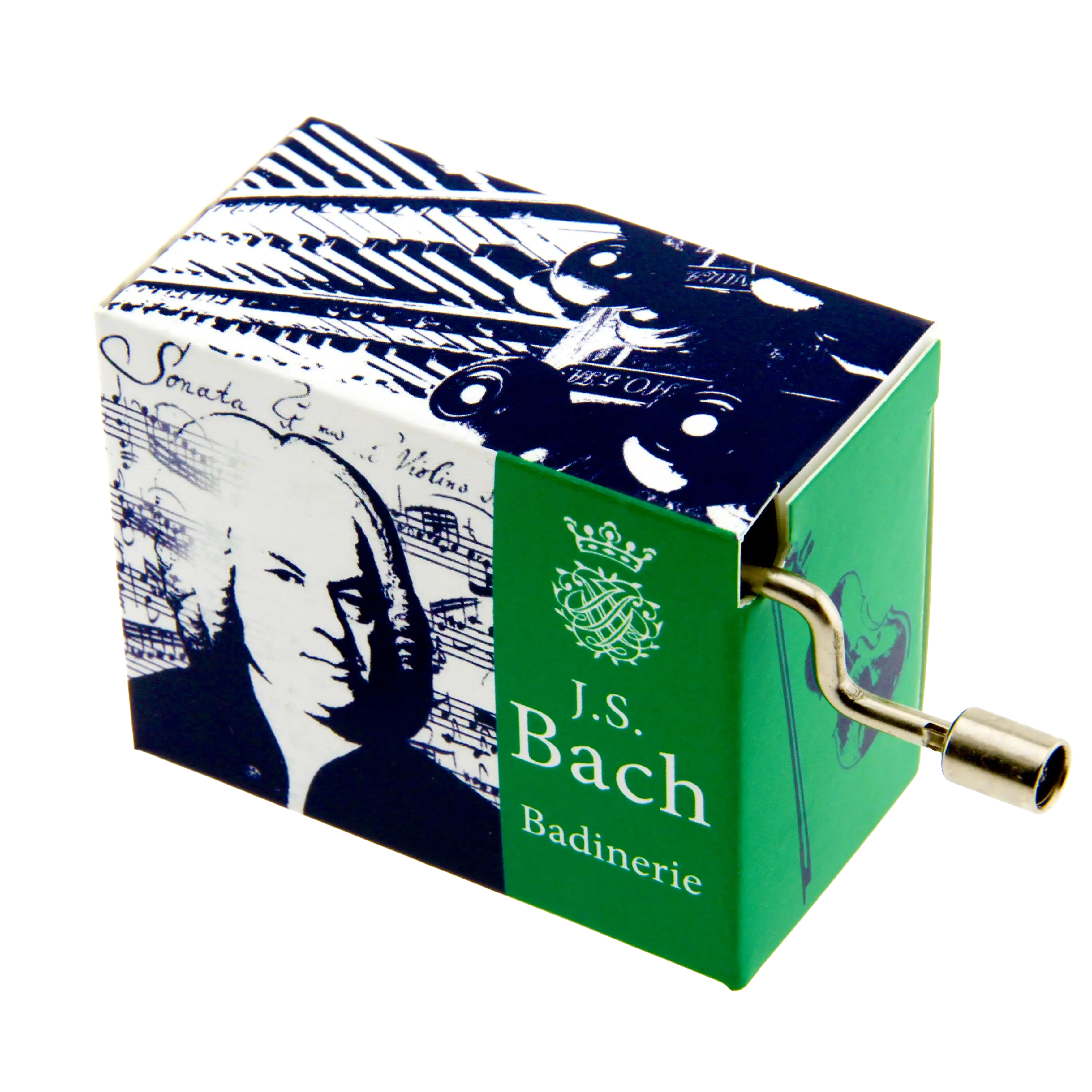
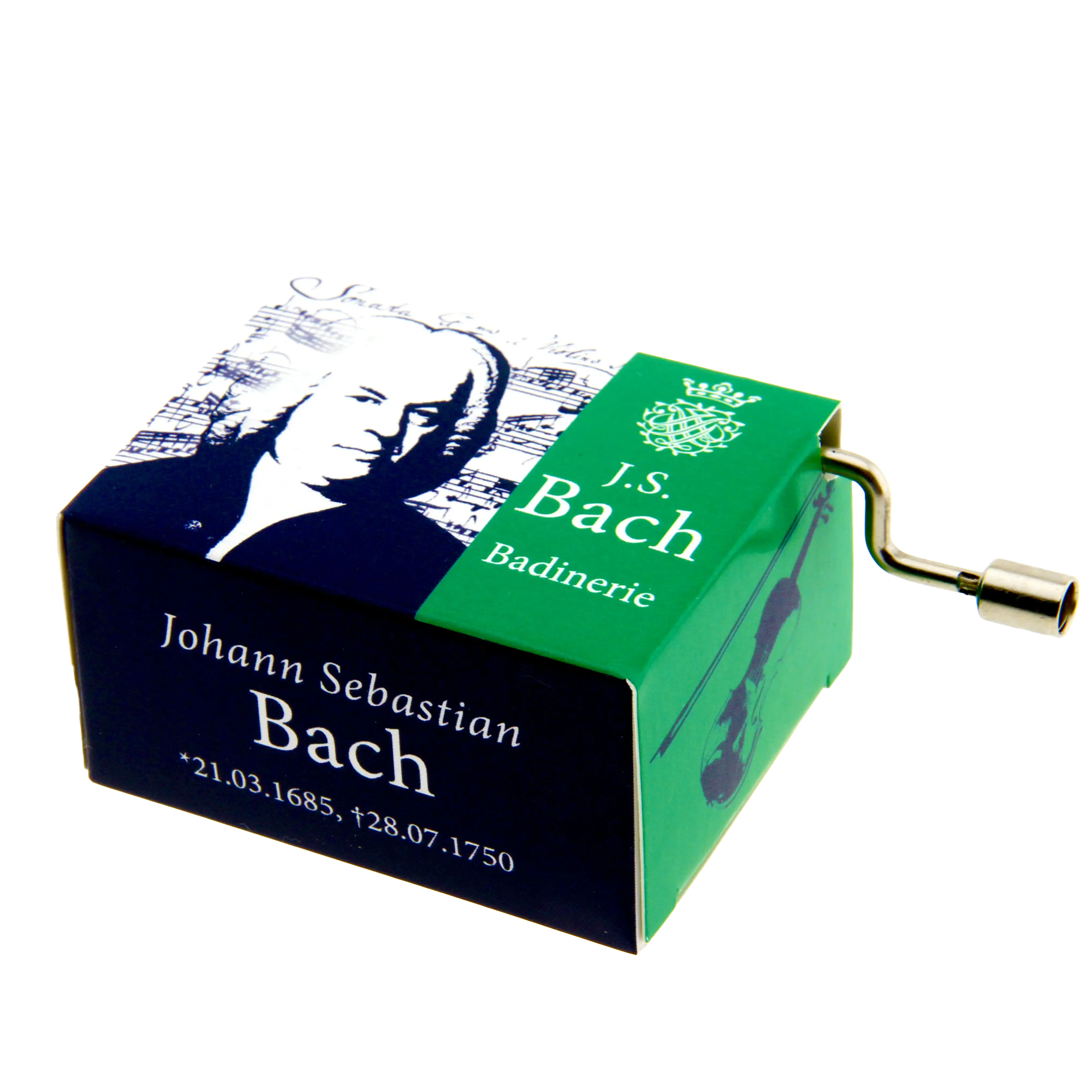
Music Box Bach Badinerie — This mechanical music box plays the famous "Badinerie" from Bach's Suite for Orchestra No. 2 in B minor (BWV 1067), a lively and playful piece from the Baroque repertoire. Manufactured in Germany with a cylinder mechanism screwed onto resonant wood, it produces the distinctive notes of this composition without electricity or batteries. The design features a portrait of Johann Sebastian Bach. Amplifiable: remove the mechanism from its case and place it on a wooden surface to transform your table or shelf into a resonance chamber. Perfect for introducing children to classical music, as a gift for musicians, or for creating moments of mechanical calm away from screens. A window onto Baroque genius, activated by a simple turn of the crank.
| Origin | Germany |
|---|---|
| Weight | 0,07 kg |
| Dimensions | 8,5 × 4,5 × 3,0 cm |
| Materials | Cardboard - Metal - Wood |
| Category | Classical music |
⚠Caution: Not suitable for children under 3 years. Please supervise older children. Beware of swallowing small parts, strangulation, material allergies, sharp edges and points! Use only for sound generation. No liability for improper use.
✦Care: Extreme temperature fluctuations, humidity and direct sunlight can affect the lifespan. Please store in balanced humidity to prevent material changes, mold and corrosion. Remove dirt with a damp cloth. Dry after cleaning and each use.
♻Disposal: Please contact your local waste disposal authority for information on environmentally sound disposal!
Music Box Bach Badinerie — Bach: Badinerie
A mechanical music box that plays one of the Baroque era's most recognisable dance pieces: Johann Sebastian Bach's "Badinerie" from the Suite for Orchestra No. 2 in B minor. Turning the crank sets a cylindrical mechanism in motion, producing the melody without electricity or batteries.
The Composition
"Badinerie" — the word itself means playful banter — is a lively, spirited piece from Bach's instrumental catalogue. The melody is instantly familiar to many listeners, even those with little classical training, making this music box an effective introduction to Baroque composition for children and a nostalgic object for those already acquainted with the work.
Mechanical Construction
The music box uses a pin-cylinder mechanism mounted on a wooden resonating body. The cylinder, fitted with precisely placed pins, engages with a tuned comb as it rotates, producing individual notes in sequence. Materials include cardboard for the decorative exterior, metal for the mechanical components, and wood for structural support and resonance.
Amplification Through Resonance
The sound emerges relatively softly from the compact mechanism. To increase volume and richness, remove the music box from its decorated housing and place it directly on a wooden surface — a table, shelf, or wooden box. The larger resonating body amplifies the melody, transforming the delicate mechanical sound into something fuller and more present without any additional equipment.
Context and History
Bach spent 27 years in Leipzig as cantor, directing music at the city's four principal churches and composing much of his sacred output for those venues. His secular works, including dance-like pieces such as "Badinerie," were performed in Leipzig's coffee houses — settings where instrumental suites found an eager, informal audience. The music box itself represents a later technological tradition, one that brought composed melodies into domestic spaces during the 18th and 19th centuries through mechanical rather than performed means.
What's Included
The music box arrives in its decorated cardboard housing, ready to operate. No assembly, winding key, or external power source is required — only manual operation of the hand crank.
This piece occupies a particular niche in Bach's output: secular, dance-like, and designed for social rather than liturgical contexts.

Your review appreciation cannot be sent
Report comment
Report sent
Your report cannot be sent
Write your review
Review sent
Your review cannot be sent