Music Box - Mozart: Eine kleine Nachtmusik

Price: €8.09
SKU SU-22 Category Music Boxes

Music Box - Mozart: Eine kleine Nachtmusik — Mozart : Eine kleine Nachtmusik

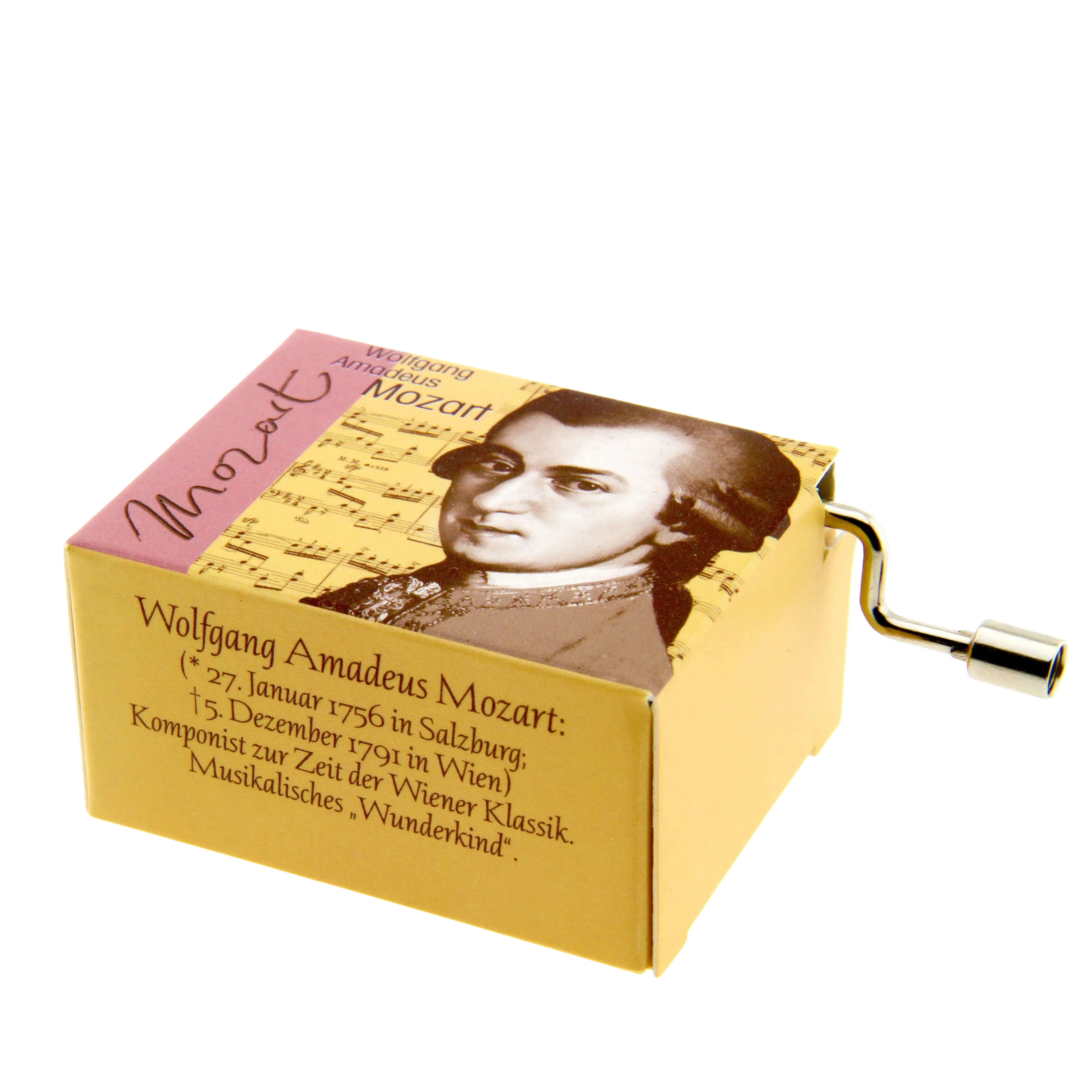
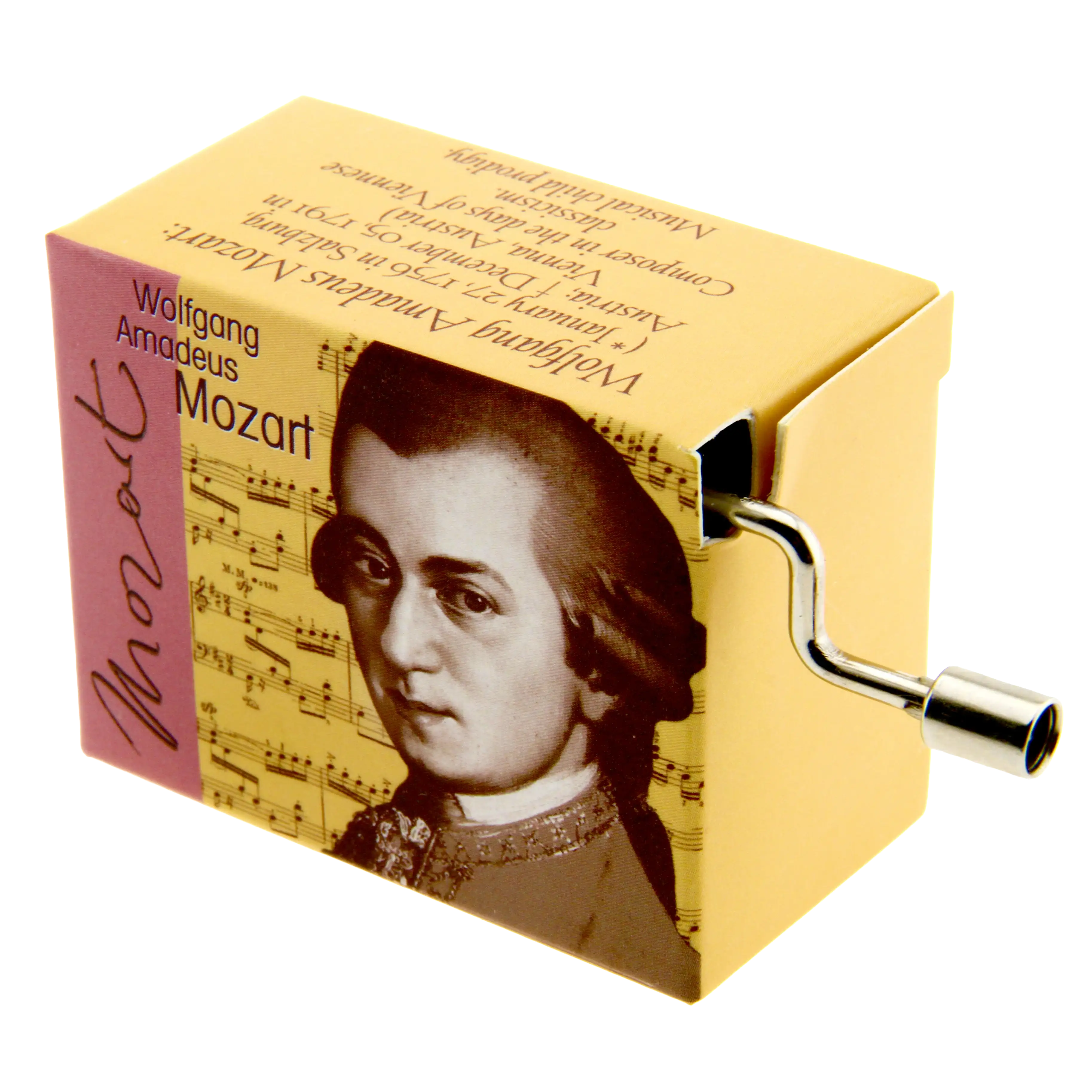
This mechanical music box plays Wolfgang Amadeus Mozart's Eine kleine Nachtmusik (A Little Night Music), the Serenade No. 13 composed in 1787, by means of a hand crank mechanism. The piece remained largely unknown until around 1900, when it began to enter concert repertoire; today it is among Mozart's most recognizable works. Operating the crank sets metal tuned teeth in motion, producing the characteristic bright, precise tones of traditional mechanical music production.

How It Works

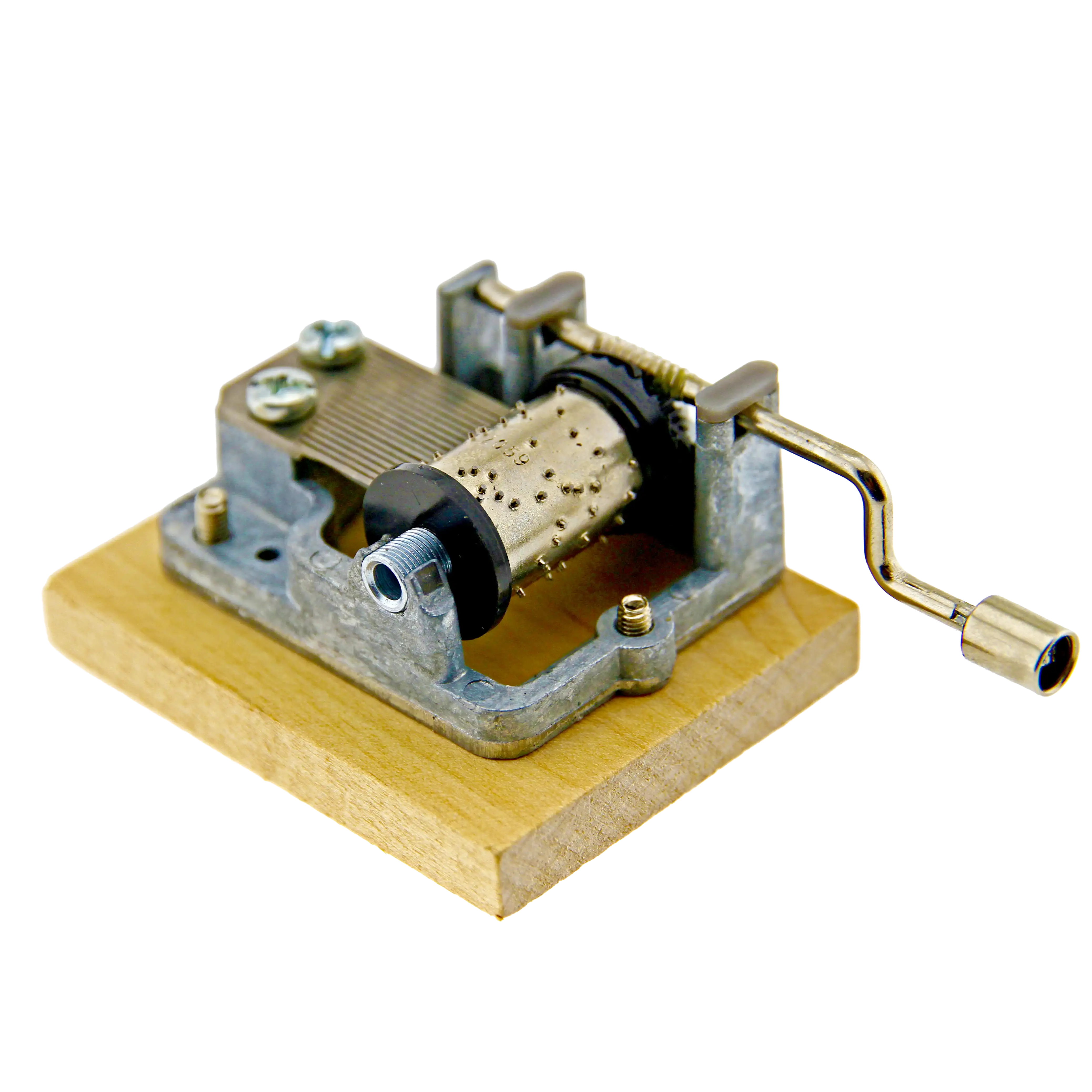
The music box operates without batteries or electricity. A turn of the crank drives a pinned cylinder that plucks a series of precisely tuned metal teeth, each calibrated to a specific pitch. The result is a clean, mechanical rendition of the melody—neither amplified nor electronically processed, but shaped entirely by the physical interaction between the rotating cylinder and the metal tines.

The volume and tonal fullness increase noticeably when the music box is placed on a larger resonating surface—a wooden shelf, a chair seat, or a box—rather than held in the hand. The surrounding material acts as a sounding board, allowing the small mechanism's output to project more fully into the room.

Construction and Materials

The mechanism is housed in a compact wooden and cardboard enclosure with metal internal components. The precision engineering reflects the traditional German approach to mechanical music manufacture, where the accuracy of metal teeth and cylinder calibration directly determines the clarity and accuracy of pitch reproduction.

What's Included

  • The music box with hand crank mechanism
  • Ready to play—no assembly, batteries or external power required

Musical and Cultural Context

Mechanical music boxes represent one of the oldest forms of automated musical performance, predating electric sound reproduction by more than a century. They were common in European homes and public spaces from the 18th century onward, making concert music and popular melodies accessible to people without access to live musicians. Mozart's serenade, with its clear melodic line and moderate tempo, translates well to the mechanical format—the piece's structure suits the inherent character of the medium rather than fighting against it.

The music box remains a functional link to mechanical music traditions that shaped how people experienced melody before electronic reproduction.

Price: €8.09
SKU SU-22 Category Music Boxes

Music Box - Mozart: Eine kleine Nachtmusik — This mechanical hand-crank music box reproduces Mozart's famous Serenade No. 13, composed in 1787. The traditional German mechanism operates precision metal tines that create the characteristic bright tones of authentic mechanical music. Compact (8.5 × 4.5 × 3.0 cm), it combines functional engineering and elegant design, serving both as an interactive instrument and a decorative object. Ideal for introducing children to classical music, creating moments of calm, or enriching a collection. No batteries required — a simple turn of the crank is all it takes. Each turn connects you to centuries of mechanical musical tradition.

Origin Germany
Weight 0,07 kg
Dimensions 8,5 × 4,5 × 3,0 cm
Materials Wood - Cardboard - Metal
Category Classical music
Audio Samples
Mozart - Eine kleine Nachtmusik

Caution: Not suitable for children under 3 years. Please supervise older children. Beware of swallowing small parts, strangulation, material allergies, sharp edges and points! Use only for sound generation. No liability for improper use.

Care: Extreme temperature fluctuations, humidity and direct sunlight can affect the lifespan. Please store in balanced humidity to prevent material changes, mold and corrosion. Remove dirt with a damp cloth. Dry after cleaning and each use.

Disposal: Please contact your local waste disposal authority for information on environmentally sound disposal!

Cet instrument vous a touché ? Faites-le découvrir.

La musique du monde se transmet — partagez cette découverte.

Music Box - Mozart: Eine kleine Nachtmusik — Mozart : Eine kleine Nachtmusik

This mechanical music box plays Wolfgang Amadeus Mozart's Eine kleine Nachtmusik (A Little Night Music), the Serenade No. 13 composed in 1787, by means of a hand crank mechanism. The piece remained largely unknown until around 1900, when it began to enter concert repertoire; today it is among Mozart's most recognizable works. Operating the crank sets metal tuned teeth in motion, producing the characteristic bright, precise tones of traditional mechanical music production.

How It Works

The music box operates without batteries or electricity. A turn of the crank drives a pinned cylinder that plucks a series of precisely tuned metal teeth, each calibrated to a specific pitch. The result is a clean, mechanical rendition of the melody—neither amplified nor electronically processed, but shaped entirely by the physical interaction between the rotating cylinder and the metal tines.

The volume and tonal fullness increase noticeably when the music box is placed on a larger resonating surface—a wooden shelf, a chair seat, or a box—rather than held in the hand. The surrounding material acts as a sounding board, allowing the small mechanism's output to project more fully into the room.

Construction and Materials

The mechanism is housed in a compact wooden and cardboard enclosure with metal internal components. The precision engineering reflects the traditional German approach to mechanical music manufacture, where the accuracy of metal teeth and cylinder calibration directly determines the clarity and accuracy of pitch reproduction.

What's Included

  • The music box with hand crank mechanism
  • Ready to play—no assembly, batteries or external power required

Musical and Cultural Context

Mechanical music boxes represent one of the oldest forms of automated musical performance, predating electric sound reproduction by more than a century. They were common in European homes and public spaces from the 18th century onward, making concert music and popular melodies accessible to people without access to live musicians. Mozart's serenade, with its clear melodic line and moderate tempo, translates well to the mechanical format—the piece's structure suits the inherent character of the medium rather than fighting against it.

The music box remains a functional link to mechanical music traditions that shaped how people experienced melody before electronic reproduction.
Recently viewed

Comments (0)
No customer reviews for the moment.

You might also like