Music Box - Beethoven - Fur Elise
This hand-crank music box plays Beethoven's "Für Elise," the romantic piano composition written in 1810. Turning the crank produces a delicate, crystalline sound that unfolds measure by measure as the mechanism advances the pinned cylinder beneath the tuned metal tines.
How It Works
The music box operates on a simple mechanical principle: the crank drives a rotating cylinder studded with pins. As the cylinder turns, the pins pluck individual tines of a metal comb, each tuned to a specific pitch. The result is a tinny, nostalgic rendition of the famous melody—intimate and direct, without amplification or electricity.
The sound remains thin when the box sits alone on a table. However, placing it on any large resonant surface—a wooden chair, shelf, or tabletop—causes the entire surface to vibrate in sympathy. This transforms the delicate tones into something fuller and more present in the room, a practical acoustic principle that has been exploited by music box makers for centuries.
The Composition and Its Mystery
Ludwig van Beethoven composed "Für Elise" in 1810, yet the identity of the woman for whom it was written has never been conclusively established. The piece exists in various scholarly interpretations and competing theories about its dedicatee, but no definitive historical record resolves the question. This ambiguity has only deepened the melody's romantic appeal over two centuries.
Construction and Presentation
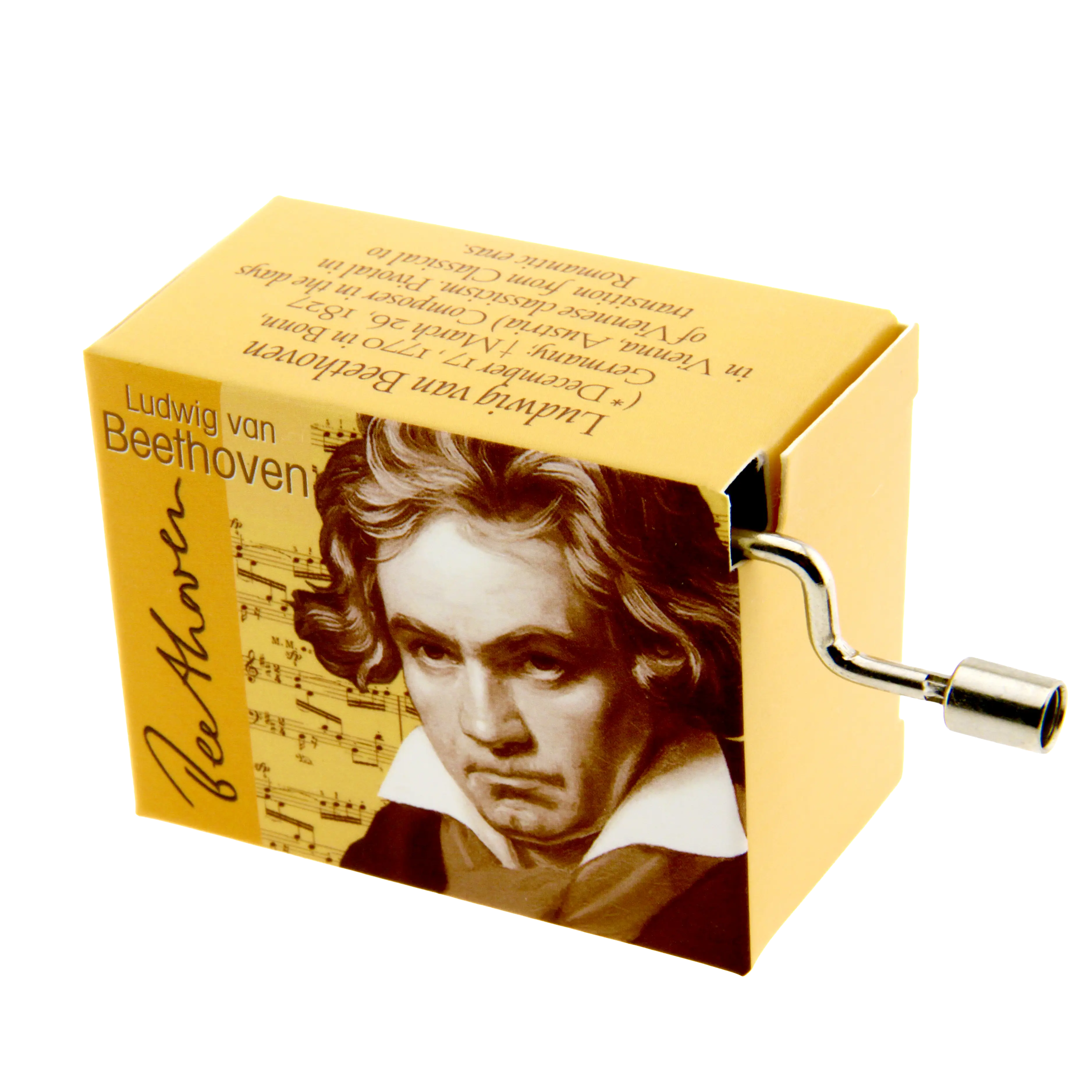
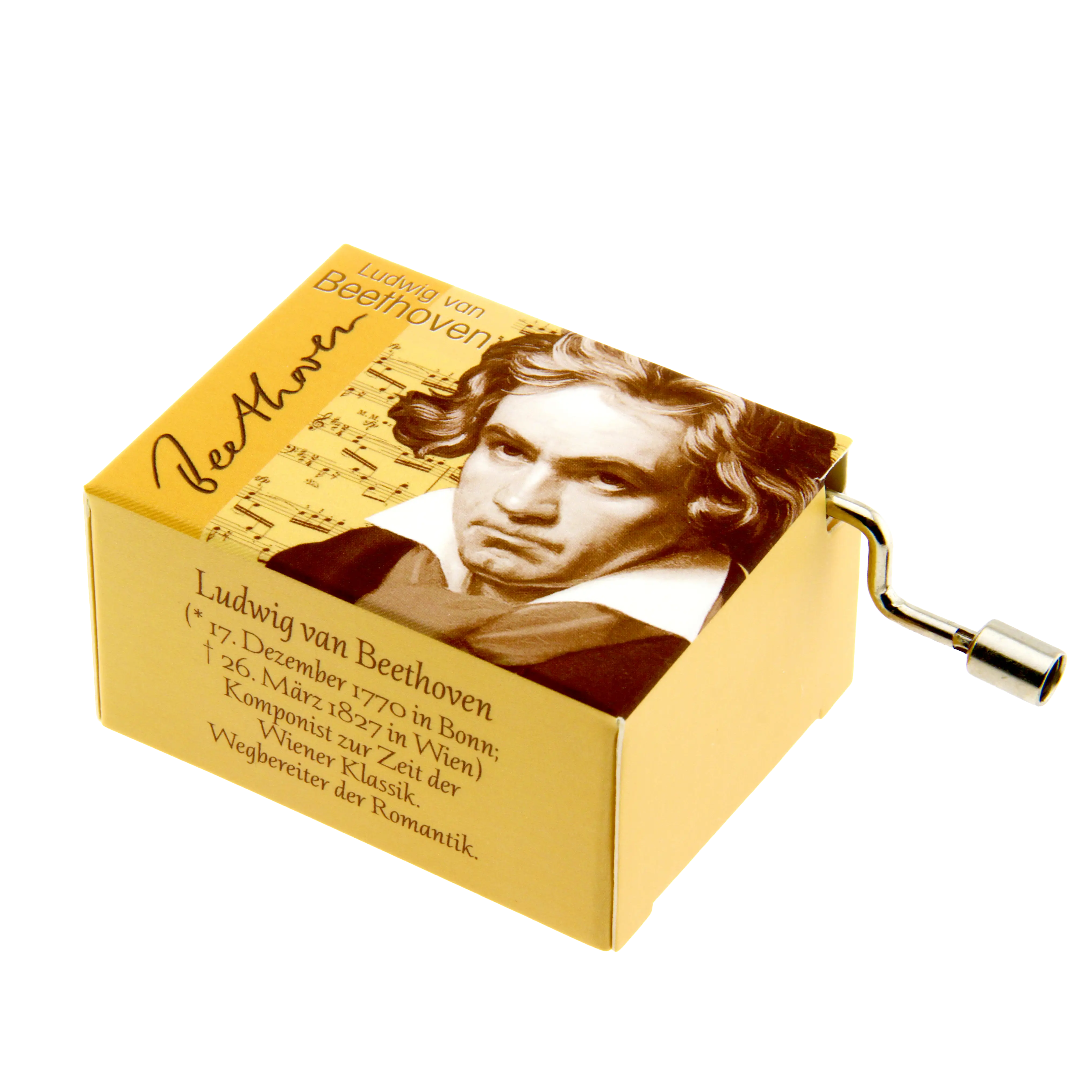
The mechanism is housed in a printed cardboard case featuring a portrait of Beethoven. The box is compact and portable—small enough to fit on a shelf or into a traveler's bag. The cardboard housing serves both as protection for the delicate internal mechanism and as the presentation vessel, making it suitable for display or gift-giving.
Use and Care
Operation requires nothing more than turning the crank by hand. The mechanism is designed for regular use. The portable format means it can be played anywhere—at home, in a study, or while traveling—and requires no maintenance beyond keeping the mechanism free of dust and avoiding exposure to excessive moisture.
The music box remains a fixture in European homes and collector's cabinets, valued equally by classical music enthusiasts and those drawn to the tactile ritual of hand-wound mechanical sound.

Music Box - Beethoven - Fur Elise — Turn the crank and hear one of music's most beloved melodies emerge from a compact mechanical device. This hand-cranked music box plays Beethoven's "Für Elise," the romantic composition from 1810, with a delicate, tinkling tone that grows richer when placed on a resonant wooden surface. Housed in a printed cardboard case featuring Beethoven's portrait and measuring just 8.5 cm wide, it's equally at home on a shelf, desk, or in a traveler's bag. Made in Germany with a robust mechanism built for regular use, this mechanical curiosity appeals to classical music lovers, collectors of hand-cranked instruments, and anyone drawn to the nostalgic ritual of winding music by hand. A piece of mechanical history that brings a moment of quiet affection into any room.
⚠Caution: Not suitable for children under 3 years. Please supervise older children. Beware of swallowing small parts, strangulation, material allergies, sharp edges and points! Use only for sound generation. No liability for improper use.
✦Care: Extreme temperature fluctuations, humidity and direct sunlight can affect the lifespan. Please store in balanced humidity to prevent material changes, mold and corrosion. Remove dirt with a damp cloth. Dry after cleaning and each use.
♻Disposal: Please contact your local waste disposal authority for information on environmentally sound disposal!
Music Box - Beethoven - Fur Elise
This hand-crank music box plays Beethoven's "Für Elise," the romantic piano composition written in 1810. Turning the crank produces a delicate, crystalline sound that unfolds measure by measure as the mechanism advances the pinned cylinder beneath the tuned metal tines.
How It Works
The music box operates on a simple mechanical principle: the crank drives a rotating cylinder studded with pins. As the cylinder turns, the pins pluck individual tines of a metal comb, each tuned to a specific pitch. The result is a tinny, nostalgic rendition of the famous melody—intimate and direct, without amplification or electricity.
The sound remains thin when the box sits alone on a table. However, placing it on any large resonant surface—a wooden chair, shelf, or tabletop—causes the entire surface to vibrate in sympathy. This transforms the delicate tones into something fuller and more present in the room, a practical acoustic principle that has been exploited by music box makers for centuries.
The Composition and Its Mystery
Ludwig van Beethoven composed "Für Elise" in 1810, yet the identity of the woman for whom it was written has never been conclusively established. The piece exists in various scholarly interpretations and competing theories about its dedicatee, but no definitive historical record resolves the question. This ambiguity has only deepened the melody's romantic appeal over two centuries.
Construction and Presentation
The mechanism is housed in a printed cardboard case featuring a portrait of Beethoven. The box is compact and portable—small enough to fit on a shelf or into a traveler's bag. The cardboard housing serves both as protection for the delicate internal mechanism and as the presentation vessel, making it suitable for display or gift-giving.
Use and Care
Operation requires nothing more than turning the crank by hand. The mechanism is designed for regular use. The portable format means it can be played anywhere—at home, in a study, or while traveling—and requires no maintenance beyond keeping the mechanism free of dust and avoiding exposure to excessive moisture.
The music box remains a fixture in European homes and collector's cabinets, valued equally by classical music enthusiasts and those drawn to the tactile ritual of hand-wound mechanical sound.

Your review appreciation cannot be sent
Report comment
Report sent
Your report cannot be sent
Write your review
Review sent
Your review cannot be sent