Maracas Gourd
Maracas Gourd
A maraca carved from dried bottle gourd and filled with small beans produces a bright, articulate rattle sound suited to rhythmic accompaniment across many musical traditions. Each instrument is handmade, and the natural variation in gourd shape and wall thickness means no two sound identical.
Sound and Playing Characteristics
The beans inside generate a loud, pointed sound with clear attack. Light shaking produces a soft rustling; more vigorous movement creates sharp, driving accents. The curved gourd shape fits the hand naturally, allowing fluid control over dynamics and texture without requiring grip adjustment.
In the Andes, maracas are traditionally played singly in religious ceremonies. In Caribbean contexts, they are paired to drive dance rhythms. A single instrument can serve either role depending on how it is played and what it accompanies.
Construction and Finish
The process begins after harvest with careful drying of the gourd. Artisans then darken the light brown surface by burning wood across it, creating a deep brown or blackened finish. Once darkened, they engrave motifs into the surface—geometric patterns, animals, plants, and human figures drawn from Andean mountain life and daily experience.
This engraving serves both aesthetic and functional purposes: the carved lines provide subtle texture and visual identity while the darkening process hardens the gourd skin, improving durability and tonal consistency.
Cultural Context
Rattles occupy a central place in South American Andean musical and ceremonial life, where they mark rhythm and punctuate sacred moments. The decorative motifs reflect the maker's environment and cultural knowledge, making each maraca a record of place and tradition.
Getting Started
The instrument arrives ready to play. Grip the handle lightly and experiment with wrist movement to find the dynamic range—from whisper-soft to full volume. Many players find that small circular motions of the wrist produce sustained, flowing sound, while sharper up-and-down strokes create punctuated accents.
The maraca remains a fundamental voice in Andean ceremony and Caribbean dance, and continues to serve educational and meditative contexts worldwide.
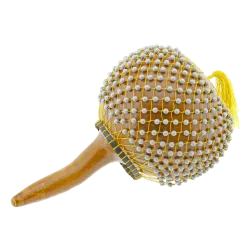
Maracas Gourd — Traditional percussion instrument crafted from a dried gourd filled with seeds and mounted in netting. This African instrument produces an authentic and bright sound, ideal for accompanying world music rhythms, educational settings or meditation practices. The ergonomic shape fits comfortably in the hand, allowing a wide range of playing techniques, from delicate whispers to pronounced accents. Connect with an ancestral musical tradition with an instrument ready to play.
| Origin | Peru |
|---|---|
| Weight | 0,10 kg |
| Dimensions | 16,0 cm |
| Materials | Gourd |
⚠Caution: Not suitable for children under 3 years. Please supervise older children. Beware of swallowing small parts, strangulation, material allergies, sharp edges and points! Use only for sound generation. No liability for improper use.
✦Care: Extreme temperature fluctuations, humidity and direct sunlight can affect the lifespan. Please store in balanced humidity to prevent material changes, mold and corrosion. Remove dirt with a damp cloth. Dry after cleaning and each use.
♻Disposal: Please contact your local waste disposal authority for information on environmentally sound disposal!
Maracas Gourd
A maraca carved from dried bottle gourd and filled with small beans produces a bright, articulate rattle sound suited to rhythmic accompaniment across many musical traditions. Each instrument is handmade, and the natural variation in gourd shape and wall thickness means no two sound identical.
Sound and Playing Characteristics
The beans inside generate a loud, pointed sound with clear attack. Light shaking produces a soft rustling; more vigorous movement creates sharp, driving accents. The curved gourd shape fits the hand naturally, allowing fluid control over dynamics and texture without requiring grip adjustment.
In the Andes, maracas are traditionally played singly in religious ceremonies. In Caribbean contexts, they are paired to drive dance rhythms. A single instrument can serve either role depending on how it is played and what it accompanies.
Construction and Finish
The process begins after harvest with careful drying of the gourd. Artisans then darken the light brown surface by burning wood across it, creating a deep brown or blackened finish. Once darkened, they engrave motifs into the surface—geometric patterns, animals, plants, and human figures drawn from Andean mountain life and daily experience.
This engraving serves both aesthetic and functional purposes: the carved lines provide subtle texture and visual identity while the darkening process hardens the gourd skin, improving durability and tonal consistency.
Cultural Context
Rattles occupy a central place in South American Andean musical and ceremonial life, where they mark rhythm and punctuate sacred moments. The decorative motifs reflect the maker's environment and cultural knowledge, making each maraca a record of place and tradition.
Getting Started
The instrument arrives ready to play. Grip the handle lightly and experiment with wrist movement to find the dynamic range—from whisper-soft to full volume. Many players find that small circular motions of the wrist produce sustained, flowing sound, while sharper up-and-down strokes create punctuated accents.
The maraca remains a fundamental voice in Andean ceremony and Caribbean dance, and continues to serve educational and meditative contexts worldwide.
Your review appreciation cannot be sent
Report comment
Report sent
Your report cannot be sent
Write your review
Review sent
Your review cannot be sent