Birdcall Eurasian Curlew
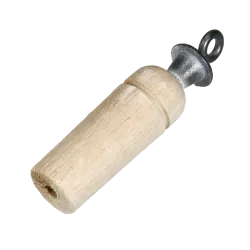
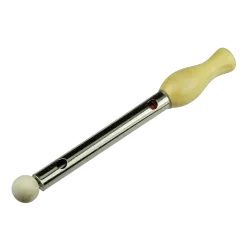
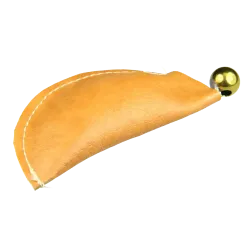
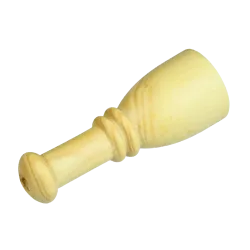
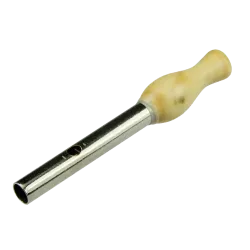
This small French bird call reproduces the distinctive call of the Eurasian curlew, a species whose song has become increasingly rare to hear in the field. The instrument produces the characteristic "ghuu-uh" sound by blowing air through the whistle and modulating the pitch with your finger at the end of the bore, allowing you to capture the bird's almost mournful inflection.
Construction and Materials
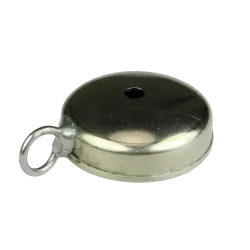
The bird call is crafted from boxwood with nickel fittings, a combination that provides both durability and acoustic clarity. The dense grain of boxwood contributes to the instrument's ability to project sound with precision, while the nickel hardware ensures the whistle maintains its response through regular use.
Sound and Playing Technique
Sound production depends on steady breath control and subtle finger movement. You blow gently into the mouthpiece to initiate the base tone, then vary the pitch by adjusting your finger position over the end of the instrument. This simple but responsive mechanism allows you to approximate the curlew's characteristic falling cadence and the slight wavering quality of its natural call.
Practical Applications
Beyond ornithological observation, the bird call functions as an effective signalling device. Its loud, penetrating sound carries well outdoors and naturally draws attention, making it useful in contexts where a distinctive acoustic marker is needed. The call's distinctiveness ensures it cuts through ambient noise without requiring great force.
The bird call remains a working tool for naturalists and birdwatchers across France and Europe, valued for its fidelity to a species whose voice has become part of cultural memory as much as natural heritage.
Birdcall Eurasian Curlew — Traditional French call instrument faithfully reproducing the distinctive song of the Eurasian curlew. Crafted from polished boxwood and nickel, this small portable instrument produces an authentic and powerful sound, perfect for birdwatching, nature education and sound applications. Ideal for European wildlife enthusiasts and naturalists.
| Origin | France |
|---|---|
| Weight | 0,03 kg |
| Dimensions | 8,5 × 1,9 × 1,9 cm |
| Materials | Boxwood - Nickel |
| Species | Eurasian Curlew |
⚠Caution: Not suitable for children under 3 years. Please supervise older children. Beware of swallowing small parts, strangulation, material allergies, sharp edges and points! Use only for sound generation. No liability for improper use.
✦Care: Extreme temperature fluctuations, humidity and direct sunlight can affect the lifespan. Please store in balanced humidity to prevent material changes, mold and corrosion. Remove dirt with a damp cloth. Dry after cleaning and each use.
♻Disposal: Please contact your local waste disposal authority for information on environmentally sound disposal!
Birdcall Eurasian Curlew
This small French bird call reproduces the distinctive call of the Eurasian curlew, a species whose song has become increasingly rare to hear in the field. The instrument produces the characteristic "ghuu-uh" sound by blowing air through the whistle and modulating the pitch with your finger at the end of the bore, allowing you to capture the bird's almost mournful inflection.
Construction and Materials
The bird call is crafted from boxwood with nickel fittings, a combination that provides both durability and acoustic clarity. The dense grain of boxwood contributes to the instrument's ability to project sound with precision, while the nickel hardware ensures the whistle maintains its response through regular use.
Sound and Playing Technique
Sound production depends on steady breath control and subtle finger movement. You blow gently into the mouthpiece to initiate the base tone, then vary the pitch by adjusting your finger position over the end of the instrument. This simple but responsive mechanism allows you to approximate the curlew's characteristic falling cadence and the slight wavering quality of its natural call.
Practical Applications
Beyond ornithological observation, the bird call functions as an effective signalling device. Its loud, penetrating sound carries well outdoors and naturally draws attention, making it useful in contexts where a distinctive acoustic marker is needed. The call's distinctiveness ensures it cuts through ambient noise without requiring great force.
The bird call remains a working tool for naturalists and birdwatchers across France and Europe, valued for its fidelity to a species whose voice has become part of cultural memory as much as natural heritage.
Your review appreciation cannot be sent
Report comment
Report sent
Your report cannot be sent
Write your review
Review sent
Your review cannot be sent