Susu Effects Whistle
A Miniature Voice Transformer
This bamboo whistle operates on a principle as simple as it is effective: a membrane suspended between two bamboo halves vibrates when air passes through it, producing a range of sounds that modify and distort the human voice. The result is a tool for vocal transformation that requires no electronics, no batteries, and no visible apparatus—only breath and the position of your tongue.
How It Works
The SuSu functions through direct contact with the mouth. You can hold it between your lips with the membrane facing inward and blow steadily to produce initial tones. From this basic position, the instrument becomes genuinely versatile: shifting the whistle to the back of your tongue and pressing it against the roof of your mouth opens an entirely different range of effects. This second technique allows you to layer your natural voice underneath the whistle's output, creating hybrid sounds that blur the line between speech and effect.
The sounds themselves range from sharp chattering and crackling noises to whistled tones, trumpet-like calls, and warbling effects. You can imitate bird calls, produce laughter, or generate abstract vocal textures. Because the whistle sits inside the mouth during play, it remains invisible to an audience—a practical advantage for performers who want the effect without revealing the mechanism.
Construction and Materials
The instrument is made from bamboo, a material chosen for its lightness, workability, and acoustic properties. The two bamboo pieces are joined with an adhesive that holds the vibrating membrane in place. This simple construction means there are no moving parts to adjust, no reeds to replace, and no tuning required. The membrane itself is the sole active component, and its behavior is determined by the force and angle of your breath rather than any adjustment you can make to the instrument itself.
Playing Techniques and Sound Range
Begin by placing the whistle between your lips with gentle, steady breath. You will hear initial tones emerge as the membrane begins to vibrate. Varying the pressure and speed of your breath changes the pitch and intensity of these sounds. The chattering effect occurs naturally when you blow with a slightly interrupted or pulsed breath pattern.
The more expressive technique involves positioning the whistle on your tongue's back surface and pressing it lightly against your palate. From this position, you can whistle melodically, produce trumpet-like calls, create warbling effects by moving your tongue, or even speak or laugh while the whistle modulates your voice. This placement allows you to combine the whistle's effect with your natural vocal range, creating sounds that are difficult to achieve with the instrument alone.
Applications in Performance and Play
The SuSu has a long history in theatrical and storytelling traditions, where it serves as a tool for creating character voices and sound effects without elaborate equipment. A narrator can use it to voice multiple characters, shift between human and animal sounds, or punctuate a story with unexpected acoustic surprises. In theatre, it provides a lightweight, portable alternative to recorded effects or complex sound design.
Beyond formal performance, the instrument invites experimentation. Its low cost and minimal learning curve make it accessible to anyone curious about vocal effects and sound play. Children and adults alike discover that the same whistle can produce wildly different results depending on breath control and tongue position, encouraging playful exploration of what the voice can do.
Care and Maintenance
The bamboo and membrane construction requires minimal care. After each use, dry the whistle thoroughly to prevent moisture from affecting the membrane's vibration or causing the bamboo to swell. Avoid extended soaking or leaving the whistle wet for long periods. With this simple attention, the instrument will remain functional for extended use.
The SuSu belongs to a tradition of portable vocal-effect tools found across East Asian performance cultures, where storytellers and theatre practitioners have long relied on such devices to expand the expressive range of the human voice.
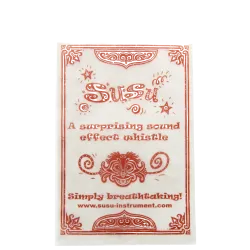
Susu Effects Whistle — This small bamboo vocal modifier transforms your voice into a surprising palette of sounds and effects. Originating from East Asia, the effects whistle has been used for generations by storytellers and artists to create character voices, imitate animals and produce special effects. Placed between the lips or against the back of the tongue, it produces chirps, buzzes and almost magical vocal transformations. Its compact dimensions (2.0 × 1.5 cm) make it easy to carry. Ideal for narration, theatre, playful sound exploration and acoustic performances. A small sonic treasure that offers a wealth of possibilities with practice.
| Origin | Vietnam |
|---|---|
| Weight | 0,00 kg |
| Dimensions | 2,0 × 1,5 cm |
| Materials | Bamboo |
⚠Caution: Not suitable for children under 3 years. Please supervise older children. Beware of swallowing small parts, strangulation, material allergies, sharp edges and points! Use only for sound generation. No liability for improper use.
✦Care: Extreme temperature fluctuations, humidity and direct sunlight can affect the lifespan. Please store in balanced humidity to prevent material changes, mold and corrosion. Remove dirt with a damp cloth. Dry after cleaning and each use.
♻Disposal: Please contact your local waste disposal authority for information on environmentally sound disposal!
A Miniature Voice Transformer
This bamboo whistle operates on a principle as simple as it is effective: a membrane suspended between two bamboo halves vibrates when air passes through it, producing a range of sounds that modify and distort the human voice. The result is a tool for vocal transformation that requires no electronics, no batteries, and no visible apparatus—only breath and the position of your tongue.
How It Works
The SuSu functions through direct contact with the mouth. You can hold it between your lips with the membrane facing inward and blow steadily to produce initial tones. From this basic position, the instrument becomes genuinely versatile: shifting the whistle to the back of your tongue and pressing it against the roof of your mouth opens an entirely different range of effects. This second technique allows you to layer your natural voice underneath the whistle's output, creating hybrid sounds that blur the line between speech and effect.
The sounds themselves range from sharp chattering and crackling noises to whistled tones, trumpet-like calls, and warbling effects. You can imitate bird calls, produce laughter, or generate abstract vocal textures. Because the whistle sits inside the mouth during play, it remains invisible to an audience—a practical advantage for performers who want the effect without revealing the mechanism.
Construction and Materials
The instrument is made from bamboo, a material chosen for its lightness, workability, and acoustic properties. The two bamboo pieces are joined with an adhesive that holds the vibrating membrane in place. This simple construction means there are no moving parts to adjust, no reeds to replace, and no tuning required. The membrane itself is the sole active component, and its behavior is determined by the force and angle of your breath rather than any adjustment you can make to the instrument itself.
Playing Techniques and Sound Range
Begin by placing the whistle between your lips with gentle, steady breath. You will hear initial tones emerge as the membrane begins to vibrate. Varying the pressure and speed of your breath changes the pitch and intensity of these sounds. The chattering effect occurs naturally when you blow with a slightly interrupted or pulsed breath pattern.
The more expressive technique involves positioning the whistle on your tongue's back surface and pressing it lightly against your palate. From this position, you can whistle melodically, produce trumpet-like calls, create warbling effects by moving your tongue, or even speak or laugh while the whistle modulates your voice. This placement allows you to combine the whistle's effect with your natural vocal range, creating sounds that are difficult to achieve with the instrument alone.
Applications in Performance and Play
The SuSu has a long history in theatrical and storytelling traditions, where it serves as a tool for creating character voices and sound effects without elaborate equipment. A narrator can use it to voice multiple characters, shift between human and animal sounds, or punctuate a story with unexpected acoustic surprises. In theatre, it provides a lightweight, portable alternative to recorded effects or complex sound design.
Beyond formal performance, the instrument invites experimentation. Its low cost and minimal learning curve make it accessible to anyone curious about vocal effects and sound play. Children and adults alike discover that the same whistle can produce wildly different results depending on breath control and tongue position, encouraging playful exploration of what the voice can do.
Care and Maintenance
The bamboo and membrane construction requires minimal care. After each use, dry the whistle thoroughly to prevent moisture from affecting the membrane's vibration or causing the bamboo to swell. Avoid extended soaking or leaving the whistle wet for long periods. With this simple attention, the instrument will remain functional for extended use.
The SuSu belongs to a tradition of portable vocal-effect tools found across East Asian performance cultures, where storytellers and theatre practitioners have long relied on such devices to expand the expressive range of the human voice.

Your review appreciation cannot be sent
Report comment
Report sent
Your report cannot be sent
Write your review
Review sent
Your review cannot be sent