Jaw Harp Morchang Kheta Anchor Brass

Price: €42.72
SKU MMI-81 Category Morchang

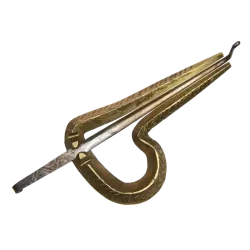
Morchang Kheta Anker — Brass Jaw Harp from Northern India

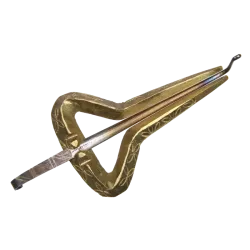
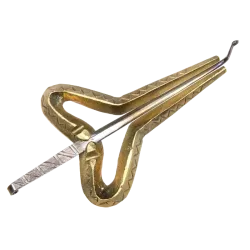
The morchang is a plucked idiophone — a single flexible metal tongue anchored within a frame that the player holds against the teeth and strikes to produce sound. This version, crafted by the master smith Kheta Ram, features a distinctive anchor-shaped frame that sets it apart from conventional rectangular designs and directly influences how the instrument resonates.

Frame Design and Construction

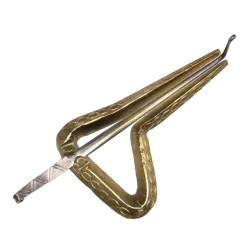
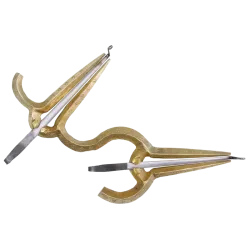
The anchor-form frame is the defining feature of this morchang. Unlike standard jaw harps with simple rectangular or horseshoe frames, the anchor shape creates specific acoustic properties that enhance the instrument's resonance characteristics. The frame is forged from brass, a material that contributes to both the instrument's durability and its tonal qualities.

The metal tongue is flexible and responds to direct plucking, allowing the player to control pitch and articulation through variation in strike force and finger placement. The compact overall size makes the instrument portable and accessible for sustained practice or performance.

Sound and Playing Range

This morchang operates on free tuning — meaning it is not locked to a specific pitch or scale. Instead, the player shapes the sound by adjusting mouth cavity resonance, breath control, and the force and angle of each pluck. The result is a range of harmonically rich tones that can be bent and modulated rather than produced as fixed notes.

The brass construction and anchor frame together produce a bright, clear tone suitable for both traditional and experimental applications. The instrument responds to subtle changes in playing technique, rewarding focused attention to hand position and oral cavity shaping.

How to Play

Hold the frame against your upper front teeth, supporting it with your fingers. The mouth cavity acts as a resonator — changing its shape alters which harmonics are amplified. Pluck the metal tongue with your index finger or thumb, striking it outward and allowing it to vibrate freely. Vary the force of each pluck to control volume and tonal character; lighter strikes produce softer, more delicate sounds, while sharper movements generate brighter, more percussive tones.

Breath control also shapes the sound. Exhaling or inhaling while the tongue vibrates introduces additional harmonic complexity and can extend the sustain of each note.

Cultural Context

The morchang has a documented history in the folk music traditions of Northern India, particularly in Rajasthan, where it remains an active instrument in traditional performance. Its small size and self-contained design have made it historically favourable for travelling musicians and itinerant performers.

Beyond its heritage applications, the morchang has found contemporary use in world music fusion, experimental soundscapes, and cross-cultural musical exploration. Its capacity for subtle tonal variation and its percussive clarity make it adaptable to many musical contexts.

What's Included

  • The morchang itself
  • Protective transport blocks
  • Quick-start guide

Getting Started

The quick-start guide included with the instrument covers basic hand position, mouth placement, and initial plucking technique. Begin with light, controlled plucks to develop familiarity with how the frame sits against your teeth and how small changes in mouth shape affect the tone. Gradual practice builds the muscle memory and oral coordination needed to produce clear, sustained tones and to explore the full range of the instrument's expressive possibilities.

The morchang remains an active voice in the folk traditions of Northern India and an increasingly explored tool in contemporary world music and experimental practice.

Price: €42.72
SKU MMI-81 Category Morchang

Jaw Harp Morchang Kheta Anchor Brass — A hand-forged jaw harp from Rajasthan with a distinctive anchor-shaped frame that enhances resonance and projects a bright, clear tone. Crafted by master smith Kheta Ram in brass, this compact instrument (10 cm) carries centuries of metalworking tradition while remaining portable enough for travelling musicians. The flexible metal tongue produces harmonically rich tones suited to traditional Rajasthani folk performance, world music fusion, and experimental soundscapes. Includes protective transport blocks and quick-start guide. A versatile voice that bridges heritage practice and contemporary creativity.

Origin India
Weight 0,06 kg
Dimensions 10,0 cm
Included Transport blocks, quick guide
Materials Brass
Key Free Tuning
Jaw Harp Type Teeth-activated jaw harp
Audio Samples
Morchang Kheta Anchor

Caution: Not suitable for children under 3 years. Please supervise older children. Beware of swallowing small parts, strangulation, material allergies, sharp edges and points! Use only for sound generation. No liability for improper use.

Care: Extreme temperature fluctuations, humidity and direct sunlight can affect the lifespan. Please store in balanced humidity to prevent material changes, mold and corrosion. Remove dirt with a damp cloth. Dry after cleaning and each use.

Disposal: Please contact your local waste disposal authority for information on environmentally sound disposal!

Cet instrument vous a touché ? Faites-le découvrir.

La musique du monde se transmet — partagez cette découverte.

Morchang Kheta Anker — Brass Jaw Harp from Northern India

The morchang is a plucked idiophone — a single flexible metal tongue anchored within a frame that the player holds against the teeth and strikes to produce sound. This version, crafted by the master smith Kheta Ram, features a distinctive anchor-shaped frame that sets it apart from conventional rectangular designs and directly influences how the instrument resonates.

Frame Design and Construction

The anchor-form frame is the defining feature of this morchang. Unlike standard jaw harps with simple rectangular or horseshoe frames, the anchor shape creates specific acoustic properties that enhance the instrument's resonance characteristics. The frame is forged from brass, a material that contributes to both the instrument's durability and its tonal qualities.

The metal tongue is flexible and responds to direct plucking, allowing the player to control pitch and articulation through variation in strike force and finger placement. The compact overall size makes the instrument portable and accessible for sustained practice or performance.

Sound and Playing Range

This morchang operates on free tuning — meaning it is not locked to a specific pitch or scale. Instead, the player shapes the sound by adjusting mouth cavity resonance, breath control, and the force and angle of each pluck. The result is a range of harmonically rich tones that can be bent and modulated rather than produced as fixed notes.

The brass construction and anchor frame together produce a bright, clear tone suitable for both traditional and experimental applications. The instrument responds to subtle changes in playing technique, rewarding focused attention to hand position and oral cavity shaping.

How to Play

Hold the frame against your upper front teeth, supporting it with your fingers. The mouth cavity acts as a resonator — changing its shape alters which harmonics are amplified. Pluck the metal tongue with your index finger or thumb, striking it outward and allowing it to vibrate freely. Vary the force of each pluck to control volume and tonal character; lighter strikes produce softer, more delicate sounds, while sharper movements generate brighter, more percussive tones.

Breath control also shapes the sound. Exhaling or inhaling while the tongue vibrates introduces additional harmonic complexity and can extend the sustain of each note.

Cultural Context

The morchang has a documented history in the folk music traditions of Northern India, particularly in Rajasthan, where it remains an active instrument in traditional performance. Its small size and self-contained design have made it historically favourable for travelling musicians and itinerant performers.

Beyond its heritage applications, the morchang has found contemporary use in world music fusion, experimental soundscapes, and cross-cultural musical exploration. Its capacity for subtle tonal variation and its percussive clarity make it adaptable to many musical contexts.

What's Included

  • The morchang itself
  • Protective transport blocks
  • Quick-start guide

Getting Started

The quick-start guide included with the instrument covers basic hand position, mouth placement, and initial plucking technique. Begin with light, controlled plucks to develop familiarity with how the frame sits against your teeth and how small changes in mouth shape affect the tone. Gradual practice builds the muscle memory and oral coordination needed to produce clear, sustained tones and to explore the full range of the instrument's expressive possibilities.

The morchang remains an active voice in the folk traditions of Northern India and an increasingly explored tool in contemporary world music and experimental practice.
Recently viewed

Comments (0)
No customer reviews for the moment.

You might also like