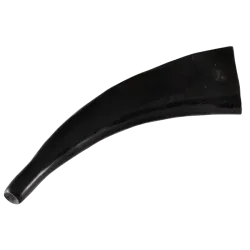
Cattle Horn
Cattle Horn — Natural Signalling Horn
A natural cow horn carved into a functional wind instrument, the corne de vache produces a loud, far-carrying sound designed to project across distance. You blow into the narrow end of the mouthpiece, vibrating your lips against the opening while applying firm air pressure to generate a sharp, penetrating call.
Historical Use and Cultural Context
Horns made from animal bone and horn have served as signalling devices since prehistoric times. The practical origin is straightforward: early peoples discovered that sawing off the pointed tip of a natural horn created a functional mouthpiece, transforming a drinking vessel into a communication tool. This simple modification enabled the instrument to carry messages across hunting grounds, alert communities to danger, and coordinate gatherings—roles it has maintained across many cultures for thousands of years.
Sound and Playing Characteristics
The instrument's power lies in its acoustic design. The natural taper of the horn and the small mouthpiece opening concentrate air pressure into a loud, directional sound that travels effectively in open spaces. Each horn produces a unique voice, determined by its individual shape, wall thickness, and interior dimensions—qualities that cannot be replicated or standardized. The pitch and tonal character vary from one instrument to another, making every corne de vache distinct in both appearance and sound.
Construction and Material
The corne de vache is carved from genuine cattle horn. The narrow end serves as the mouthpiece; the wider, open end projects the sound. No additional components or modifications are required for play. The material's natural density and hardness allow it to withstand the pressure of regular use while maintaining its acoustic properties over time.
What's Included
- One natural cow horn, ready to play
Care and Longevity
Horn is a durable organic material that improves with use. Exposure to air and handling gradually creates a patina that deepens its character. Store the instrument in a dry environment to prevent cracking. If the interior accumulates moisture or residue from prolonged use, rinse gently with water and allow to air-dry completely before storage.
The corne de vache remains in active use across pastoral and folk traditions, valued for its reliability and the unambiguous clarity of its signal across open terrain.
Cattle Horn — Traditional signaling horn carved from genuine cattle horn, producing a powerful, far-carrying tone used for centuries across cultures to announce gatherings, coordinate hunts, and warn of danger. Played with a brass-instrument technique—vibrate your lips against the narrow mouthpiece end while blowing firmly to unlock its distinctive piercing call. Each horn is unique in voice and appearance, shaped by its natural form. Ideal for historical reenactments, outdoor performances, folk ensembles, and anyone drawn to authentic communication tools that bridge past and present. A simple, effective instrument whose sound carries across distances as it has for millennia.
| Origin | Vietnam |
|---|---|
| Weight | 0,49 kg |
| Dimensions | 45,0 × 10,0 × 7,0 cm |
| Materials | Horn |
⚠Caution: Not suitable for children under 3 years. Please supervise older children. Beware of swallowing small parts, strangulation, material allergies, sharp edges and points! Use only for sound generation. No liability for improper use.
✦Care: Extreme temperature fluctuations, humidity and direct sunlight can affect the lifespan. Please store in balanced humidity to prevent material changes, mold and corrosion. Remove dirt with a damp cloth. Dry after cleaning and each use.
♻Disposal: Please contact your local waste disposal authority for information on environmentally sound disposal!
Cattle Horn — Natural Signalling Horn
A natural cow horn carved into a functional wind instrument, the corne de vache produces a loud, far-carrying sound designed to project across distance. You blow into the narrow end of the mouthpiece, vibrating your lips against the opening while applying firm air pressure to generate a sharp, penetrating call.
Historical Use and Cultural Context
Horns made from animal bone and horn have served as signalling devices since prehistoric times. The practical origin is straightforward: early peoples discovered that sawing off the pointed tip of a natural horn created a functional mouthpiece, transforming a drinking vessel into a communication tool. This simple modification enabled the instrument to carry messages across hunting grounds, alert communities to danger, and coordinate gatherings—roles it has maintained across many cultures for thousands of years.
Sound and Playing Characteristics
The instrument's power lies in its acoustic design. The natural taper of the horn and the small mouthpiece opening concentrate air pressure into a loud, directional sound that travels effectively in open spaces. Each horn produces a unique voice, determined by its individual shape, wall thickness, and interior dimensions—qualities that cannot be replicated or standardized. The pitch and tonal character vary from one instrument to another, making every corne de vache distinct in both appearance and sound.
Construction and Material
The corne de vache is carved from genuine cattle horn. The narrow end serves as the mouthpiece; the wider, open end projects the sound. No additional components or modifications are required for play. The material's natural density and hardness allow it to withstand the pressure of regular use while maintaining its acoustic properties over time.
What's Included
- One natural cow horn, ready to play
Care and Longevity
Horn is a durable organic material that improves with use. Exposure to air and handling gradually creates a patina that deepens its character. Store the instrument in a dry environment to prevent cracking. If the interior accumulates moisture or residue from prolonged use, rinse gently with water and allow to air-dry completely before storage.
The corne de vache remains in active use across pastoral and folk traditions, valued for its reliability and the unambiguous clarity of its signal across open terrain.
Your review appreciation cannot be sent
Report comment
Report sent
Your report cannot be sent
Write your review
Review sent
Your review cannot be sent