Baoding Ball Set
Baoding Balls — Steel Sound Spheres
Baoding balls are hollow steel spheres that produce soft, meditative tones when rotated in the palm of the hand. Each pair contains a spring and a freely movable steel marble inside, which creates sound through gentle rotation and intensifies with more vigorous movement or shaking. Originating from the city of Baoding in northern China, these objects have been documented since the 14th century during the Ming Dynasty, when they were known as Jiàn shen qiú — literally "balls for physical health."
Historical Development and Cultural Context
The practice of hand-exercise balls began with nuts and fruits used to train manual dexterity. Over centuries, the objects evolved into manufactured forms made of stone or metal, and spiritual significance became woven into their use. According to Daoist doctrine, rotating both balls in the hand is believed to harmonize yin and yang energies. This dual purpose — physical conditioning combined with meditative or spiritual practice — has sustained the tradition across centuries.
Construction and Sound
The pair consists of chromed steel balls, each containing a spring mechanism and a small steel marble that moves freely inside the hollow chamber. The rotation of this internal marble against the walls of the sphere generates the characteristic sound. Light, continuous rotation produces delicate tones suitable for meditation or background sound; faster shaking and more vigorous movement increase both volume and intensity, making the balls effective as sound-effect instruments and shakers in musical contexts.
Use in Hand Exercise and Acupressure
In Traditional Chinese Medicine practice, the rotating movements of Baoding balls are understood to stimulate acupressure points across the hand through sustained contact and motion. Regular practice is believed to develop fine motor control in the fingers and hands. Some practitioners use them as a complementary approach to hand and finger joint mobility, though outcomes vary with individual practice.
Musical and Sonic Applications
Beyond their role in wellness practice, Baoding balls serve as sound instruments. The meditative tones they produce make them suitable for ambient soundscapes, meditation recordings, or as percussion elements in world music and experimental contexts. The player controls the sonic character entirely through hand movement — from barely audible whispers at slow rotation to pronounced, bell-like tones at higher speeds. This responsiveness to subtle changes in hand technique makes them accessible to beginners while offering depth for those seeking refined control.
Baoding balls remain a living tradition in Chinese hand-exercise practice and continue to be produced in their city of origin.
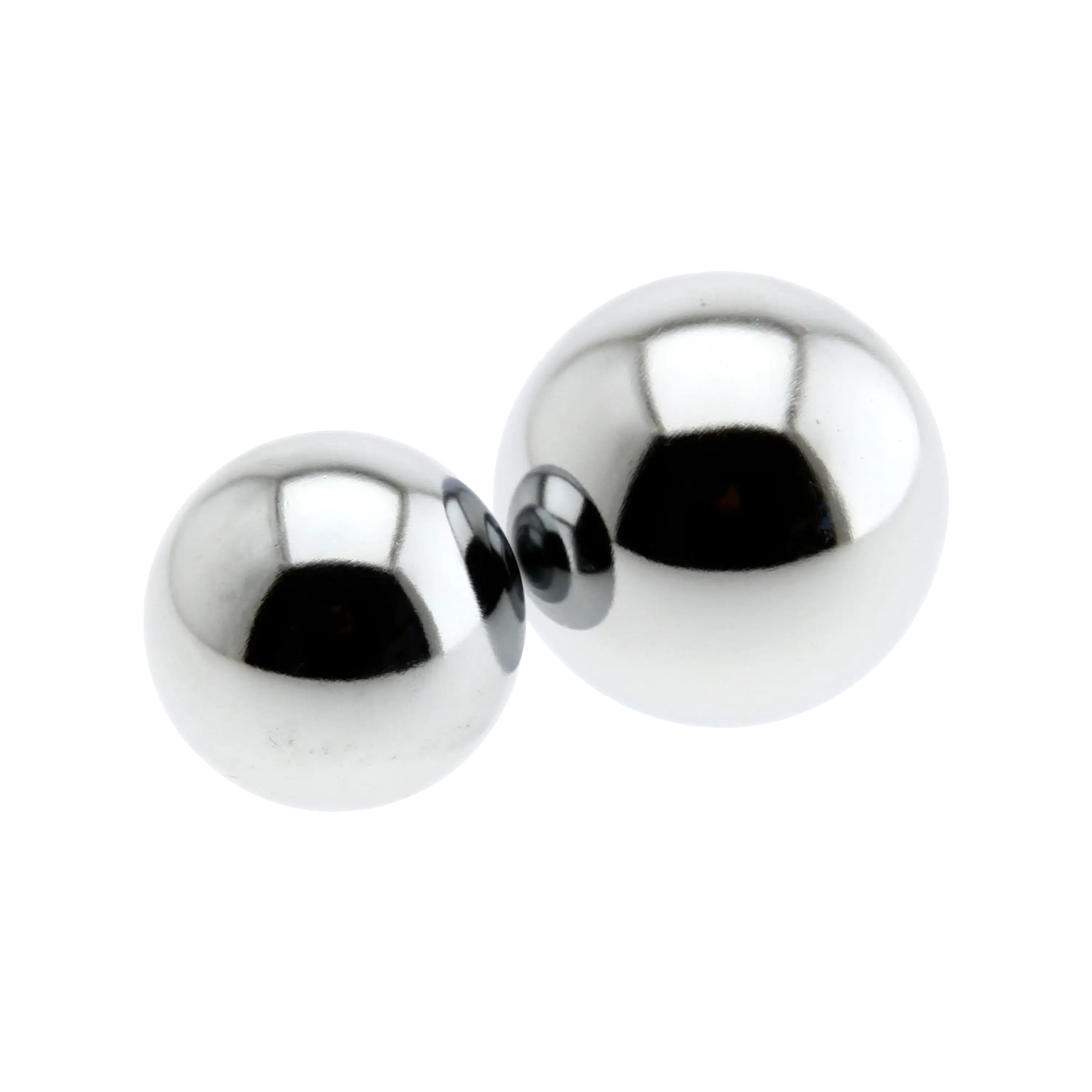
Baoding Ball Set — These hollow spheres made of chromium-plated steel, originating from China, contain an internal chime that produces delicate and melodic sounds when rotated in the palm. Heirs to a tradition dating back to the Ming Dynasty, they combine hand exercise and sound meditation, offering both tactile stimulation and a soothing auditory experience. Available in two sizes (40 mm and 50 mm), they are suitable for both wellness practice and musical sound exploration. A tool for dexterity and relaxation that connects the user to centuries of Chinese wisdom.
| Origin | China |
|---|---|
| Materials | Steel |
⚠Caution: Not suitable for children under 3 years. Please supervise older children. Beware of swallowing small parts, strangulation, material allergies, sharp edges and points! Use only for sound generation. No liability for improper use.
✦Care: Extreme temperature fluctuations, humidity and direct sunlight can affect the lifespan. Please store in balanced humidity to prevent material changes, mold and corrosion. Remove dirt with a damp cloth. Dry after cleaning and each use.
♻Disposal: Please contact your local waste disposal authority for information on environmentally sound disposal!
Baoding Balls — Steel Sound Spheres
Baoding balls are hollow steel spheres that produce soft, meditative tones when rotated in the palm of the hand. Each pair contains a spring and a freely movable steel marble inside, which creates sound through gentle rotation and intensifies with more vigorous movement or shaking. Originating from the city of Baoding in northern China, these objects have been documented since the 14th century during the Ming Dynasty, when they were known as Jiàn shen qiú — literally "balls for physical health."
Historical Development and Cultural Context
The practice of hand-exercise balls began with nuts and fruits used to train manual dexterity. Over centuries, the objects evolved into manufactured forms made of stone or metal, and spiritual significance became woven into their use. According to Daoist doctrine, rotating both balls in the hand is believed to harmonize yin and yang energies. This dual purpose — physical conditioning combined with meditative or spiritual practice — has sustained the tradition across centuries.
Construction and Sound
The pair consists of chromed steel balls, each containing a spring mechanism and a small steel marble that moves freely inside the hollow chamber. The rotation of this internal marble against the walls of the sphere generates the characteristic sound. Light, continuous rotation produces delicate tones suitable for meditation or background sound; faster shaking and more vigorous movement increase both volume and intensity, making the balls effective as sound-effect instruments and shakers in musical contexts.
Use in Hand Exercise and Acupressure
In Traditional Chinese Medicine practice, the rotating movements of Baoding balls are understood to stimulate acupressure points across the hand through sustained contact and motion. Regular practice is believed to develop fine motor control in the fingers and hands. Some practitioners use them as a complementary approach to hand and finger joint mobility, though outcomes vary with individual practice.
Musical and Sonic Applications
Beyond their role in wellness practice, Baoding balls serve as sound instruments. The meditative tones they produce make them suitable for ambient soundscapes, meditation recordings, or as percussion elements in world music and experimental contexts. The player controls the sonic character entirely through hand movement — from barely audible whispers at slow rotation to pronounced, bell-like tones at higher speeds. This responsiveness to subtle changes in hand technique makes them accessible to beginners while offering depth for those seeking refined control.
Baoding balls remain a living tradition in Chinese hand-exercise practice and continue to be produced in their city of origin.
Your review appreciation cannot be sent
Report comment
Report sent
Your report cannot be sent
Write your review
Review sent
Your review cannot be sent