Birdcall Pied Wagtail
Birdcall Pied Wagtail - Bergeronnette grise
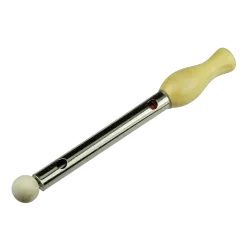
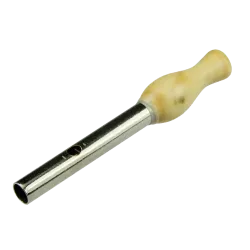
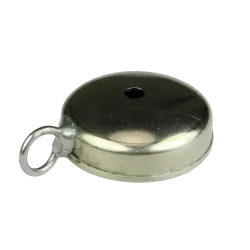
This French bird call reproduces the distinctive metallic song of the European white wagtail, a small grey and white bird common across much of Europe. The instrument is constructed from boxwood and maillechort (a copper-nickel alloy), materials that together produce the sharp, high-pitched tones characteristic of the bird's natural call.
Sound and Imitation
The wagtail's song is notably high and metallic—qualities that make it both recognisable and challenging to replicate by voice alone. This bird call captures that quality with precision, allowing you to call the bird across open ground, gardens, or wetland margins where wagtails forage. The metallic edge of the call carries well in outdoor settings and carries sufficient distinctiveness that the bird will respond or investigate.
Beyond bird observation, the instrument generates a range of sharp, percussive sound effects useful for play, signal-making, or sound design. The compact design and simple mechanics mean the range of tones available is limited but reliable.
Construction and Materials
Boxwood is chosen for its density and acoustic properties—it resists splitting and produces clear, focused tones. The maillechort component adds metallic resonance and durability. The combination of these materials is traditional in European bird-call manufacture, proven over generations of use.
Playing and Technique
The bird call operates on breath control alone. You blow gently into the instrument to produce the characteristic call; variation in breath pressure and duration shapes the pitch and rhythm. The technique is straightforward and requires no prior musical training. Experimentation with breath intensity will reveal the full tonal range available.
Historical and Cultural Context
Bird calls of this type have been used across Europe for centuries by hunters, naturalists, and bird enthusiasts to observe wildlife or manage flocks. The wagtail, a familiar figure in farmland and open country, has long been a subject of these traditional calls. The manufacture of such instruments remains an active craft in France, maintaining methods and materials that date back generations.
What's Included
The bird call arrives ready to use. No assembly, tuning, or preparation is required.
Care and Use
The boxwood and metal construction requires minimal maintenance. After use, allow the instrument to air-dry if it has been exposed to moisture. Store in a dry environment to prevent warping. The simplicity of the design means there are no moving parts to wear or adjust.
The bird call remains an active tool among European birdwatchers and naturalists, connecting the user directly to a tradition of close observation and interaction with wild birds in their natural habitats.
Birdcall Pied Wagtail — Traditional French bird call handcrafted in beech wood and arcap metal to replicate the grey wagtail's distinctive metallic call. Compact (10.5 cm) and lightweight (20g), it connects birdwatchers and nature enthusiasts to European ornithological heritage. Simple breath control technique; ideal for observing this elegant bird in natural habitats or deepening your connection to traditional wildlife interaction.
| Origin | France |
|---|---|
| Weight | 0,01 kg |
| Dimensions | 5,5 × 2,1 × 2,1 cm |
| Materials | Boxwood - German silver |
| Species | Grey Wagtail |
⚠Caution: Not suitable for children under 3 years. Please supervise older children. Beware of swallowing small parts, strangulation, material allergies, sharp edges and points! Use only for sound generation. No liability for improper use.
✦Care: Extreme temperature fluctuations, humidity and direct sunlight can affect the lifespan. Please store in balanced humidity to prevent material changes, mold and corrosion. Remove dirt with a damp cloth. Dry after cleaning and each use.
♻Disposal: Please contact your local waste disposal authority for information on environmentally sound disposal!
Birdcall Pied Wagtail - Bergeronnette grise
This French bird call reproduces the distinctive metallic song of the European white wagtail, a small grey and white bird common across much of Europe. The instrument is constructed from boxwood and maillechort (a copper-nickel alloy), materials that together produce the sharp, high-pitched tones characteristic of the bird's natural call.
Sound and Imitation
The wagtail's song is notably high and metallic—qualities that make it both recognisable and challenging to replicate by voice alone. This bird call captures that quality with precision, allowing you to call the bird across open ground, gardens, or wetland margins where wagtails forage. The metallic edge of the call carries well in outdoor settings and carries sufficient distinctiveness that the bird will respond or investigate.
Beyond bird observation, the instrument generates a range of sharp, percussive sound effects useful for play, signal-making, or sound design. The compact design and simple mechanics mean the range of tones available is limited but reliable.
Construction and Materials
Boxwood is chosen for its density and acoustic properties—it resists splitting and produces clear, focused tones. The maillechort component adds metallic resonance and durability. The combination of these materials is traditional in European bird-call manufacture, proven over generations of use.
Playing and Technique
The bird call operates on breath control alone. You blow gently into the instrument to produce the characteristic call; variation in breath pressure and duration shapes the pitch and rhythm. The technique is straightforward and requires no prior musical training. Experimentation with breath intensity will reveal the full tonal range available.
Historical and Cultural Context
Bird calls of this type have been used across Europe for centuries by hunters, naturalists, and bird enthusiasts to observe wildlife or manage flocks. The wagtail, a familiar figure in farmland and open country, has long been a subject of these traditional calls. The manufacture of such instruments remains an active craft in France, maintaining methods and materials that date back generations.
What's Included
The bird call arrives ready to use. No assembly, tuning, or preparation is required.
Care and Use
The boxwood and metal construction requires minimal maintenance. After use, allow the instrument to air-dry if it has been exposed to moisture. Store in a dry environment to prevent warping. The simplicity of the design means there are no moving parts to wear or adjust.
The bird call remains an active tool among European birdwatchers and naturalists, connecting the user directly to a tradition of close observation and interaction with wild birds in their natural habitats.
Your review appreciation cannot be sent
Report comment
Report sent
Your report cannot be sent
Write your review
Review sent
Your review cannot be sent