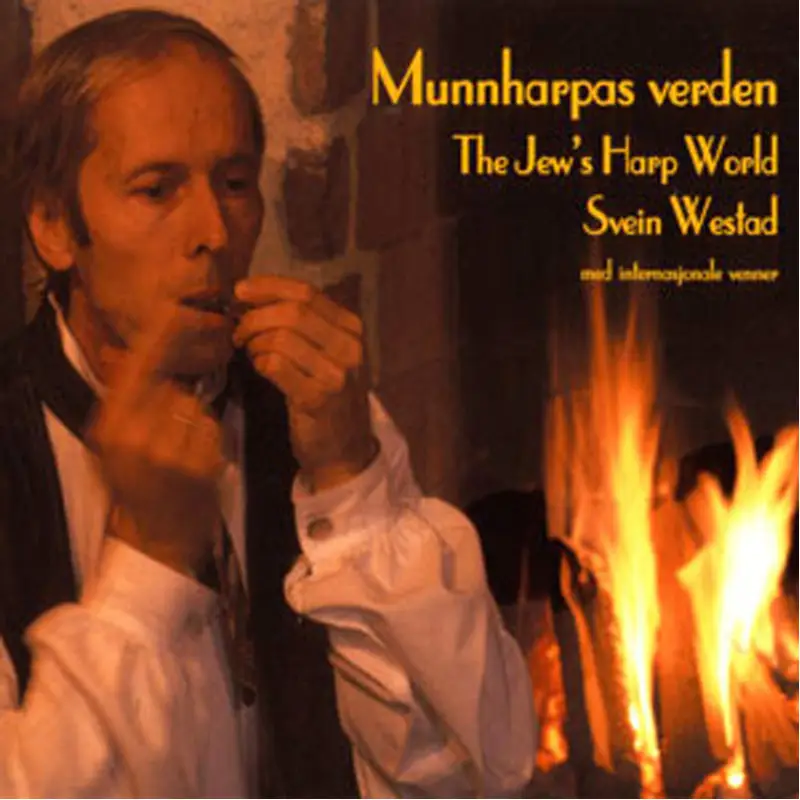
Svein Westad - Munnharpas Verden

Price: €16.78
SKU CD-10 Category Books & CDs

Svein Westad - Munnharpas Verden

This 73-minute recording from 2001 documents the mouth harp as it exists across eight distinct musical cultures—not as a single instrument with regional variations, but as fundamentally different sonic and expressive traditions shaped by centuries of local practice. The collection spans eight countries and treats the mouth harp not as a historical artifact but as a living, evolving presence in the hands of contemporary masters.

Four master performers across eight traditions

Svein Westad anchors the recording with the Scandinavian lineage, drawing on Norwegian folk practice. Leo Tadagawa brings the Japanese tradition, where the instrument carries its own technical and aesthetic demands. Tran Quang Hai represents Vietnamese mastery, a practice with distinct tonal approaches. John Wright contributes the Irish and Western European perspective, where the mouth harp holds a particular place in folk revival and contemporary musical creation. Together, they document performance practice in Norway, Ireland, Vietnam, Indonesia, China, Japan, India, and Kyrgyzstan—a geographical and musical span that immediately reveals how one instrument family generates profoundly different sounds and applications across cultures.

What 29 tracks reveal

The recording interweaves traditional folk compositions with contemporary interpretations, allowing listeners to encounter both the historical roots of mouth harp music in each region and the ways the instrument continues to evolve in modern performance. You will hear the harmonic depth and expressive range the mouth harp achieves—qualities that often surprise people encountering the instrument for the first time, who may know it only as a children's toy or novelty item.

The scope matters. Hearing the same instrument family played across these eight traditions reveals not gradual differences but fundamental shifts in approach: different playing techniques, tonal ideals, musical contexts, and even what the instrument is understood to be capable of expressing. A listener moves from one musical world to another in minutes, encountering the mouth harp as both intimate solo voice and as part of broader ensemble textures.

Who benefits from this recording

If you play the mouth harp yourself, this recording offers direct exposure to techniques and musical approaches beyond your own tradition—a form of practical education that no written guide can fully provide. If you explore world music more broadly, it demonstrates how a single instrument family generates radically different sounds and uses depending on cultural context and musical intention. If you are curious about the mouth harp specifically, this is a grounded introduction to what the instrument can actually do.

Value also lies in hearing masters at work. These are not demonstrations or pedagogical recordings; they are performances by musicians who have spent decades within their traditions. The depth of knowledge embedded in each performance—control, phrasing, understanding of what the instrument can express—becomes audible across the collection.

Format and listening

Published in 2001 as a standard audio CD, the recording runs 73 minutes 19 seconds across 29 tracks. The format is straightforward and durable—designed for repeated listening, study, and the kind of return visits that deepen understanding with each pass.

This is the type of recording that rewards both casual listening and sustained attention. Listen once to encounter the breadth. Return to begin hearing the distinctions—the way a performer shapes breath, the particular resonance drawn from the instrument, the relationship between technique and musical intention.

The mouth harp remains a living practice across these eight regions, each tradition maintaining its own repertoire, aesthetic, and place within local musical life.
Price: €16.78
SKU CD-10 Category Books & CDs

Svein Westad - Munnharpas Verden — A 29-track journey through the jaw harp traditions of Norway, Ireland, Vietnam, Indonesia, China, Japan, India, and Kyrgyzstan, performed by four internationally recognized virtuosos: Svein Westad, Leo Tadagawa, Tran Quang Hai, and John Wright. Released in 2001 by Etnisk Musikklubb, this 73-minute collection blends traditional folk compositions with contemporary interpretations, showcasing the instrument's harmonic depth and expressive range across cultures. Essential listening for anyone exploring the jaw harp's global voice.

Origin Norway
Weight 0,10 kg
Tracks 29
Publication Year 2001
Genre Folk
Duration 73'19"

Cet instrument vous a touché ? Faites-le découvrir.

La musique du monde se transmet — partagez cette découverte.

Svein Westad - Munnharpas Verden

This 73-minute recording from 2001 documents the mouth harp as it exists across eight distinct musical cultures—not as a single instrument with regional variations, but as fundamentally different sonic and expressive traditions shaped by centuries of local practice. The collection spans eight countries and treats the mouth harp not as a historical artifact but as a living, evolving presence in the hands of contemporary masters.

Four master performers across eight traditions

Svein Westad anchors the recording with the Scandinavian lineage, drawing on Norwegian folk practice. Leo Tadagawa brings the Japanese tradition, where the instrument carries its own technical and aesthetic demands. Tran Quang Hai represents Vietnamese mastery, a practice with distinct tonal approaches. John Wright contributes the Irish and Western European perspective, where the mouth harp holds a particular place in folk revival and contemporary musical creation. Together, they document performance practice in Norway, Ireland, Vietnam, Indonesia, China, Japan, India, and Kyrgyzstan—a geographical and musical span that immediately reveals how one instrument family generates profoundly different sounds and applications across cultures.

What 29 tracks reveal

The recording interweaves traditional folk compositions with contemporary interpretations, allowing listeners to encounter both the historical roots of mouth harp music in each region and the ways the instrument continues to evolve in modern performance. You will hear the harmonic depth and expressive range the mouth harp achieves—qualities that often surprise people encountering the instrument for the first time, who may know it only as a children's toy or novelty item.

The scope matters. Hearing the same instrument family played across these eight traditions reveals not gradual differences but fundamental shifts in approach: different playing techniques, tonal ideals, musical contexts, and even what the instrument is understood to be capable of expressing. A listener moves from one musical world to another in minutes, encountering the mouth harp as both intimate solo voice and as part of broader ensemble textures.

Who benefits from this recording

If you play the mouth harp yourself, this recording offers direct exposure to techniques and musical approaches beyond your own tradition—a form of practical education that no written guide can fully provide. If you explore world music more broadly, it demonstrates how a single instrument family generates radically different sounds and uses depending on cultural context and musical intention. If you are curious about the mouth harp specifically, this is a grounded introduction to what the instrument can actually do.

Value also lies in hearing masters at work. These are not demonstrations or pedagogical recordings; they are performances by musicians who have spent decades within their traditions. The depth of knowledge embedded in each performance—control, phrasing, understanding of what the instrument can express—becomes audible across the collection.

Format and listening

Published in 2001 as a standard audio CD, the recording runs 73 minutes 19 seconds across 29 tracks. The format is straightforward and durable—designed for repeated listening, study, and the kind of return visits that deepen understanding with each pass.

This is the type of recording that rewards both casual listening and sustained attention. Listen once to encounter the breadth. Return to begin hearing the distinctions—the way a performer shapes breath, the particular resonance drawn from the instrument, the relationship between technique and musical intention.

The mouth harp remains a living practice across these eight regions, each tradition maintaining its own repertoire, aesthetic, and place within local musical life.

Recently viewed

Comments (0)
No customer reviews for the moment.

You might also like