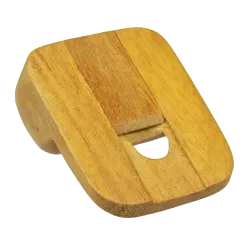
Wooden Nose Flute Large

Price: €8.91
SKU NS-1 Category Nose Flutes

Nasal Flute

A nasal flute is a wind instrument played by breathing through the nostrils rather than the mouth. The player's open mouth serves as a resonance chamber, allowing direct control over pitch and tone colour by adjusting mouth shape and position. This dual-channel approach—breath entering through the nose, resonance shaped by the oral cavity—produces a distinctive sound character quite unlike conventional flutes.

Sound and Playing Technique

The instrument generates a range of tonal possibilities, from soft, flute-like tones to articulated melodic phrases. You control pitch by modifying the shape and opening of your mouth while air flows steadily through the nostrils. The technique requires modest practice to develop breath control and mouth positioning, but produces results within the first few sessions of focused play.

Because the mouth remains open and active in shaping the sound, you can produce ornamental variations and subtle dynamic shifts that would be difficult or impossible on a conventional nose flute. Bird-call imitations, classical melodic passages, and experimental sound exploration are all within reach once basic technique is established.

Construction and Materials

This nasal flute is crafted from oiled wood, a material choice that contributes warmth to the instrument's tonal character while providing durability for regular play. The oiling protects the wood from moisture and handling wear, and the natural density of the material supports clear, resonant sound production across the playable range.

Cultural Context

Nasal flutes belong to a widespread family of wind instruments found across Southeast Asian and Polynesian musical traditions, where they have served both ceremonial and everyday musical purposes for generations. The technique of playing a wind instrument through the nose appears in diverse cultural contexts, each with its own repertoire and performance conventions.

What's Included

The nasal flute arrives ready to play. No assembly or additional preparation is required.

The nasal flute remains an active instrument in its source traditions, played by musicians and learners seeking direct connection to historical wind-playing techniques.

Price: €8.91
SKU NS-1 Category Nose Flutes

Wooden Nose Flute Large — A wind instrument played through the nostrils, originating from South-East Asian and Polynesian traditions. Constructed from natural bamboo, it produces soft and nuanced sounds by using the open mouth as a resonance chamber. The technique involves blowing through one nostril whilst blocking the other, allowing you to control the pitch by altering the shape of your mouth. Accessible after a few practice sessions, it is suitable for musical performances, teaching world traditions, and creative sound exploration. A living connection to ancient musical practices, preserved by generations of craftspeople.

Born from the hands of a craftsman, each item is a unique object in its own right. The photographs illustrate the product type; the piece you receive may vary slightly in shape, colour or finish.
Origin Vietnam
Weight 0,03 kg
Dimensions 7,0 × 5,0 × 2,5 cm
Materials Oiled jackwood - Wood
Audio Samples
Nose Flute - 1
Nose Flute - 2
Nose Flute - 3

Caution: Not suitable for children under 3 years. Please supervise older children. Beware of swallowing small parts, strangulation, material allergies, sharp edges and points! Use only for sound generation. No liability for improper use.

Care: Extreme temperature fluctuations, humidity and direct sunlight can affect the lifespan. Please store in balanced humidity to prevent material changes, mold and corrosion. Remove dirt with a damp cloth. Dry after cleaning and each use.

Disposal: Please contact your local waste disposal authority for information on environmentally sound disposal!

Cet instrument vous a touché ? Faites-le découvrir.

La musique du monde se transmet — partagez cette découverte.

Nasal Flute

A nasal flute is a wind instrument played by breathing through the nostrils rather than the mouth. The player's open mouth serves as a resonance chamber, allowing direct control over pitch and tone colour by adjusting mouth shape and position. This dual-channel approach—breath entering through the nose, resonance shaped by the oral cavity—produces a distinctive sound character quite unlike conventional flutes.

Sound and Playing Technique

The instrument generates a range of tonal possibilities, from soft, flute-like tones to articulated melodic phrases. You control pitch by modifying the shape and opening of your mouth while air flows steadily through the nostrils. The technique requires modest practice to develop breath control and mouth positioning, but produces results within the first few sessions of focused play.

Because the mouth remains open and active in shaping the sound, you can produce ornamental variations and subtle dynamic shifts that would be difficult or impossible on a conventional nose flute. Bird-call imitations, classical melodic passages, and experimental sound exploration are all within reach once basic technique is established.

Construction and Materials

This nasal flute is crafted from oiled wood, a material choice that contributes warmth to the instrument's tonal character while providing durability for regular play. The oiling protects the wood from moisture and handling wear, and the natural density of the material supports clear, resonant sound production across the playable range.

Cultural Context

Nasal flutes belong to a widespread family of wind instruments found across Southeast Asian and Polynesian musical traditions, where they have served both ceremonial and everyday musical purposes for generations. The technique of playing a wind instrument through the nose appears in diverse cultural contexts, each with its own repertoire and performance conventions.

What's Included

The nasal flute arrives ready to play. No assembly or additional preparation is required.

The nasal flute remains an active instrument in its source traditions, played by musicians and learners seeking direct connection to historical wind-playing techniques.

Recently viewed

Comments (0)
No customer reviews for the moment.

You might also like