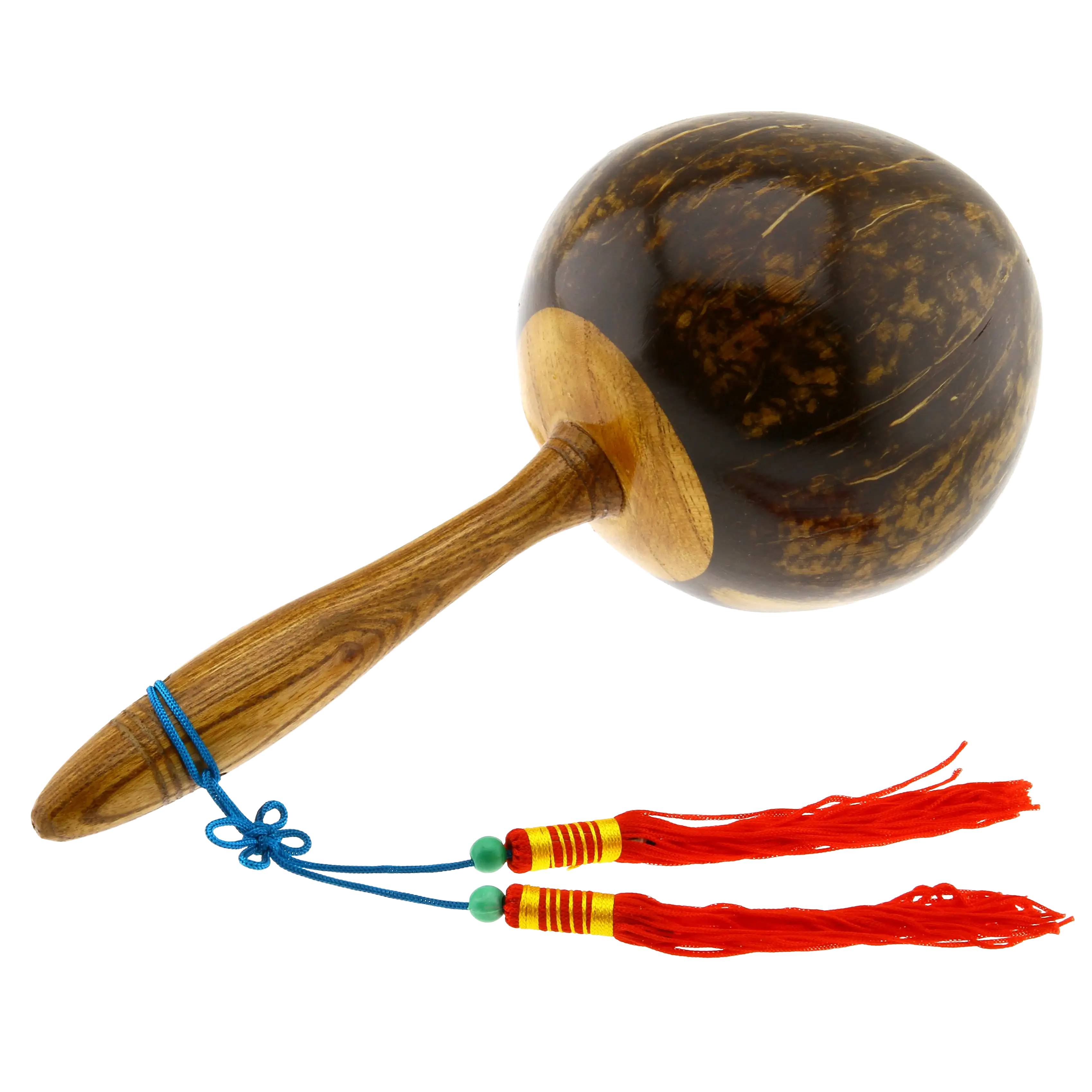
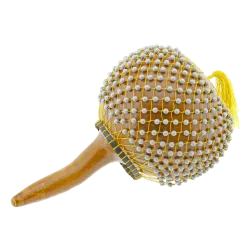
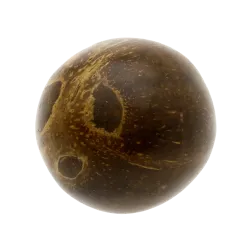
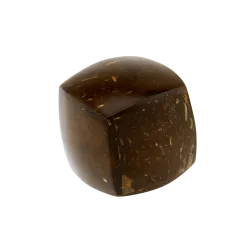
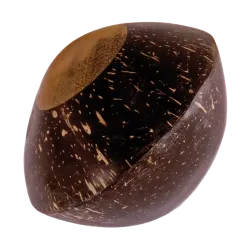
Maraca Coconut Large 26 cm (10.2")
Large Coconut Maraca
This maraca combines a whole coconut shell with steel balls inside to produce a sound that is both loud and penetrating. The coconut serves as the resonating chamber, and the steel balls provide the weight and projection needed for rhythmic accompaniment in ensemble settings. The result is a powerful, focused tone suitable for driving rhythmic patterns and energetic improvisation.
Sound and Construction
The pairing of coconut and steel creates a distinctive acoustic character. The coconut shell acts as a natural resonator, while the steel balls generate the sharp, cutting attack that allows the maraca to cut through in group playing. This combination produces a sound that is both melodic and forceful—qualities that make it effective in loud, rhythmically complex musical contexts.
Use in Traditional Music
Maracas are played across many musical traditions worldwide, but they hold a central role in Latin American music. They are typically played in pairs, providing rhythmic accompaniment to salsa, cumbia, bossa nova, merengue, and samba. In these traditions, the maraca serves as a driving pulse instrument, layering texture and momentum beneath melody and harmony.
Playing and Handling
The instrument comes fitted with a wooden handle and a colored ribbon. The handle provides a secure grip for shaking and rhythmic work, while the ribbon offers both functional balance and visual distinction—useful when playing maracas in pairs, where left and right hands need clear visual coordination.
The maraca remains a foundational percussion tool in Latin American ensemble music and in world music settings where natural, acoustically resonant rhythm instruments are valued.
Maraca Coconut Large 26 cm (10.2") — This 26 cm maraca, crafted from a whole coconut filled with steel balls, produces a powerful and resonant sound that naturally commands attention in musical contexts. The coconut shell offers an authentic resonance chamber, creating a tonal richness that synthetic alternatives cannot replicate. With its comfortable wooden handle and coloured ribbon, it accommodates varied playing techniques — from traditional shaking to circular motions — and adapts equally well to Latin music (salsa, cumbia, samba), world music ensembles, community percussion circles, or recording sessions seeking natural percussion. An authentic percussion instrument for musicians demanding genuine sonic presence.
| Weight | 0,21 kg |
|---|---|
| Origin | India |
| Dimensions | 20,0 × 11,0 × 11,0 cm |
| Materials | Coconut - Steel balls |
⚠Caution: Not suitable for children under 3 years. Please supervise older children. Beware of swallowing small parts, strangulation, material allergies, sharp edges and points! Use only for sound generation. No liability for improper use.
✦Care: Extreme temperature fluctuations, humidity and direct sunlight can affect the lifespan. Please store in balanced humidity to prevent material changes, mold and corrosion. Remove dirt with a damp cloth. Dry after cleaning and each use.
♻Disposal: Please contact your local waste disposal authority for information on environmentally sound disposal!
Large Coconut Maraca
This maraca combines a whole coconut shell with steel balls inside to produce a sound that is both loud and penetrating. The coconut serves as the resonating chamber, and the steel balls provide the weight and projection needed for rhythmic accompaniment in ensemble settings. The result is a powerful, focused tone suitable for driving rhythmic patterns and energetic improvisation.
Sound and Construction
The pairing of coconut and steel creates a distinctive acoustic character. The coconut shell acts as a natural resonator, while the steel balls generate the sharp, cutting attack that allows the maraca to cut through in group playing. This combination produces a sound that is both melodic and forceful—qualities that make it effective in loud, rhythmically complex musical contexts.
Use in Traditional Music
Maracas are played across many musical traditions worldwide, but they hold a central role in Latin American music. They are typically played in pairs, providing rhythmic accompaniment to salsa, cumbia, bossa nova, merengue, and samba. In these traditions, the maraca serves as a driving pulse instrument, layering texture and momentum beneath melody and harmony.
Playing and Handling
The instrument comes fitted with a wooden handle and a colored ribbon. The handle provides a secure grip for shaking and rhythmic work, while the ribbon offers both functional balance and visual distinction—useful when playing maracas in pairs, where left and right hands need clear visual coordination.
The maraca remains a foundational percussion tool in Latin American ensemble music and in world music settings where natural, acoustically resonant rhythm instruments are valued.
Your review appreciation cannot be sent
Report comment
Report sent
Your report cannot be sent
Write your review
Review sent
Your review cannot be sent