Mouth Violin Kni Traditional Pentatonic Tuning
Kni — Vietnamese Mouth-Resonating String Instrument
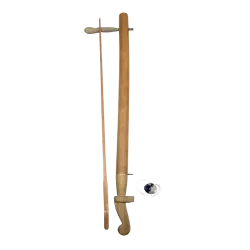
The Kni is a single-string instrument from the Giaray tradition of Vietnam, played by positioning a small round plate behind the teeth while a bamboo bow draws sound from the string. The player's mouth cavity acts as a resonator, and by varying the volume and shape of the mouth, the player modulates the pitch and timbre across a range of overtones.
Construction and Tuning
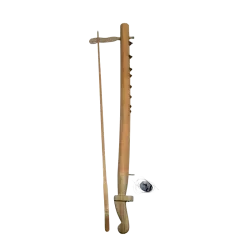
The instrument is built from bamboo and comes with six frets. It is tuned pentatonically, a five-note tuning system common to many Asian string traditions. The small plate that sits behind the teeth during playing is a crucial interface between the player's body and the instrument's vibrating string.
Playing Technique and Sound
Sound production depends on three elements working together: the bamboo bow, which draws across the string; the player's mouth, which resonates and shapes the tone; and the frets, which allow the player to access different pitches. The bow requires rosin before use to generate sufficient friction on the string. By adjusting mouth volume and cavity shape while the bow is in motion, the player can produce a range of tones from a single string — a technique that demands both physical control and listening sensitivity.
What's Included
- Kni instrument with six frets
- Traditional bamboo bow
- Protective bag
Rosin for the bow is not included and must be obtained separately before the instrument can be played.
Optional Accessories
A horsehair bow is available as an alternative to the traditional bamboo bow, offering players the choice to experiment with different bow materials and their sonic effects.
The Kni remains an active instrument in Giaray musical practice, valued for the subtle harmonic complexity it achieves through the integration of the player's body as part of the instrument's resonating system.
Guimbarde buccale K'ni - Accord traditionnel — A single-string instrument from the Giaray tradition of Vietnam, the K'ni produces ethereal, harmonically rich tones by combining oral cavity resonance with a bamboo-bowed string. Played by positioning a small plate behind your teeth, you shape the sound by modifying mouth volume and form while the traditional bamboo bow draws the string, creating an impressive range from a pentatonic-tuned frame. Includes the instrument with six frets, bamboo bow, and protective case; rosin required separately. Ideal for contemporary world music, meditation soundscapes, and musicians seeking textures that transcend conventional Western instruments.
| Weight | 0,45 kg |
|---|---|
| Origin | Vietnam |
| Dimensions | 73,0 cm |
| Materials | Bamboo |
⚠Caution: Not suitable for children under 3 years. Please supervise older children. Beware of swallowing small parts, strangulation, material allergies, sharp edges and points! Use only for sound generation. No liability for improper use.
✦Care: Extreme temperature fluctuations, humidity and direct sunlight can affect the lifespan. Please store in balanced humidity to prevent material changes, mold and corrosion. Remove dirt with a damp cloth. Dry after cleaning and each use.
♻Disposal: Please contact your local waste disposal authority for information on environmentally sound disposal!
Kni — Vietnamese Mouth-Resonating String Instrument
The Kni is a single-string instrument from the Giaray tradition of Vietnam, played by positioning a small round plate behind the teeth while a bamboo bow draws sound from the string. The player's mouth cavity acts as a resonator, and by varying the volume and shape of the mouth, the player modulates the pitch and timbre across a range of overtones.
Construction and Tuning
The instrument is built from bamboo and comes with six frets. It is tuned pentatonically, a five-note tuning system common to many Asian string traditions. The small plate that sits behind the teeth during playing is a crucial interface between the player's body and the instrument's vibrating string.
Playing Technique and Sound
Sound production depends on three elements working together: the bamboo bow, which draws across the string; the player's mouth, which resonates and shapes the tone; and the frets, which allow the player to access different pitches. The bow requires rosin before use to generate sufficient friction on the string. By adjusting mouth volume and cavity shape while the bow is in motion, the player can produce a range of tones from a single string — a technique that demands both physical control and listening sensitivity.
What's Included
- Kni instrument with six frets
- Traditional bamboo bow
- Protective bag
Rosin for the bow is not included and must be obtained separately before the instrument can be played.
Optional Accessories
A horsehair bow is available as an alternative to the traditional bamboo bow, offering players the choice to experiment with different bow materials and their sonic effects.
The Kni remains an active instrument in Giaray musical practice, valued for the subtle harmonic complexity it achieves through the integration of the player's body as part of the instrument's resonating system.
Your review appreciation cannot be sent
Report comment
Report sent
Your report cannot be sent
Write your review
Review sent
Your review cannot be sent