Wind Chime Furin Iwachu Tsurigane 5.5 cm
Tsurigane Furin: A Cast Iron Wind Chime from Japan
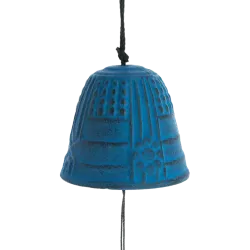
This small wind chime is cast from iron in the Japanese tradition, designed to respond to air currents with a clear, sustained tone. Measuring 5.5 cm across and 6.5 cm tall, it belongs to a family of hanging bells whose aesthetic and sonic principles derive from the larger ceremonial bells found in Buddhist temples.
Design and Construction
The chime is made entirely of cast iron, a material chosen for its ability to produce a resonant sound and its durability across seasons. The form echoes that of traditional temple bells—compact and weighted, with a shape designed to catch the wind and ring clearly when struck by the suspended clapper inside.
Each piece is cast by hand using methods refined over centuries within the Nambu-Tekki metalworking tradition of Japan. This approach ensures that no two chimes are identical; variations in the casting and finishing are inherent to the process.
Sound and Use
The tone produced is described as subtle and refreshing—neither sharp nor overly deep, but clear enough to be heard across a room or garden space. The chime responds to gentle air movement, making it suitable for indoor placement near a window, or outdoors on a balcony or in a garden where breezes are regular.
Cultural Context
Wind chimes of this type, called furin, have been used in Japanese culture for centuries. Historically, they were placed in temples and homes as a means to ward off harmful spirits and encourage positive energy. The practice reflects a broader Japanese aesthetic principle known as mono no aware—the appreciation of transience and impermanence. Each sound from the chime marks a passing moment, embodying this philosophical concept.
What's Included
The chime arrives ready to hang. It includes all necessary components for immediate installation and use.
The furin remains a common fixture in Japanese homes, gardens and temples, where its intermittent voice marks the passage of wind and time.
Wind Chime Furin Iwachu Tsurigane 5.5 cm — A compact cast-iron wind chime from Japan's Iwachu foundry, designed after the hanging bells of Buddhist temples. Standing 6.5 cm tall with a 5.5 cm diameter, this tsurigane produces a soft, resonant tone that captures passing breezes. Handcrafted using techniques refined over four centuries in the Nambu-Tekki tradition, it brings contemplative beauty to living rooms, gardens, and balconies. A small vessel of Japanese craftsmanship that transforms air into sound.
| Origin | Japan |
|---|---|
| Weight | 0,17 kg |
| Dimensions | 5,5 × 5,5 × 6,5 cm |
| Materials | Cast iron |
⚠Caution: Not suitable for children under 3 years. Please supervise older children. Beware of swallowing small parts, strangulation, material allergies, sharp edges and points! Use only for sound generation. No liability for improper use.
✦Care: Extreme temperature fluctuations, humidity and direct sunlight can affect the lifespan. Please store in balanced humidity to prevent material changes, mold and corrosion. Remove dirt with a damp cloth. Dry after cleaning and each use.
♻Disposal: Please contact your local waste disposal authority for information on environmentally sound disposal!
Tsurigane Furin: A Cast Iron Wind Chime from Japan
This small wind chime is cast from iron in the Japanese tradition, designed to respond to air currents with a clear, sustained tone. Measuring 5.5 cm across and 6.5 cm tall, it belongs to a family of hanging bells whose aesthetic and sonic principles derive from the larger ceremonial bells found in Buddhist temples.
Design and Construction
The chime is made entirely of cast iron, a material chosen for its ability to produce a resonant sound and its durability across seasons. The form echoes that of traditional temple bells—compact and weighted, with a shape designed to catch the wind and ring clearly when struck by the suspended clapper inside.
Each piece is cast by hand using methods refined over centuries within the Nambu-Tekki metalworking tradition of Japan. This approach ensures that no two chimes are identical; variations in the casting and finishing are inherent to the process.
Sound and Use
The tone produced is described as subtle and refreshing—neither sharp nor overly deep, but clear enough to be heard across a room or garden space. The chime responds to gentle air movement, making it suitable for indoor placement near a window, or outdoors on a balcony or in a garden where breezes are regular.
Cultural Context
Wind chimes of this type, called furin, have been used in Japanese culture for centuries. Historically, they were placed in temples and homes as a means to ward off harmful spirits and encourage positive energy. The practice reflects a broader Japanese aesthetic principle known as mono no aware—the appreciation of transience and impermanence. Each sound from the chime marks a passing moment, embodying this philosophical concept.
What's Included
The chime arrives ready to hang. It includes all necessary components for immediate installation and use.
The furin remains a common fixture in Japanese homes, gardens and temples, where its intermittent voice marks the passage of wind and time.
Your review appreciation cannot be sent
Report comment
Report sent
Your report cannot be sent
Write your review
Review sent
Your review cannot be sent