Singing Bowl Sakya
Singing Bowl Sakya
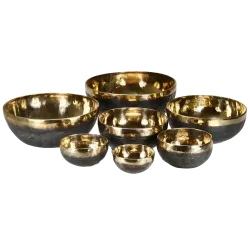
The Sakya singing bowl is a hand-wrought brass instrument from Nepal, designed to produce sustained, resonant tones suitable for meditation, yoga, and sound work. Its construction combines brass with bronze, leather, wool felt, and wood components, each contributing to both its acoustic properties and durability.
Sound and Playing Method
The bowl responds to two distinct playing techniques. You can strike it with a mallet to produce immediate, clear tones that sustain and evolve over time. Alternatively, you can rub the rim or outer surface with a mallet or stick in a circular motion, which generates a continuous sound with pulsing harmonics—overtones that shimmer and shift within the overall tone.
The satin-finished bronze surface contributes to the bowl's tonal character, producing harmonics that develop smoothly rather than harshly. This makes the instrument particularly suited to extended listening and meditative practice, where gradual harmonic development supports sustained attention.
Construction and Materials
Hand-wrought construction means each bowl is individually shaped and finished, resulting in slight variations between pieces. The brass body forms the primary resonating chamber, while the bronze finish affects both appearance and acoustic response. The included leather and wool felt components serve practical purposes: the felt typically forms a cushion base that protects the bowl during storage and use, while the leather may be part of the mallet or striker assembly.
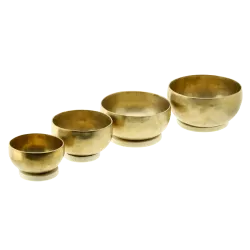
Because all singing bowls of this type are hand-formed, dimensions and weight vary within a range. Available sizes span from approximately 2000 grams to 3500 grams, with corresponding diameter and height variations.
What's Included
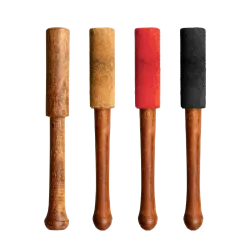
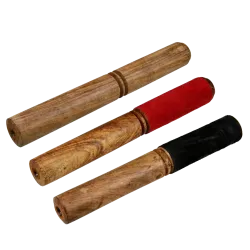
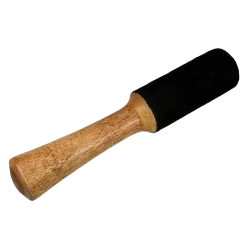
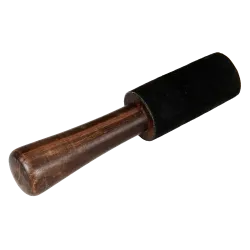
Each Singing Bowl Sakya comes with a mallet, a stick, and a cushion. The mallet and stick offer different striking and rubbing options, allowing you to explore the bowl's full range of tonal possibilities. The cushion provides stable support during play and protects the instrument when not in use.
Mallet Selection
Any of the available mallets can produce sound from the bowl, but matching mallet size to bowl size typically yields the best results. Smaller mallets suit smaller bowls, while larger mallets work more effectively with bigger instruments. Adjacent sizes—one size up or down—generally work well together, offering flexibility if you own multiple bowls or wish to experiment with different tonal qualities.
Singing bowls of this type remain central to contemplative practice across the Himalayan region and beyond, valued for their capacity to sustain attention and create immersive sonic environments.
Singing Bowl Sakya — Handcrafted singing bowl from Nepal, forged in traditional metal alloy with a rich, sustained resonance ideal for meditation, yoga, and sound therapy. Hand-struck or friction-played to produce evolving harmonics and deep tones. Includes mallet, stick, and cushion. A timeless Himalayan instrument for contemplative practice and sonic exploration.
| Origin | Nepal |
|---|---|
| Materials | Brass - Leather - Sheep wool felt - Wood - Bronze |
⚠Caution: Not suitable for children under 3 years. Please supervise older children. Beware of swallowing small parts, strangulation, material allergies, sharp edges and points! Use only for sound generation. No liability for improper use.
✦Care: Extreme temperature fluctuations, humidity and direct sunlight can affect the lifespan. Please store in balanced humidity to prevent material changes, mold and corrosion. Remove dirt with a damp cloth. Dry after cleaning and each use.
♻Disposal: Please contact your local waste disposal authority for information on environmentally sound disposal!
Singing Bowl Sakya
The Sakya singing bowl is a hand-wrought brass instrument from Nepal, designed to produce sustained, resonant tones suitable for meditation, yoga, and sound work. Its construction combines brass with bronze, leather, wool felt, and wood components, each contributing to both its acoustic properties and durability.
Sound and Playing Method
The bowl responds to two distinct playing techniques. You can strike it with a mallet to produce immediate, clear tones that sustain and evolve over time. Alternatively, you can rub the rim or outer surface with a mallet or stick in a circular motion, which generates a continuous sound with pulsing harmonics—overtones that shimmer and shift within the overall tone.
The satin-finished bronze surface contributes to the bowl's tonal character, producing harmonics that develop smoothly rather than harshly. This makes the instrument particularly suited to extended listening and meditative practice, where gradual harmonic development supports sustained attention.
Construction and Materials
Hand-wrought construction means each bowl is individually shaped and finished, resulting in slight variations between pieces. The brass body forms the primary resonating chamber, while the bronze finish affects both appearance and acoustic response. The included leather and wool felt components serve practical purposes: the felt typically forms a cushion base that protects the bowl during storage and use, while the leather may be part of the mallet or striker assembly.
Because all singing bowls of this type are hand-formed, dimensions and weight vary within a range. Available sizes span from approximately 2000 grams to 3500 grams, with corresponding diameter and height variations.
What's Included
Each Singing Bowl Sakya comes with a mallet, a stick, and a cushion. The mallet and stick offer different striking and rubbing options, allowing you to explore the bowl's full range of tonal possibilities. The cushion provides stable support during play and protects the instrument when not in use.
Mallet Selection
Any of the available mallets can produce sound from the bowl, but matching mallet size to bowl size typically yields the best results. Smaller mallets suit smaller bowls, while larger mallets work more effectively with bigger instruments. Adjacent sizes—one size up or down—generally work well together, offering flexibility if you own multiple bowls or wish to experiment with different tonal qualities.
Singing bowls of this type remain central to contemplative practice across the Himalayan region and beyond, valued for their capacity to sustain attention and create immersive sonic environments.
Your review appreciation cannot be sent
Report comment
Report sent
Your report cannot be sent
Write your review
Review sent
Your review cannot be sent