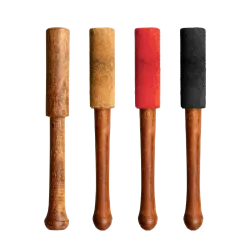
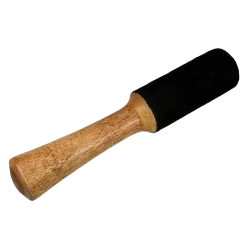
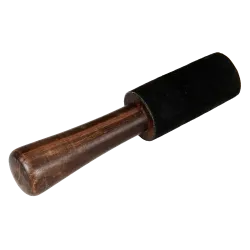
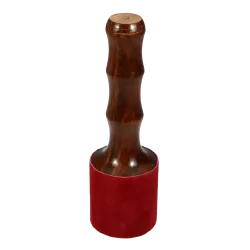
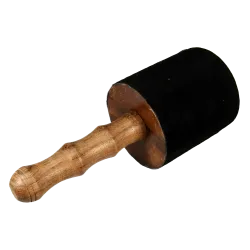
Singing Bowl Mallet 19x3
Mallet for Singing Bowls — 19 × 3 cm
A small wooden and leather mallet designed to activate metal singing bowls in the medium to large range, typically those weighing around 500 grams or more. The tool's design accommodates two distinct playing methods: striking the bowl's rim for a clear, defined tone, or rubbing it in circular motions to sustain resonance.
Construction and Materials
The mallet combines a wooden core with a leather wrapping. This dual-material construction serves two acoustic purposes. The exposed wood produces the clearest, most articulate tone when the bowl is struck directly on the rim. The leather-wrapped section, by contrast, facilitates the rubbing technique — the softer surface maintains consistent contact with the bowl's curved surface and generates the sustained, continuous tones characteristic of circular playing.
Playing Technique and Sound
Strike the bowl's rim with the wooden end for a sharp, well-defined attack. The resulting tone carries clarity and definition, useful for marking rhythm or creating distinct sonic punctuation. For sustained sound, hold the mallet lightly and move it in steady circular motions around the bowl's outer wall, keeping gentle pressure. The leather surface allows the mallet to glide smoothly without catching, producing the characteristic singing or humming resonance from which the instrument takes its name.
Bowl weight influences the technique required. Heavier bowls (500g and above) respond well to both methods with this mallet's proportions, though larger bowls may benefit from slower circular strokes to build resonance gradually.
Applications
Singing bowls and their mallets feature in meditation, sound healing sessions, and yoga practices, where sustained tones create an immersive acoustic environment. They also appear in musical exploration and contemporary sound design, where the bowl's harmonic content can be investigated and layered with other instruments or ambient sound.
What's Included
- One mallet (wooden and leather construction)
Care and Use
The leather wrapping will gradually show wear from regular circular rubbing — this is normal and does not impair function. Store the mallet in a dry location to prevent the wood from warping. If the leather becomes loose, it can be rewrapped or replaced by a craftsperson familiar with mallet repair.
The singing bowl and its mallet remain central tools in sound meditation traditions across Asia and increasingly in Western wellness practices.
Singing Bowl Mallet 19x3 — This Indian accessory, 19 cm in length, crafted from wood and leather, is designed to activate medium to large-sized metal singing bowls. Perfectly balanced, it allows for sharp striking of the rim as well as circular rubbing to generate clear sounds or continuous resonances. Ideal for meditation sessions, yoga, or musical sound exploration. A traditional tool that reveals the acoustic richness of your bowl.
| Origin | India |
|---|---|
| Dimensions | 19,0 × 3,0 × 3,0 cm |
| Materials | Leather - Wood |
⚠Caution: Not suitable for children under 3 years. Please supervise older children. Beware of swallowing small parts, strangulation, material allergies, sharp edges and points! Use only for sound generation. No liability for improper use.
✦Care: Extreme temperature fluctuations, humidity and direct sunlight can affect the lifespan. Please store in balanced humidity to prevent material changes, mold and corrosion. Remove dirt with a damp cloth. Dry after cleaning and each use.
♻Disposal: Please contact your local waste disposal authority for information on environmentally sound disposal!
Mallet for Singing Bowls — 19 × 3 cm
A small wooden and leather mallet designed to activate metal singing bowls in the medium to large range, typically those weighing around 500 grams or more. The tool's design accommodates two distinct playing methods: striking the bowl's rim for a clear, defined tone, or rubbing it in circular motions to sustain resonance.
Construction and Materials
The mallet combines a wooden core with a leather wrapping. This dual-material construction serves two acoustic purposes. The exposed wood produces the clearest, most articulate tone when the bowl is struck directly on the rim. The leather-wrapped section, by contrast, facilitates the rubbing technique — the softer surface maintains consistent contact with the bowl's curved surface and generates the sustained, continuous tones characteristic of circular playing.
Playing Technique and Sound
Strike the bowl's rim with the wooden end for a sharp, well-defined attack. The resulting tone carries clarity and definition, useful for marking rhythm or creating distinct sonic punctuation. For sustained sound, hold the mallet lightly and move it in steady circular motions around the bowl's outer wall, keeping gentle pressure. The leather surface allows the mallet to glide smoothly without catching, producing the characteristic singing or humming resonance from which the instrument takes its name.
Bowl weight influences the technique required. Heavier bowls (500g and above) respond well to both methods with this mallet's proportions, though larger bowls may benefit from slower circular strokes to build resonance gradually.
Applications
Singing bowls and their mallets feature in meditation, sound healing sessions, and yoga practices, where sustained tones create an immersive acoustic environment. They also appear in musical exploration and contemporary sound design, where the bowl's harmonic content can be investigated and layered with other instruments or ambient sound.
What's Included
- One mallet (wooden and leather construction)
Care and Use
The leather wrapping will gradually show wear from regular circular rubbing — this is normal and does not impair function. Store the mallet in a dry location to prevent the wood from warping. If the leather becomes loose, it can be rewrapped or replaced by a craftsperson familiar with mallet repair.
The singing bowl and its mallet remain central tools in sound meditation traditions across Asia and increasingly in Western wellness practices.
Your review appreciation cannot be sent
Report comment
Report sent
Your report cannot be sent
Write your review
Review sent
Your review cannot be sent