Shaman Rattle Shipibo

Price: €22.40
SKU RSS-12M Category Shakers & Rattles

Shipibo Shamanic Rattle

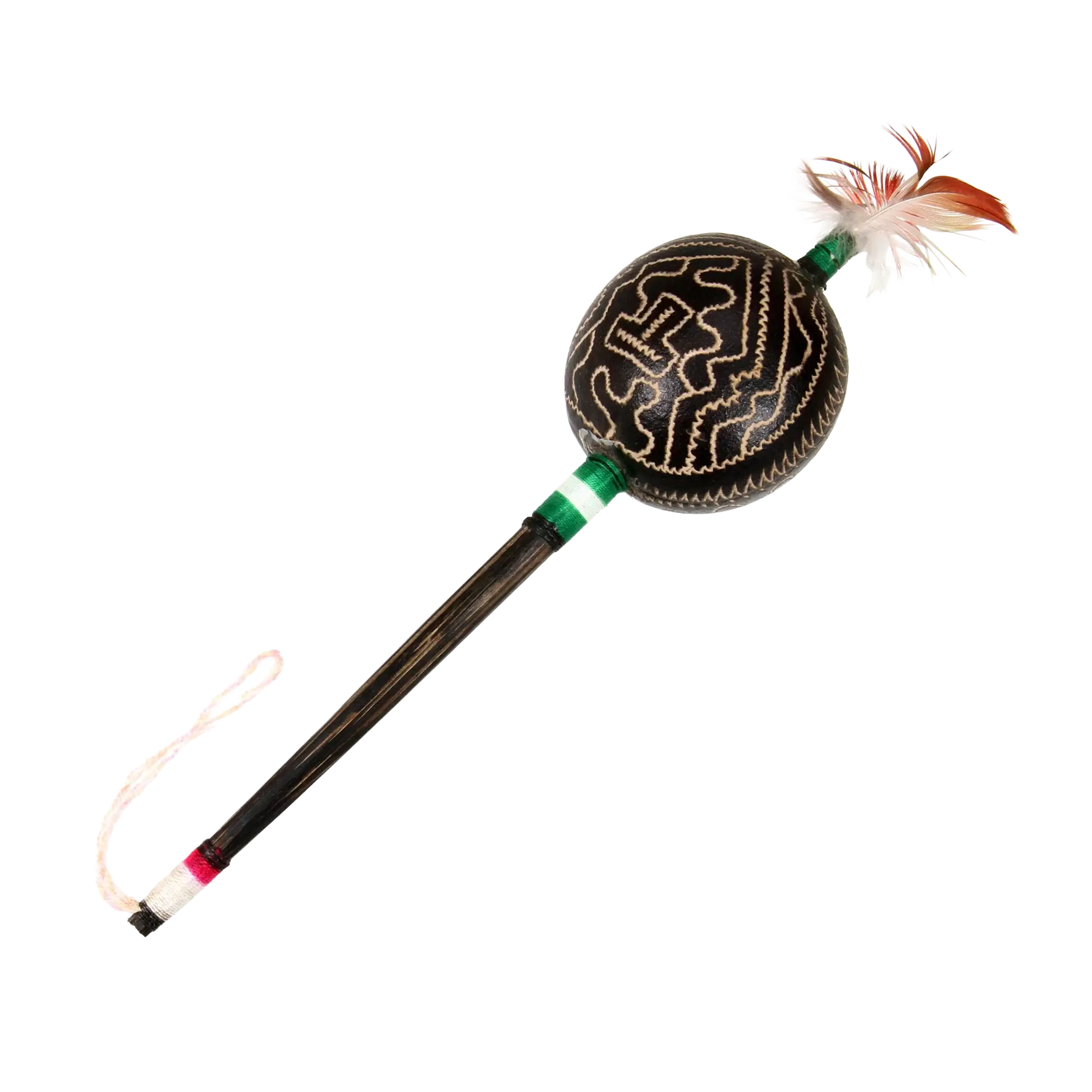
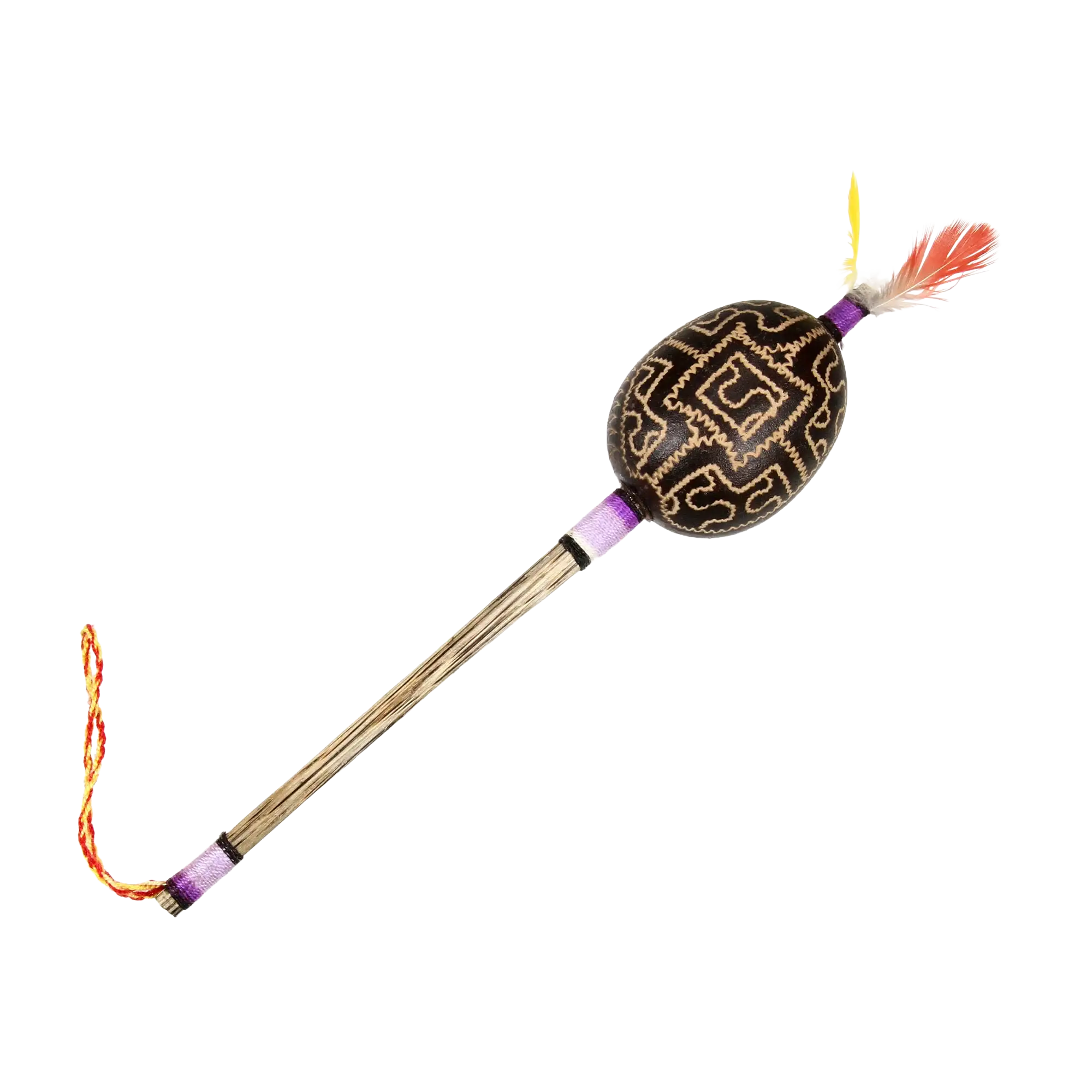
This rattle is a gourd-based percussion instrument handmade by Shipibo-Conibo women in the Amazon lowlands of Peru. The sounding body is formed from the tutuma fruit of the calabash tree, hollowed and dried, with a wooden handle that provides control and leverage during play. Each rattle is decorated with hand-painted geometric patterns called quené—sacred ornamental lines that originate in the visionary experiences of Shipibo shamans.

Origin and Cultural Significance

The quené patterns are not arbitrary decoration. Within Shipibo tradition, shamans receive these designs during ayahuasca ceremonies, perceiving them as energy lines and melodies from the transcendent realm. The shamans then transmit these patterns to the women of the community, who translate them onto textiles, vessels, and rattles. In this way, each rattle becomes a material expression of spiritual knowledge, unique to the vision and artistry of its maker.

The rattle serves a documented role in shamanic healing ceremonies. During these rituals, the shaman uses the instrument to accompany sacred songs called icaro—melodies believed to harmonise imbalanced energies. The rattle may be played alongside chacapas (leaf-bundle shakers) or independently, its rhythm and timbre supporting the healer's work.

Sound and Playing Characteristics

The sound of the rattle varies significantly with how it is played. A gentle shake produces a soft, meditative quality suited to contemplative practice. Faster, more vigorous shaking generates a brighter, more energetic sound. Deliberate, punctual strikes create sharp accents that cut through ensemble sound. The gourd's natural resonance creates a warm, enveloping tone across this dynamic range.

The wooden handle allows precise control of movement and timing, making the instrument responsive to both subtle and forceful playing techniques. This responsiveness makes it practical for percussion ensembles, early music education, and individual practice.

Materials and Construction

The body is made from tutuma fruit—a natural gourd that is harvested, hollowed, and dried. The handle is fashioned from wood. The interior contains seeds or small stones that produce the rattle's sound when the instrument is shaken. The exterior surface receives hand-painted quené patterns in traditional designs specific to each maker.

What's Included

  • One Shipibo shamanic rattle, ready to play

The rattle remains a central tool in Shipibo shamanic practice and continues to be made by the women of the community as both a spiritual object and a practical percussion instrument for healing work and musical accompaniment.

Price: €22.40
SKU RSS-12M Category Shakers & Rattles

Shaman Rattle Shipibo — A traditional percussion instrument from the Amazon, this rattle combines a naturally hollowed and dried gourd with geometric "quené" patterns hand-painted by Shipibo-Conibo artisans. The natural wooden handle allows for precise gestures, producing sounds that range from soft and soothing to powerful and enveloping depending on the intensity of the movement. Historically used to accompany sacred chants "icaros" during healing ceremonies, it now finds its place in world music, meditation and percussion ensembles. Each piece is unique, bearing the artistic and spiritual imprint of its creator. An instrument that honours Amazonian craftsmanship whilst enriching your musical practice.

Every piece is made individually by skilled artisans, so no two are identical. The images are representative samples — the instrument you receive may differ subtly in shape, colour or design.
Size Large
Audio Samples
Shipibo - Small
Shipibo - Medium
Shipibo - Small-Medium
Origin Peru
Materials Fruit tree calabash - Wood

Caution: Not suitable for children under 3 years. Please supervise older children. Beware of swallowing small parts, strangulation, material allergies, sharp edges and points! Use only for sound generation. No liability for improper use.

Care: Extreme temperature fluctuations, humidity and direct sunlight can affect the lifespan. Please store in balanced humidity to prevent material changes, mold and corrosion. Remove dirt with a damp cloth. Dry after cleaning and each use.

Disposal: Please contact your local waste disposal authority for information on environmentally sound disposal!

Shipibo Shamanic Rattle

This rattle is a gourd-based percussion instrument handmade by Shipibo-Conibo women in the Amazon lowlands of Peru. The sounding body is formed from the tutuma fruit of the calabash tree, hollowed and dried, with a wooden handle that provides control and leverage during play. Each rattle is decorated with hand-painted geometric patterns called quené—sacred ornamental lines that originate in the visionary experiences of Shipibo shamans.

Origin and Cultural Significance

The quené patterns are not arbitrary decoration. Within Shipibo tradition, shamans receive these designs during ayahuasca ceremonies, perceiving them as energy lines and melodies from the transcendent realm. The shamans then transmit these patterns to the women of the community, who translate them onto textiles, vessels, and rattles. In this way, each rattle becomes a material expression of spiritual knowledge, unique to the vision and artistry of its maker.

The rattle serves a documented role in shamanic healing ceremonies. During these rituals, the shaman uses the instrument to accompany sacred songs called icaro—melodies believed to harmonise imbalanced energies. The rattle may be played alongside chacapas (leaf-bundle shakers) or independently, its rhythm and timbre supporting the healer's work.

Sound and Playing Characteristics

The sound of the rattle varies significantly with how it is played. A gentle shake produces a soft, meditative quality suited to contemplative practice. Faster, more vigorous shaking generates a brighter, more energetic sound. Deliberate, punctual strikes create sharp accents that cut through ensemble sound. The gourd's natural resonance creates a warm, enveloping tone across this dynamic range.

The wooden handle allows precise control of movement and timing, making the instrument responsive to both subtle and forceful playing techniques. This responsiveness makes it practical for percussion ensembles, early music education, and individual practice.

Materials and Construction

The body is made from tutuma fruit—a natural gourd that is harvested, hollowed, and dried. The handle is fashioned from wood. The interior contains seeds or small stones that produce the rattle's sound when the instrument is shaken. The exterior surface receives hand-painted quené patterns in traditional designs specific to each maker.

What's Included

  • One Shipibo shamanic rattle, ready to play

The rattle remains a central tool in Shipibo shamanic practice and continues to be made by the women of the community as both a spiritual object and a practical percussion instrument for healing work and musical accompaniment.
Comments (0)
No customer reviews for the moment.

You may also like