Jaw Harp Dan Moi Bass

Price: €13.23
SKU MD-4 Category Dan Moi

Guimbarde Dan Moi - Basse

The Dan Moi - Basse is a Vietnamese jaw harp constructed from brass, engineered to produce resonant tones in the lower register. The larger frame and thicker vibrating tongue generate fundamentally deeper frequencies than the standard model, making it a distinct voice within the jaw harp family. You hold the frame against your upper front teeth, pluck the metal tongue to set it vibrating, then shape your oral cavity and control your breath pressure to filter and modulate the resulting pitch.

Pitch Range and Free Tuning

This instrument offers free tuning across a range spanning A#1, B1, C2, C#2, D2, and D#2. Free tuning means the instrument does not lock to a single fixed pitch; instead, you control the exact note through embouchure adjustment and breathing dynamics. The lower register suits sustained tones and resonant textures rather than rapid melodic lines, making it ideal for meditative or ambient sound-building.

Construction and Materials

Brass construction provides both durability and the specific acoustic properties that characterize this metal's tonal character. The enlarged frame relative to standard models allows the tongue to vibrate with greater amplitude, directly contributing to the deeper sonority. The increased mass of the vibrating element also means the instrument responds more forgivingly to variations in player technique—a practical advantage for beginners establishing their fundamental control.

Playing Technique

You position the frame so the metal tongue rests lightly against your upper front teeth, with the frame opening facing into your mouth. A light pluck or tap sets the tongue in oscillation. Pitch control comes from shaping the space inside your mouth and modulating your breath: tightening the throat produces higher frequencies, while opening the oral cavity and using slower, deeper breathing generates lower tones. The larger size of this bass model gives you more physical working space, making initial tone production more accessible than with smaller instruments.

Clicking or buzzing sounds during play typically indicate the frame vibrating against your teeth rather than the tongue alone. The included instructional material addresses this common early challenge directly.

What Is Included

The package contains written playing instructions and a protective carrying case. The case preserves the instrument and simplifies transport. The instructions cover basic embouchure, breathing technique, and fundamental pitch control—essential reference material as you develop the muscle memory and listening sensitivity needed to respond to the instrument's feedback.

Getting Started

For visual guidance on proper handling and setup, a tutorial demonstrating how to safely pack and unpack the Dan Moi jaw harp shows the correct method for protecting the delicate tongue during storage and transport. Additionally, a second video addresses the clicking issue that sometimes occurs when the frame makes contact with the teeth—practical troubleshooting that accelerates your progress past this common early obstacle.

Musical Applications

The jaw harp appears in Vietnamese folk traditions as a solo voice and accompaniment to sung narrative. In contemporary practice, the instrument has found use in world music ensembles, experimental music, and electronic music production, where its distinctive timbre and ability to subtly bend pitch add textural depth. The lower register of this model suits meditative and ambient contexts particularly well, where sustained, resonant tones form the foundation of a sonic landscape.

The jaw harp remains central to Vietnamese musical heritage, played in rural and urban contexts alike, and continues to attract musicians exploring non-Western approaches to pitch and timbre.

Price: €13.23
SKU MD-4 Category Dan Moi

Guimbarde Dan Moi - Basse — This Vietnamese jaw harp produces warm, resonant tones in the lower register, with a frame and reed designed to vibrate at deeper frequencies than standard models. Brass construction, 12 cm long, and tuned across a free range (A#1–D#2), it's equally suited to beginners seeking immediate melodic results and experienced players exploring textural and meditative soundscapes. Includes playing instructions and protective case. A grounded voice for world music, electronic texture, and rhythmic exploration.

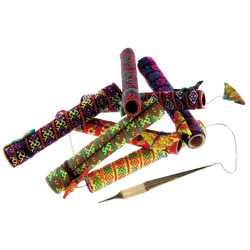
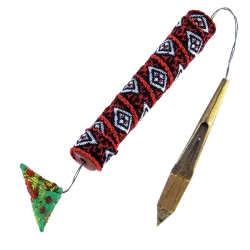
Every piece is made individually by skilled artisans, so no two are identical. The images are representative samples — the instrument you receive may differ subtly in shape, colour or design.
Audio Samples
Bass - Free
Bass - A#1
Bass - B1
Bass - C#2
Bass - D2
Bass - D#2
Origin Vietnam
Dimensions 12,0 cm
Included Playing instructions, Jaw harp bag
Materials Brass
Key Free Tuning A#1 B1 C2 C#2 D2 D#2
Jaw Harp Type Lip-activated jaw harp
Special Features Bass jaw harp recommended for beginners

Caution: Not suitable for children under 3 years. Please supervise older children. Beware of swallowing small parts, strangulation, material allergies, sharp edges and points! Use only for sound generation. No liability for improper use.

Care: Extreme temperature fluctuations, humidity and direct sunlight can affect the lifespan. Please store in balanced humidity to prevent material changes, mold and corrosion. Remove dirt with a damp cloth. Dry after cleaning and each use.

Disposal: Please contact your local waste disposal authority for information on environmentally sound disposal!

Guimbarde Dan Moi - Basse

The Dan Moi - Basse is a Vietnamese jaw harp constructed from brass, engineered to produce resonant tones in the lower register. The larger frame and thicker vibrating tongue generate fundamentally deeper frequencies than the standard model, making it a distinct voice within the jaw harp family. You hold the frame against your upper front teeth, pluck the metal tongue to set it vibrating, then shape your oral cavity and control your breath pressure to filter and modulate the resulting pitch.

Pitch Range and Free Tuning

This instrument offers free tuning across a range spanning A#1, B1, C2, C#2, D2, and D#2. Free tuning means the instrument does not lock to a single fixed pitch; instead, you control the exact note through embouchure adjustment and breathing dynamics. The lower register suits sustained tones and resonant textures rather than rapid melodic lines, making it ideal for meditative or ambient sound-building.

Construction and Materials

Brass construction provides both durability and the specific acoustic properties that characterize this metal's tonal character. The enlarged frame relative to standard models allows the tongue to vibrate with greater amplitude, directly contributing to the deeper sonority. The increased mass of the vibrating element also means the instrument responds more forgivingly to variations in player technique—a practical advantage for beginners establishing their fundamental control.

Playing Technique

You position the frame so the metal tongue rests lightly against your upper front teeth, with the frame opening facing into your mouth. A light pluck or tap sets the tongue in oscillation. Pitch control comes from shaping the space inside your mouth and modulating your breath: tightening the throat produces higher frequencies, while opening the oral cavity and using slower, deeper breathing generates lower tones. The larger size of this bass model gives you more physical working space, making initial tone production more accessible than with smaller instruments.

Clicking or buzzing sounds during play typically indicate the frame vibrating against your teeth rather than the tongue alone. The included instructional material addresses this common early challenge directly.

What Is Included

The package contains written playing instructions and a protective carrying case. The case preserves the instrument and simplifies transport. The instructions cover basic embouchure, breathing technique, and fundamental pitch control—essential reference material as you develop the muscle memory and listening sensitivity needed to respond to the instrument's feedback.

Getting Started

For visual guidance on proper handling and setup, a tutorial demonstrating how to safely pack and unpack the Dan Moi jaw harp shows the correct method for protecting the delicate tongue during storage and transport. Additionally, a second video addresses the clicking issue that sometimes occurs when the frame makes contact with the teeth—practical troubleshooting that accelerates your progress past this common early obstacle.

Musical Applications

The jaw harp appears in Vietnamese folk traditions as a solo voice and accompaniment to sung narrative. In contemporary practice, the instrument has found use in world music ensembles, experimental music, and electronic music production, where its distinctive timbre and ability to subtly bend pitch add textural depth. The lower register of this model suits meditative and ambient contexts particularly well, where sustained, resonant tones form the foundation of a sonic landscape.

The jaw harp remains central to Vietnamese musical heritage, played in rural and urban contexts alike, and continues to attract musicians exploring non-Western approaches to pitch and timbre.
Comments (0)
No customer reviews for the moment.

You may also like