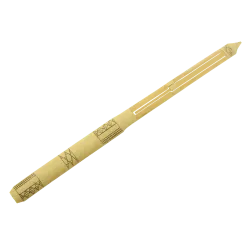
Bamboo Jaw Harp Kubing Crocodile

Price: €9.77
SKU MBP-4B2 Category Kubing

Kubing en Bambou — Motif Crocodile

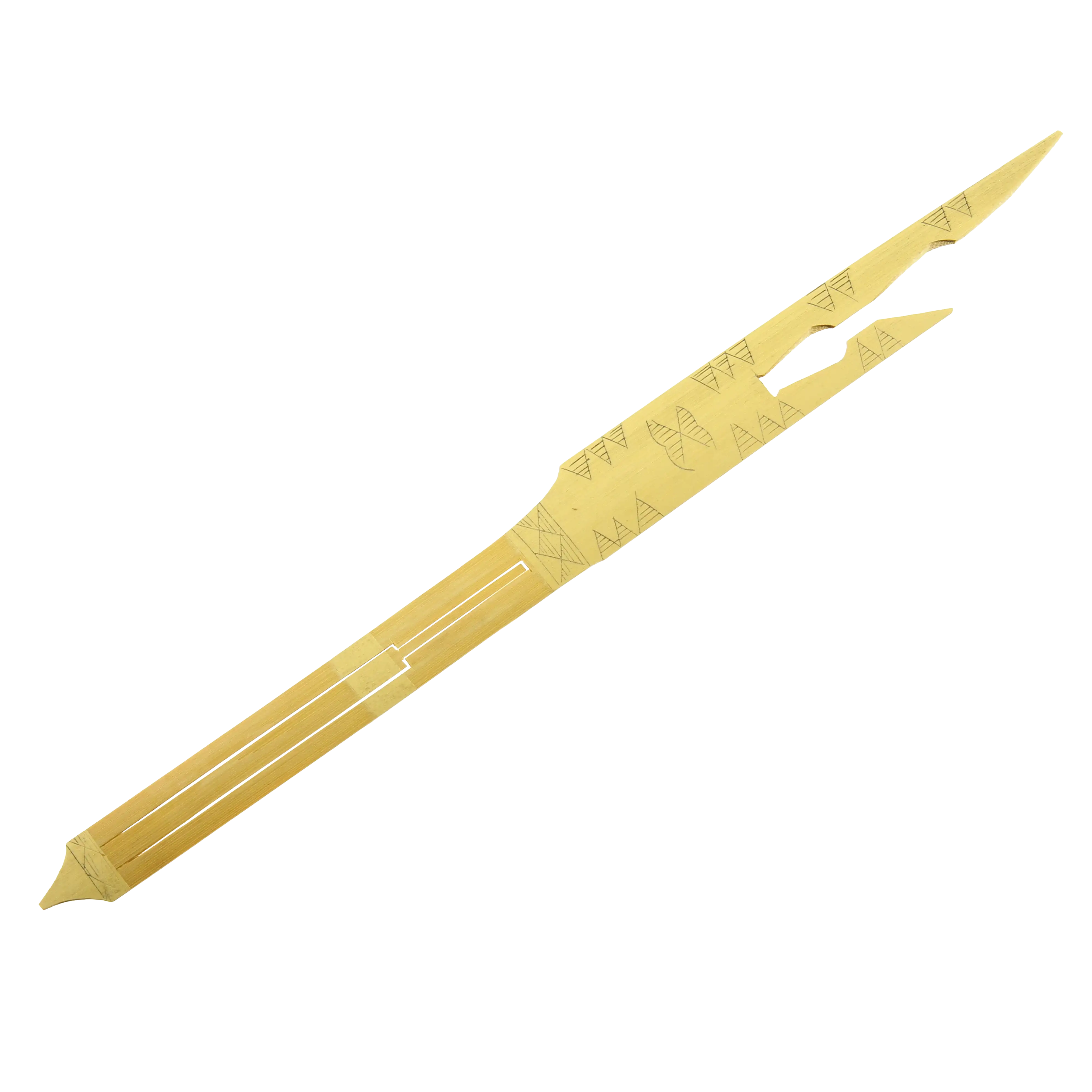
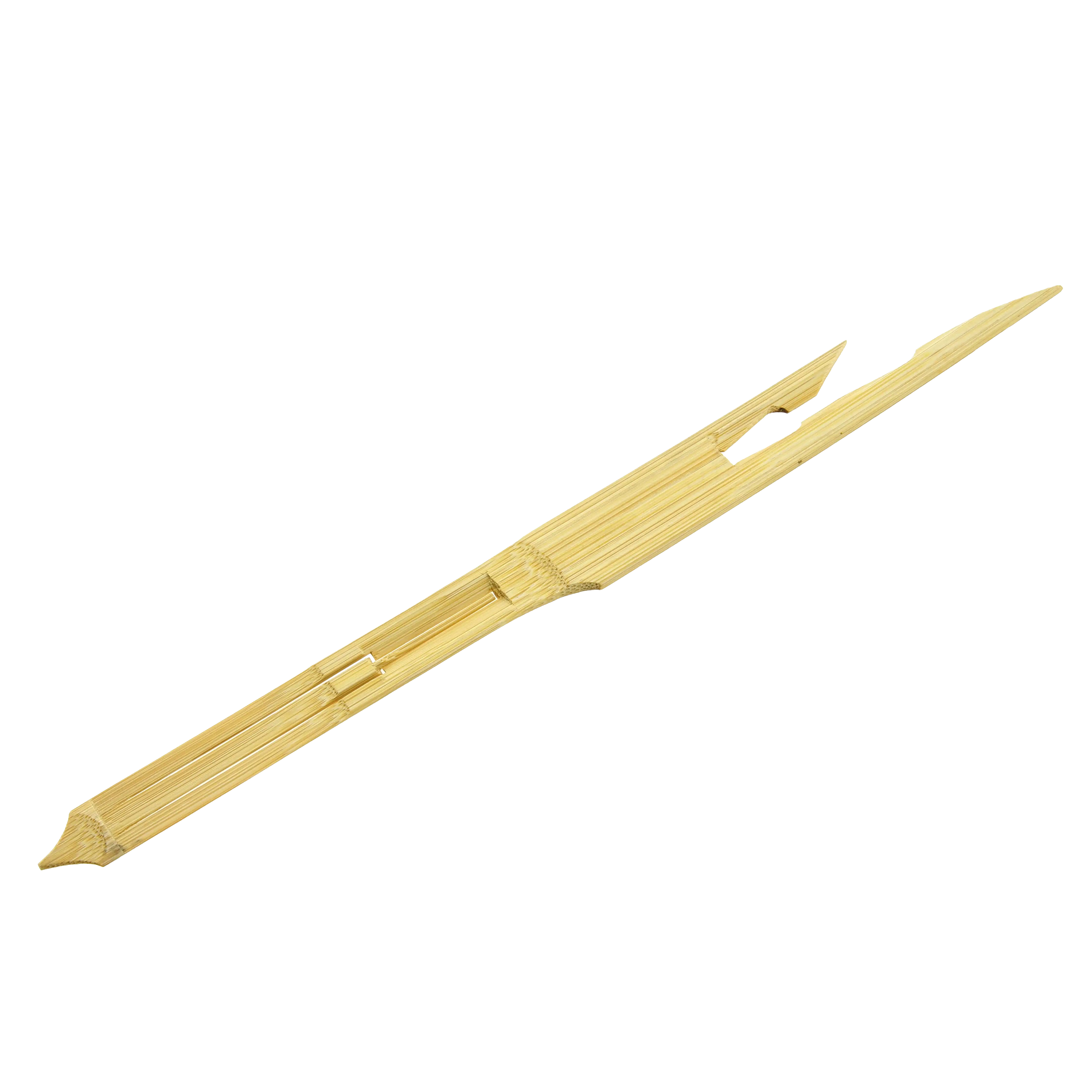
The Kubing is a lip jaw harp from Mindanao, Philippines, made from bamboo and shaped with a handle carved to resemble a crocodile. The grip bears incised decorative details that echo the form of the animal. You hold it against your lips and cause the central tongue to vibrate, producing sound that you shape and modulate by changing the form of your mouth cavity and throat.

Construction and Materials

Bamboo is the primary material — a fast-growing plant that is flexible and durable enough to withstand sustained use without degradation. The choice of bamboo as the working material for a jaw harp means the instrument can produce rich overtones while remaining responsive to subtle pressure and embouchure changes. Each instrument is handcrafted by artisans in Mindanao, a region with a long tradition of this craft.

The crocodile motif is not merely decorative: the carved grip provides an ergonomic hold that keeps the instrument stable against your lips during play, while the incised pattern adds visual character without compromising the structural integrity of the bamboo.

Playing Technique and Sound

You position the jaw harp against your lips so that the vibrating tongue sits just inside your mouth. By varying the shape of your oral cavity — widening or narrowing your throat, moving your tongue, adjusting your jaw — you filter and amplify different harmonic series within the fundamental tone. The result is a warm, organic sound that shifts in colour and brightness according to your mouth position.

The instrument responds well to beginners who are willing to experiment with embouchure and cavity shape; even small adjustments produce audible changes in timbre and pitch. This responsiveness makes it an accessible entry point into jaw harp playing, while the depth of harmonic control available keeps it interesting for experienced players exploring different tonal effects.

Cultural Context

The Kubing belongs to a family of jaw harps played across the Philippines and broader Southeast Asia, where such instruments have been part of traditional music-making for generations. In Mindanao, the craft remains alive among artisans who continue to shape and finish each instrument by hand, maintaining techniques passed down through families and communities.

The Kubing remains an active instrument in Philippine folk music traditions, played both as a solo voice and in ensemble settings where its penetrating, flexible tone complements other traditional instruments.
Price: €9.77
SKU MBP-4B2 Category Kubing

Bamboo Jaw Harp Kubing Crocodile — Traditional jaw harp from the Philippines crafted from quality bamboo, where the central tongue vibrates against your lips to produce a warm and organic sound that you modulate by changing the shape of your mouth cavity. The engraved crocodile motif offers an ergonomic grip whilst reflecting Philippine artisanal craftsmanship. Accessible to beginners, rich in harmonics for musicians seeking authentic ethnic timbres.

Audio Samples
Kubing

Caution: Not suitable for children under 3 years. Please supervise older children. Beware of swallowing small parts, strangulation, material allergies, sharp edges and points! Use only for sound generation. No liability for improper use.

Care: Extreme temperature fluctuations, humidity and direct sunlight can affect the lifespan. Please store in balanced humidity to prevent material changes, mold and corrosion. Remove dirt with a damp cloth. Dry after cleaning and each use.

Disposal: Please contact your local waste disposal authority for information on environmentally sound disposal!

Kubing en Bambou — Motif Crocodile

The Kubing is a lip jaw harp from Mindanao, Philippines, made from bamboo and shaped with a handle carved to resemble a crocodile. The grip bears incised decorative details that echo the form of the animal. You hold it against your lips and cause the central tongue to vibrate, producing sound that you shape and modulate by changing the form of your mouth cavity and throat.

Construction and Materials

Bamboo is the primary material — a fast-growing plant that is flexible and durable enough to withstand sustained use without degradation. The choice of bamboo as the working material for a jaw harp means the instrument can produce rich overtones while remaining responsive to subtle pressure and embouchure changes. Each instrument is handcrafted by artisans in Mindanao, a region with a long tradition of this craft.

The crocodile motif is not merely decorative: the carved grip provides an ergonomic hold that keeps the instrument stable against your lips during play, while the incised pattern adds visual character without compromising the structural integrity of the bamboo.

Playing Technique and Sound

You position the jaw harp against your lips so that the vibrating tongue sits just inside your mouth. By varying the shape of your oral cavity — widening or narrowing your throat, moving your tongue, adjusting your jaw — you filter and amplify different harmonic series within the fundamental tone. The result is a warm, organic sound that shifts in colour and brightness according to your mouth position.

The instrument responds well to beginners who are willing to experiment with embouchure and cavity shape; even small adjustments produce audible changes in timbre and pitch. This responsiveness makes it an accessible entry point into jaw harp playing, while the depth of harmonic control available keeps it interesting for experienced players exploring different tonal effects.

Cultural Context

The Kubing belongs to a family of jaw harps played across the Philippines and broader Southeast Asia, where such instruments have been part of traditional music-making for generations. In Mindanao, the craft remains alive among artisans who continue to shape and finish each instrument by hand, maintaining techniques passed down through families and communities.

The Kubing remains an active instrument in Philippine folk music traditions, played both as a solo voice and in ensemble settings where its penetrating, flexible tone complements other traditional instruments.
Comments (0)
No customer reviews for the moment.

You may also like