The Sound Frog Family
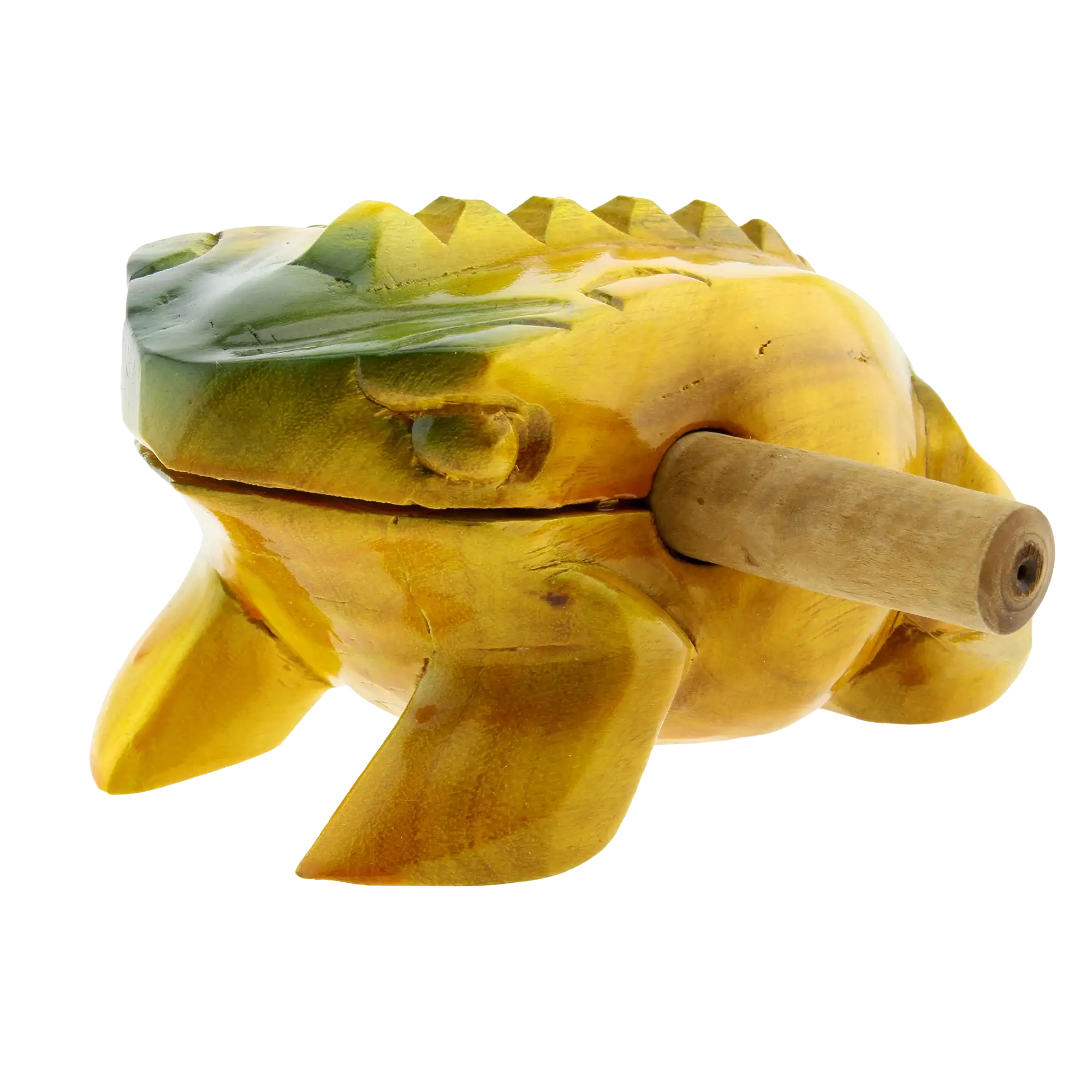
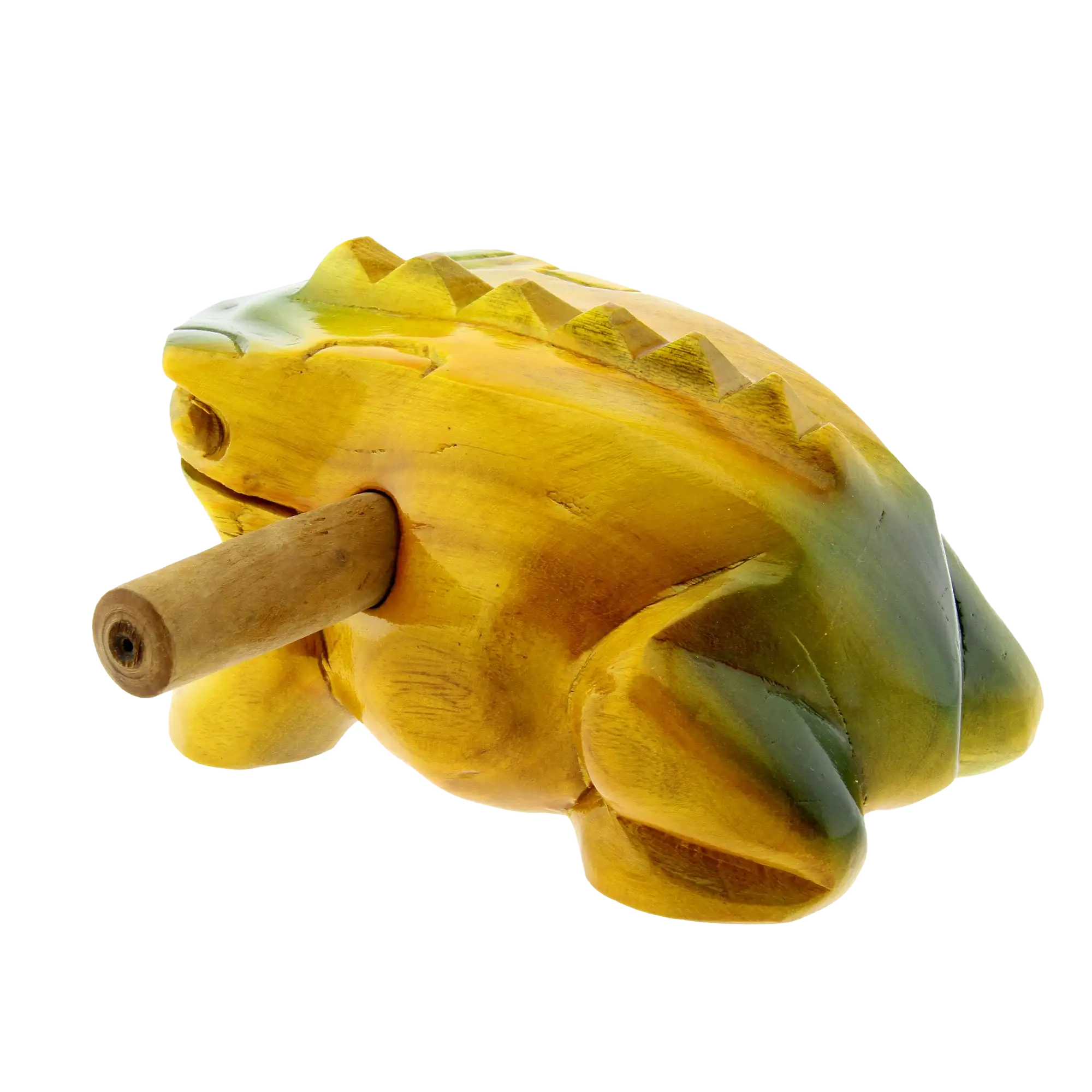
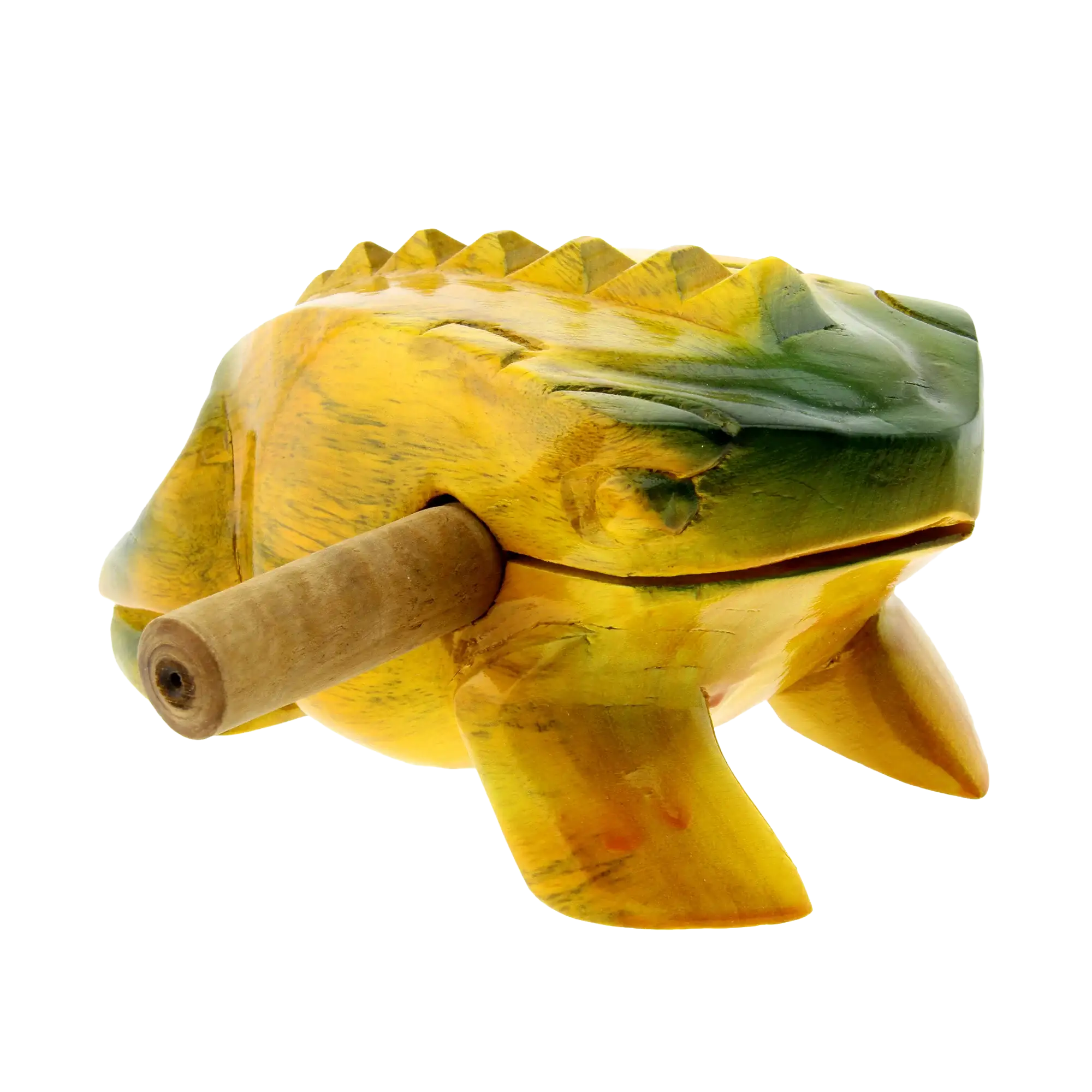
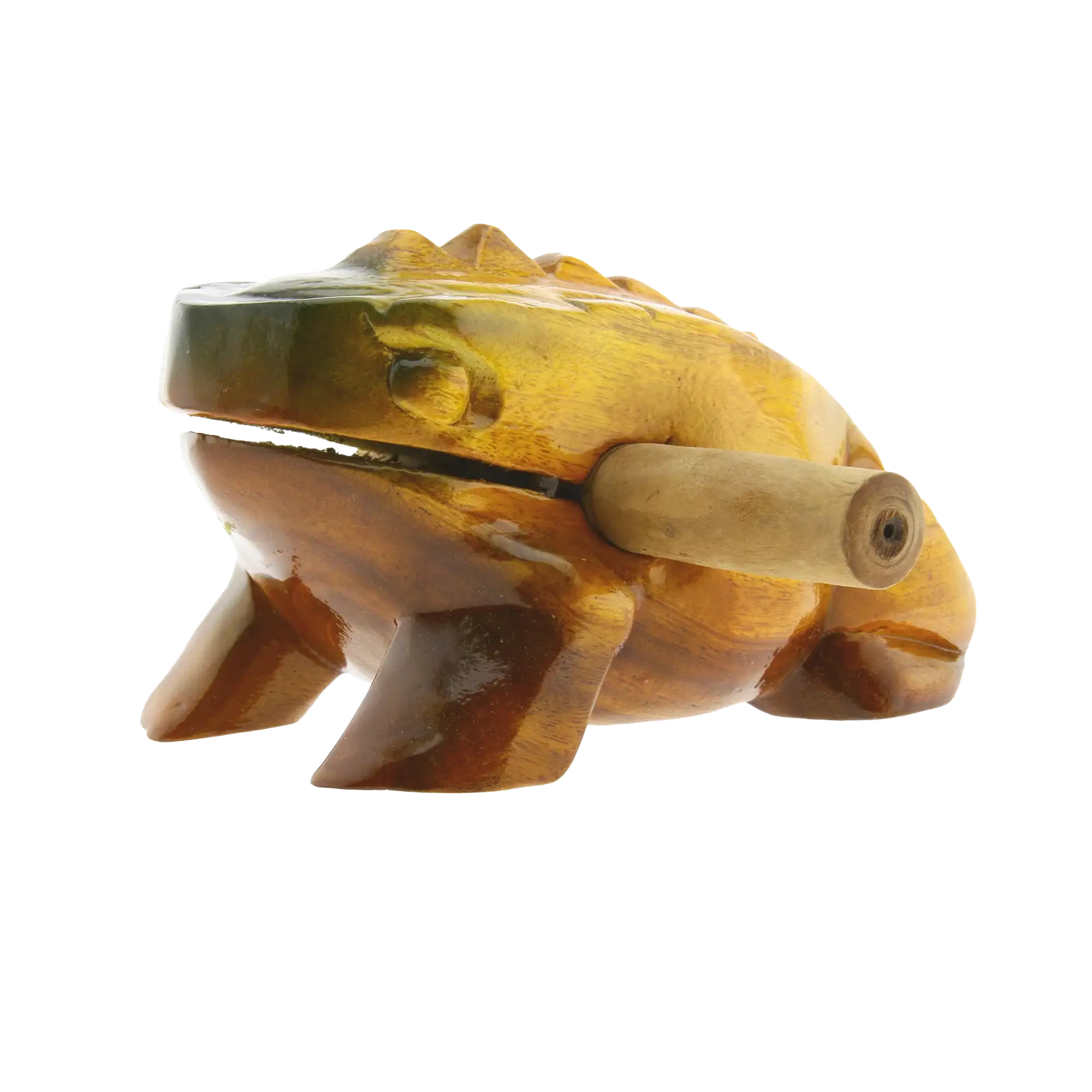
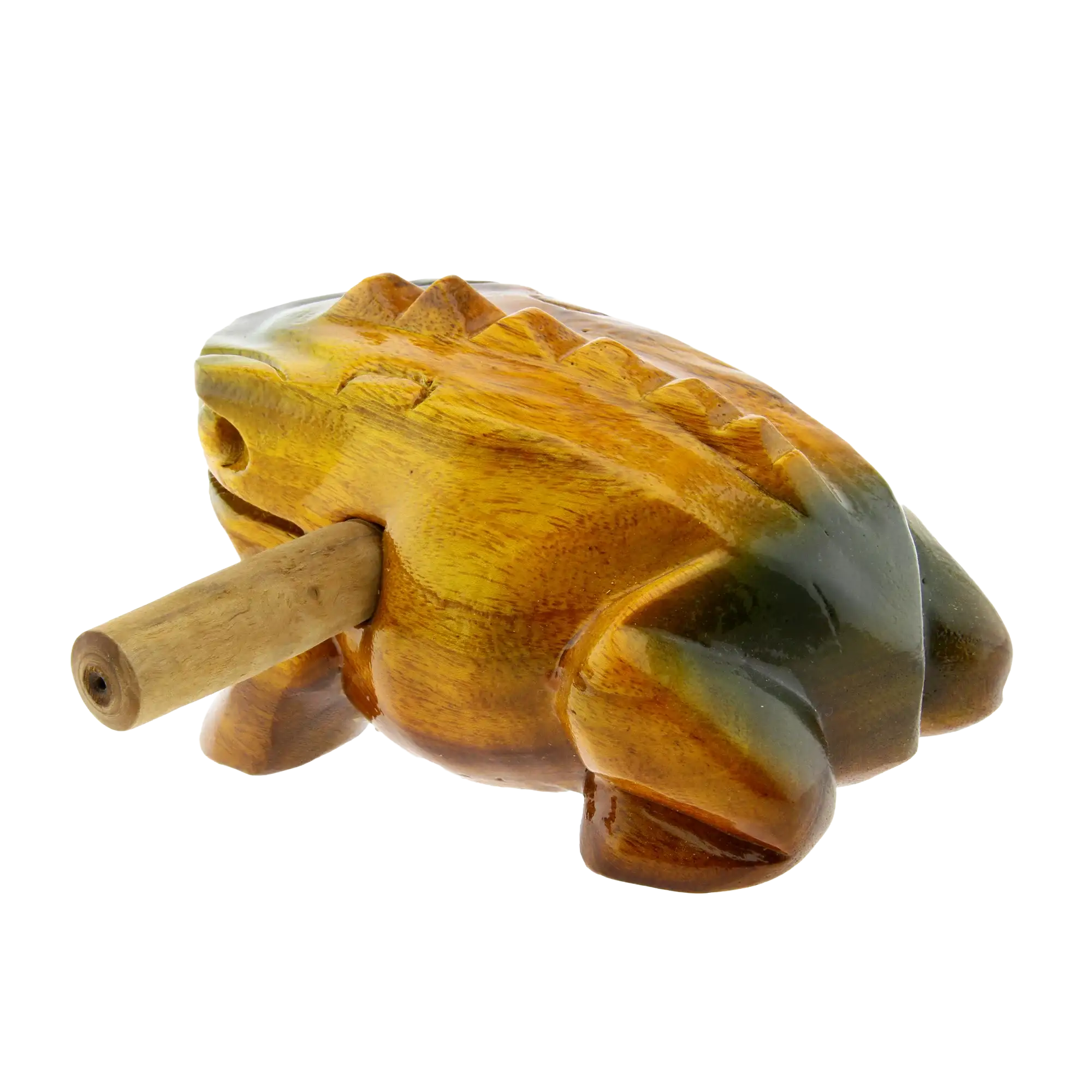
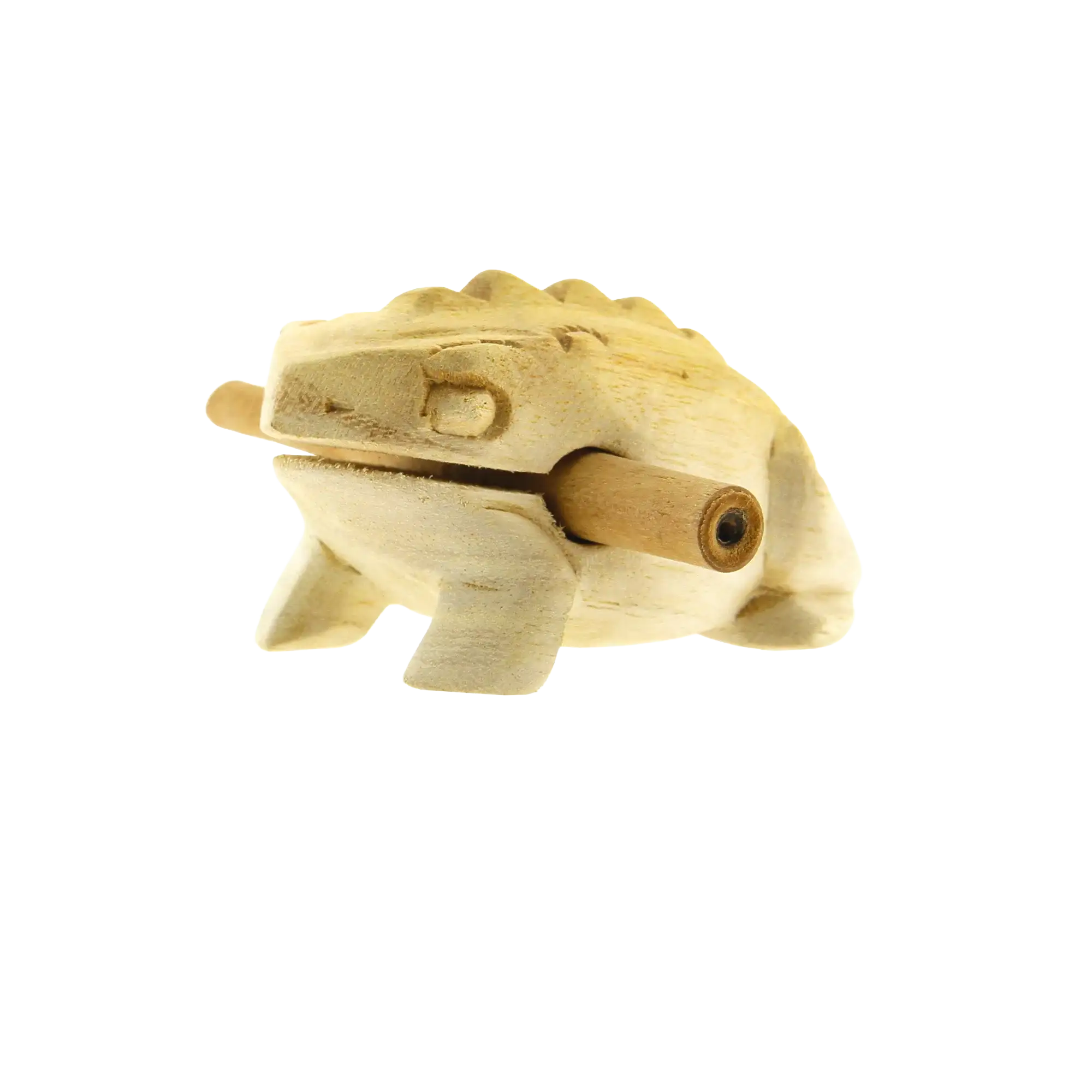
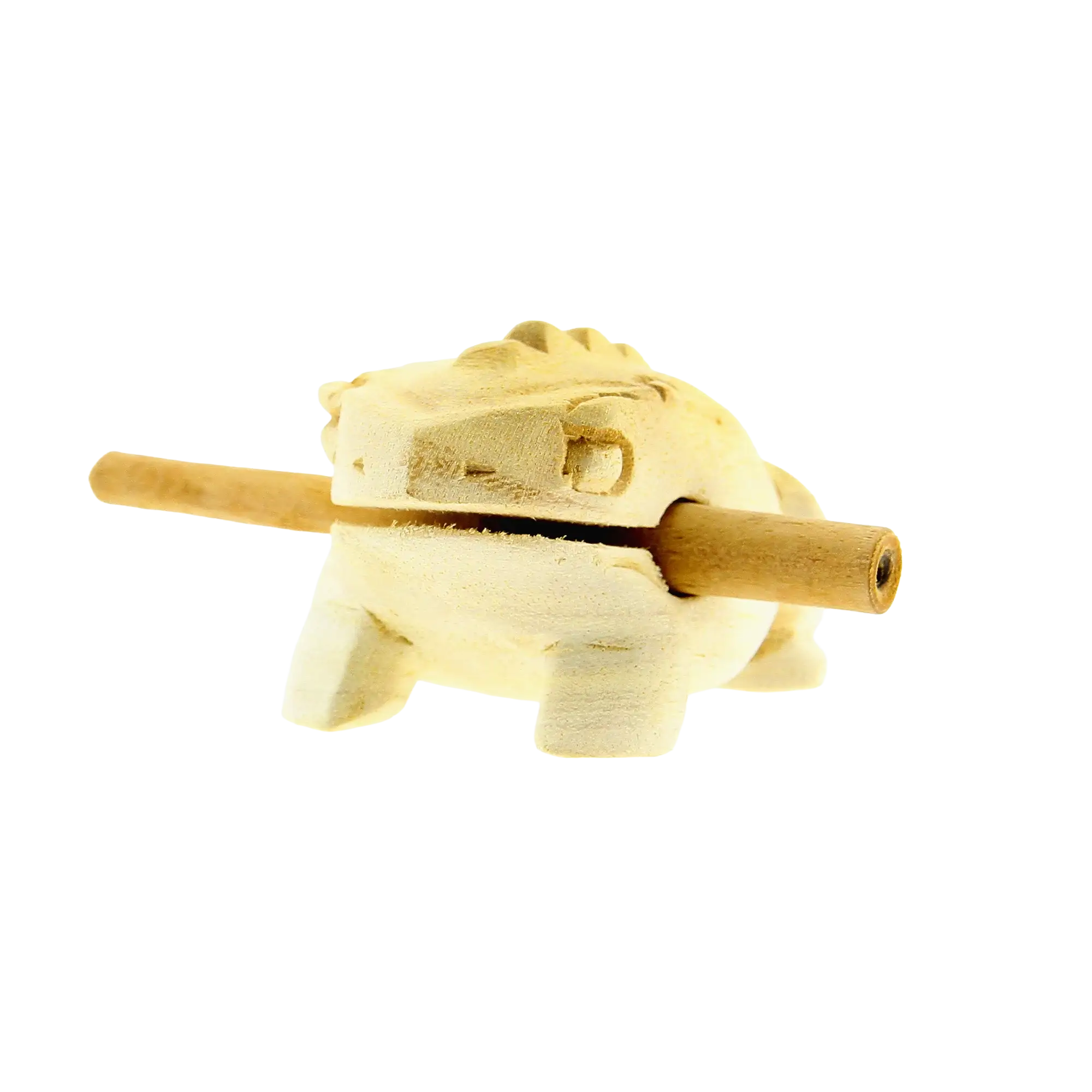
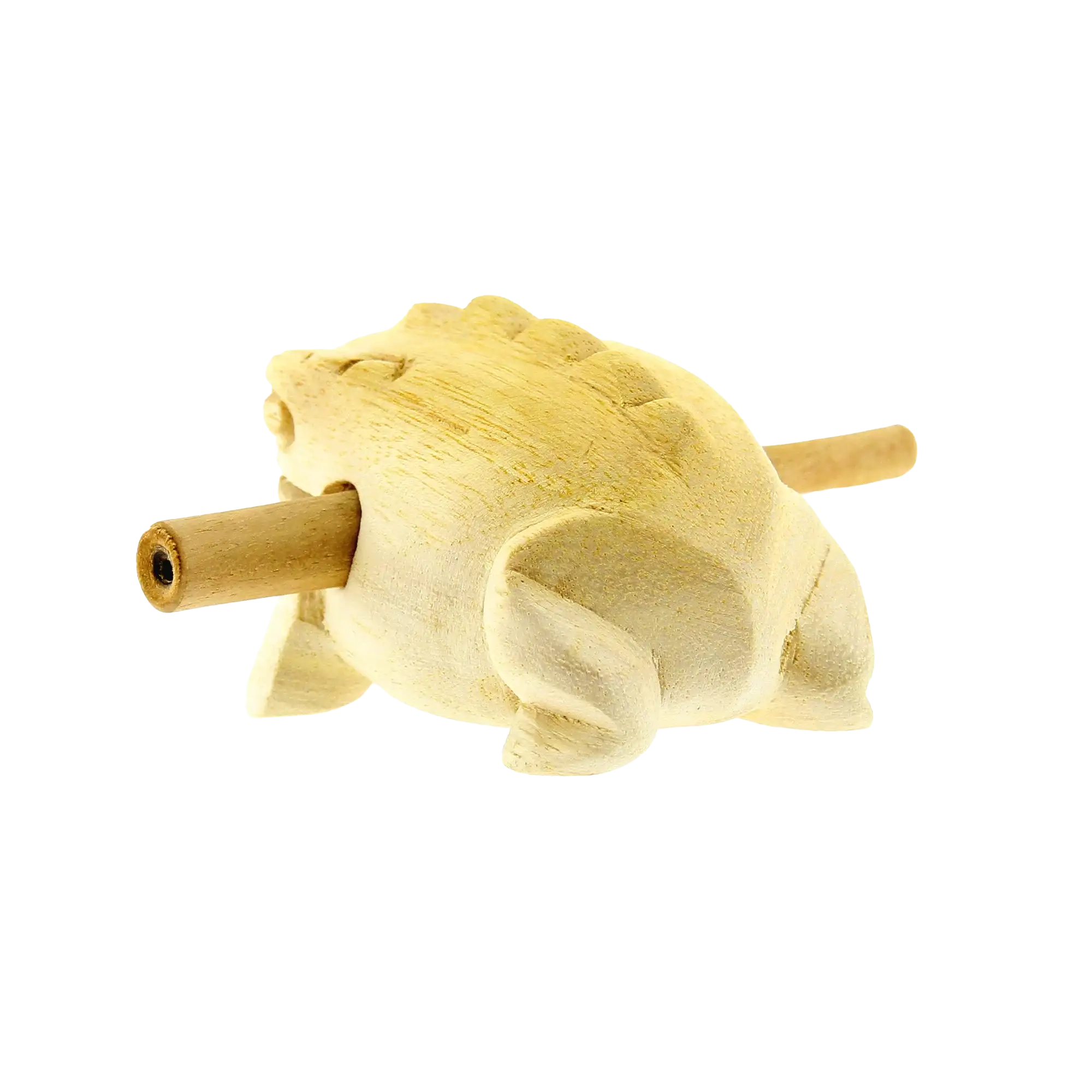
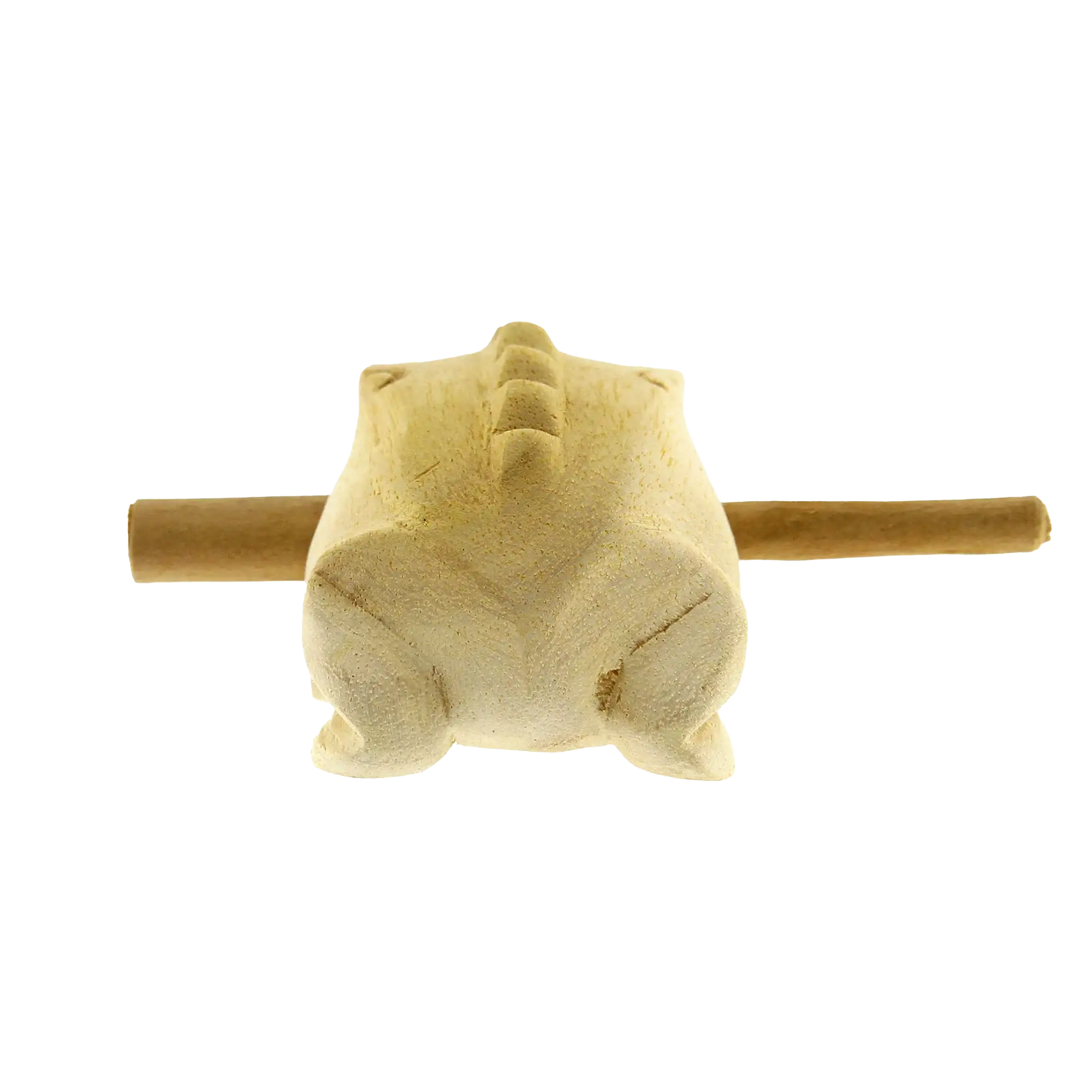
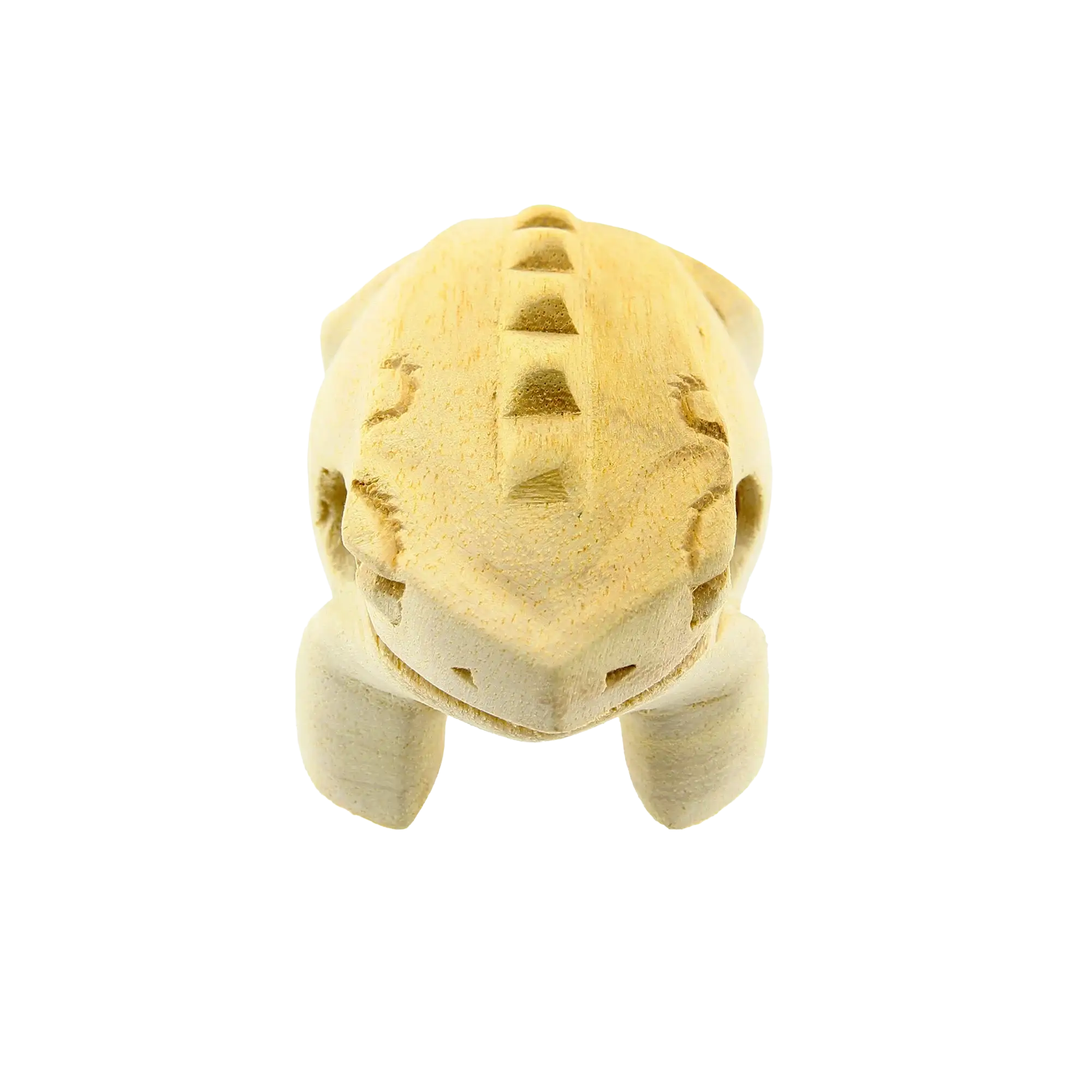
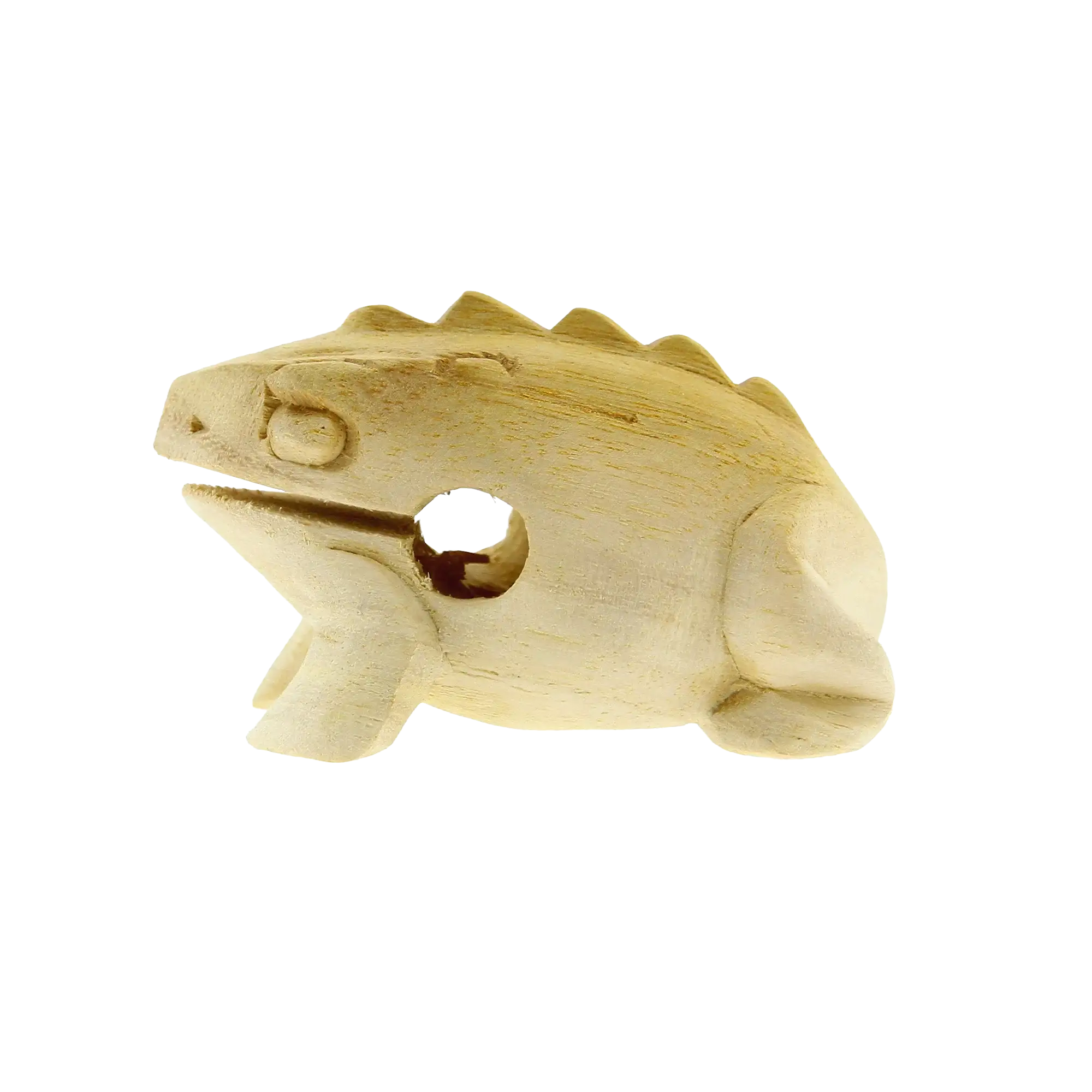
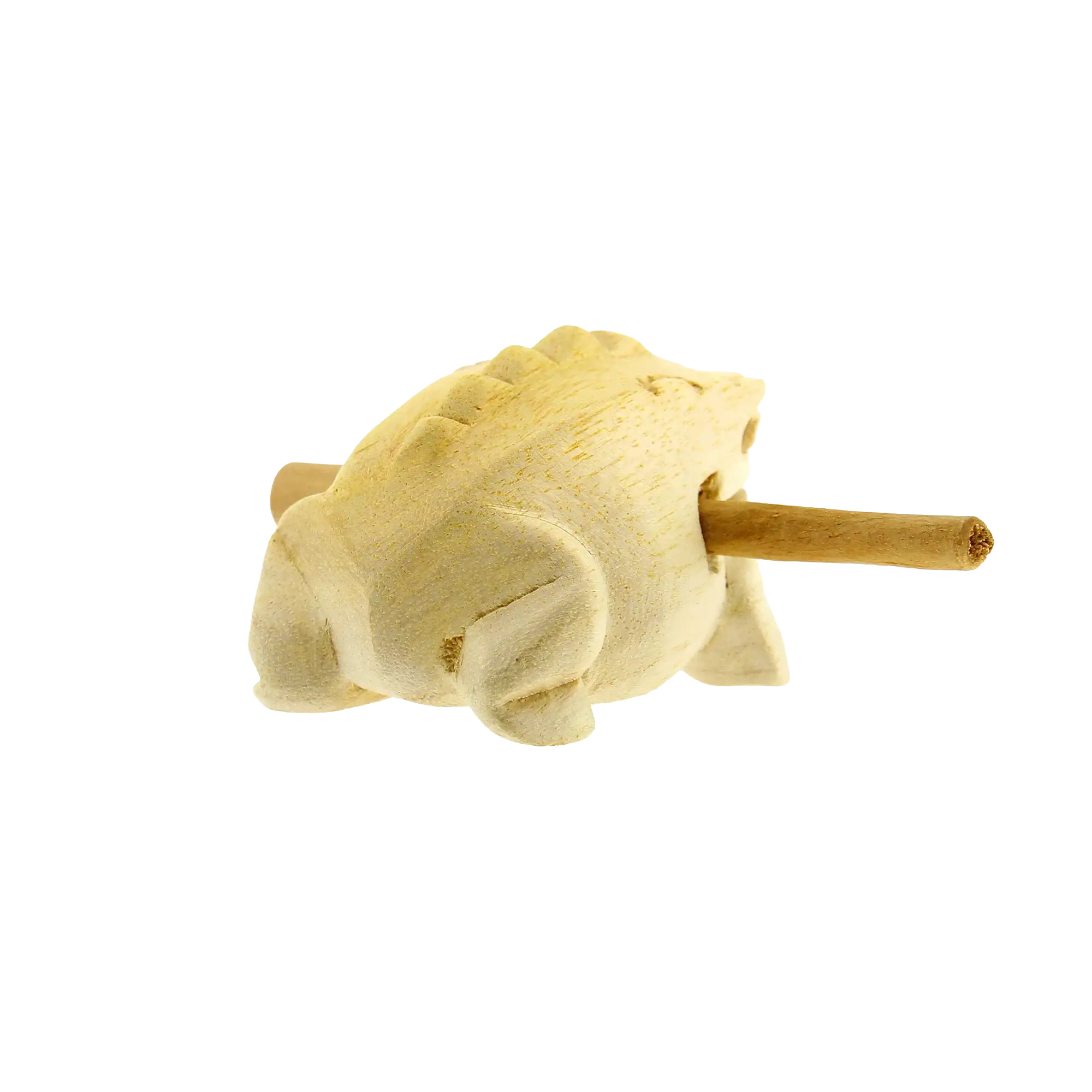
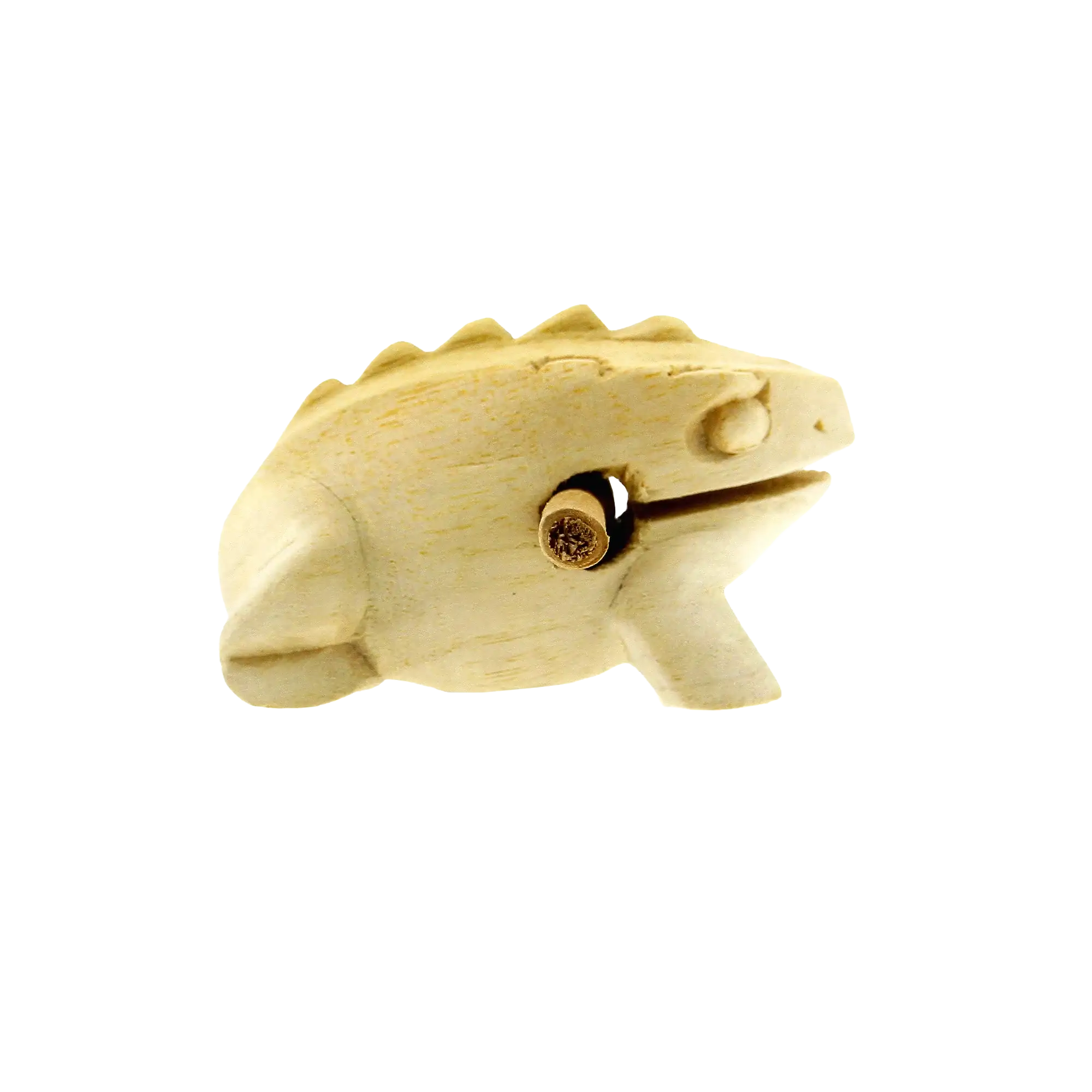
The grenouille sonore is a wooden percussion instrument carved in the shape of a frog, played by stroking its ridged back with a mallet to produce a croaking sound. Made from jackfruit wood and finished with oil, each frog generates a distinct pitch determined by its size, allowing players to create multi-tonal arrangements by combining instruments of different dimensions.
Construction and Sound
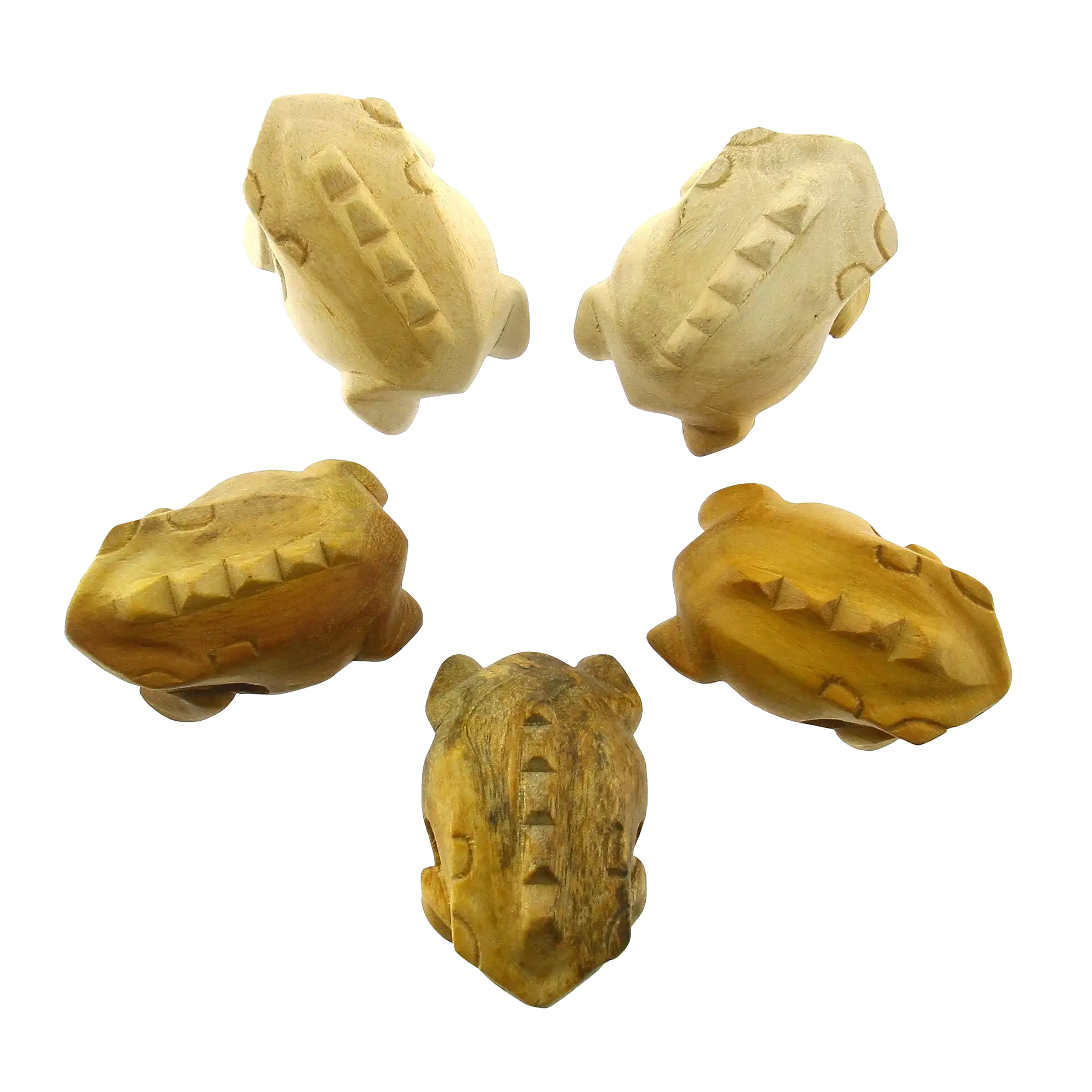
The body is sculpted from jackfruit wood, a material chosen for its durability, weather resistance, and bright tonal quality. The back of each frog features a grained surface that, when rubbed with the included mallet, produces the characteristic croaking timbre. The wood displays natural variation in colour, ranging from pale cream through golden-brown to deeper red-brown tones.
Each frog in the range produces a different pitch. By selecting frogs of various sizes, you can assemble a graduated set capable of generating a range of croaking tones, from higher to lower registers. A single stroke or repeated rhythmic scraping both yield recognisable frog sounds.
Playing Technique
Hold the frog firmly and draw the mallet across the ridged back in a steady, controlled motion. Varying the speed and pressure of the stroke alters the intensity and character of the sound. Lighter, slower strokes produce softer croaks, while faster or firmer movements generate louder, sharper tones. The instrument requires no special technique to produce an immediate, satisfying result.
Musical Applications
The grenouille sonore suits rhythm work, textural exploration, and ensemble playing. Children find the frog shape and simple mechanics immediately engaging, making it effective for early music education and group activities. Experienced players use sets of multiple frogs to build layered rhythmic or tonal effects, and the instruments integrate naturally into world music ensembles, percussion circles, and theatrical sound design.
What's Included
Each grenouille sonore comes with a matched mallet suitable for playing. Individual frogs are available in six different sizes, allowing you to purchase and combine them according to your tonal and ensemble needs.
Care and Maintenance
The oil finish protects the wood and enhances its natural appearance. Wipe the instrument occasionally with a soft, dry cloth to maintain the finish. Store in a dry location to preserve the wood and the clarity of the ridged playing surface.
Frog instruments have deep roots in Southeast Asian percussion traditions, where the sound is associated with rainfall and good fortune in cultural and festive contexts.
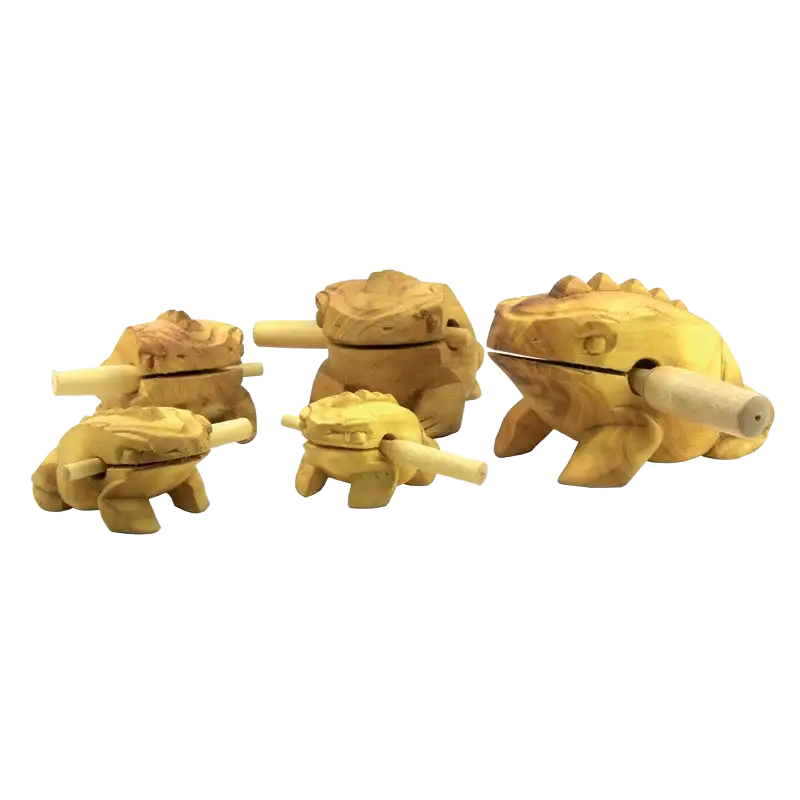
The Sound Frog Family — Wooden percussion instruments originating from Vietnam, carved from jackfruit wood and featuring a ridged back that produces authentic croaking sounds when rubbed with a mallet. Available in six different sizes to create varied pitches, they embody a Southeast Asian tradition where frogs symbolise good fortune and abundance. Used in multi-tonal orchestras, music education, percussion ensembles or theatrical performances, these instruments offer immediate accessibility to beginners whilst revealing sonic nuances to experienced musicians. Each Sound Frog Family member brings a tactile and cultural connection to the world of world percussion.
| Origin | Vietnam |
|---|---|
| Materials | Oiled - Jackwood - Wood |
⚠Caution: Not suitable for children under 3 years. Please supervise older children. Beware of swallowing small parts, strangulation, material allergies, sharp edges and points! Use only for sound generation. No liability for improper use.
✦Care: Extreme temperature fluctuations, humidity and direct sunlight can affect the lifespan. Please store in balanced humidity to prevent material changes, mold and corrosion. Remove dirt with a damp cloth. Dry after cleaning and each use.
♻Disposal: Please contact your local waste disposal authority for information on environmentally sound disposal!
The Sound Frog Family
The grenouille sonore is a wooden percussion instrument carved in the shape of a frog, played by stroking its ridged back with a mallet to produce a croaking sound. Made from jackfruit wood and finished with oil, each frog generates a distinct pitch determined by its size, allowing players to create multi-tonal arrangements by combining instruments of different dimensions.
Construction and Sound
The body is sculpted from jackfruit wood, a material chosen for its durability, weather resistance, and bright tonal quality. The back of each frog features a grained surface that, when rubbed with the included mallet, produces the characteristic croaking timbre. The wood displays natural variation in colour, ranging from pale cream through golden-brown to deeper red-brown tones.
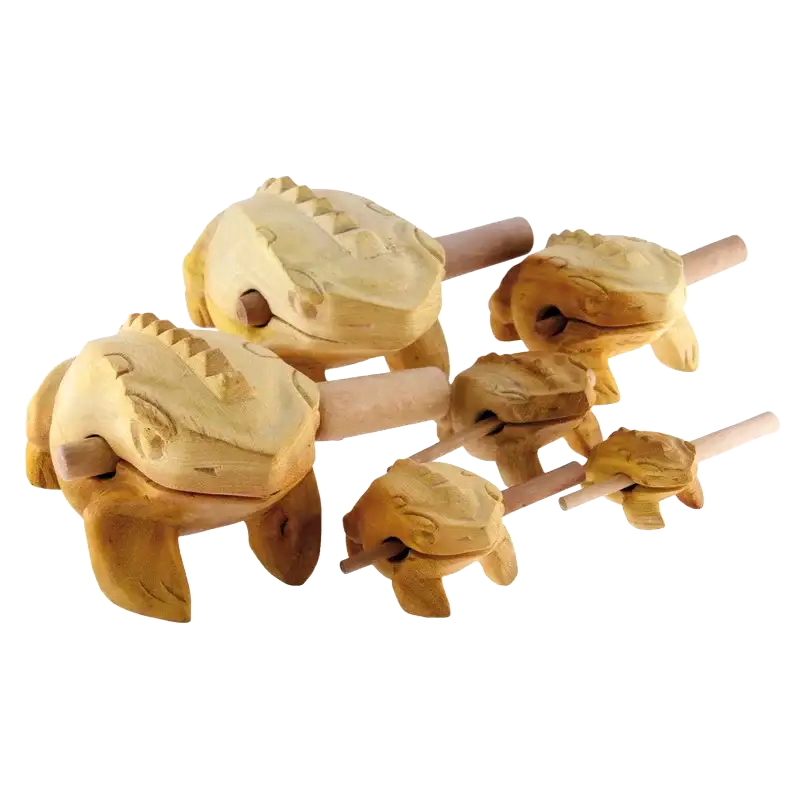
Each frog in the range produces a different pitch. By selecting frogs of various sizes, you can assemble a graduated set capable of generating a range of croaking tones, from higher to lower registers. A single stroke or repeated rhythmic scraping both yield recognisable frog sounds.
Playing Technique
Hold the frog firmly and draw the mallet across the ridged back in a steady, controlled motion. Varying the speed and pressure of the stroke alters the intensity and character of the sound. Lighter, slower strokes produce softer croaks, while faster or firmer movements generate louder, sharper tones. The instrument requires no special technique to produce an immediate, satisfying result.
Musical Applications
The grenouille sonore suits rhythm work, textural exploration, and ensemble playing. Children find the frog shape and simple mechanics immediately engaging, making it effective for early music education and group activities. Experienced players use sets of multiple frogs to build layered rhythmic or tonal effects, and the instruments integrate naturally into world music ensembles, percussion circles, and theatrical sound design.
What's Included
Each grenouille sonore comes with a matched mallet suitable for playing. Individual frogs are available in six different sizes, allowing you to purchase and combine them according to your tonal and ensemble needs.
Care and Maintenance
The oil finish protects the wood and enhances its natural appearance. Wipe the instrument occasionally with a soft, dry cloth to maintain the finish. Store in a dry location to preserve the wood and the clarity of the ridged playing surface.
Frog instruments have deep roots in Southeast Asian percussion traditions, where the sound is associated with rainfall and good fortune in cultural and festive contexts.
Your review appreciation cannot be sent
Report comment
Report sent
Your report cannot be sent
Write your review
Review sent
Your review cannot be sent